Richard Collins: Snake tunnel adds up to wildlife win
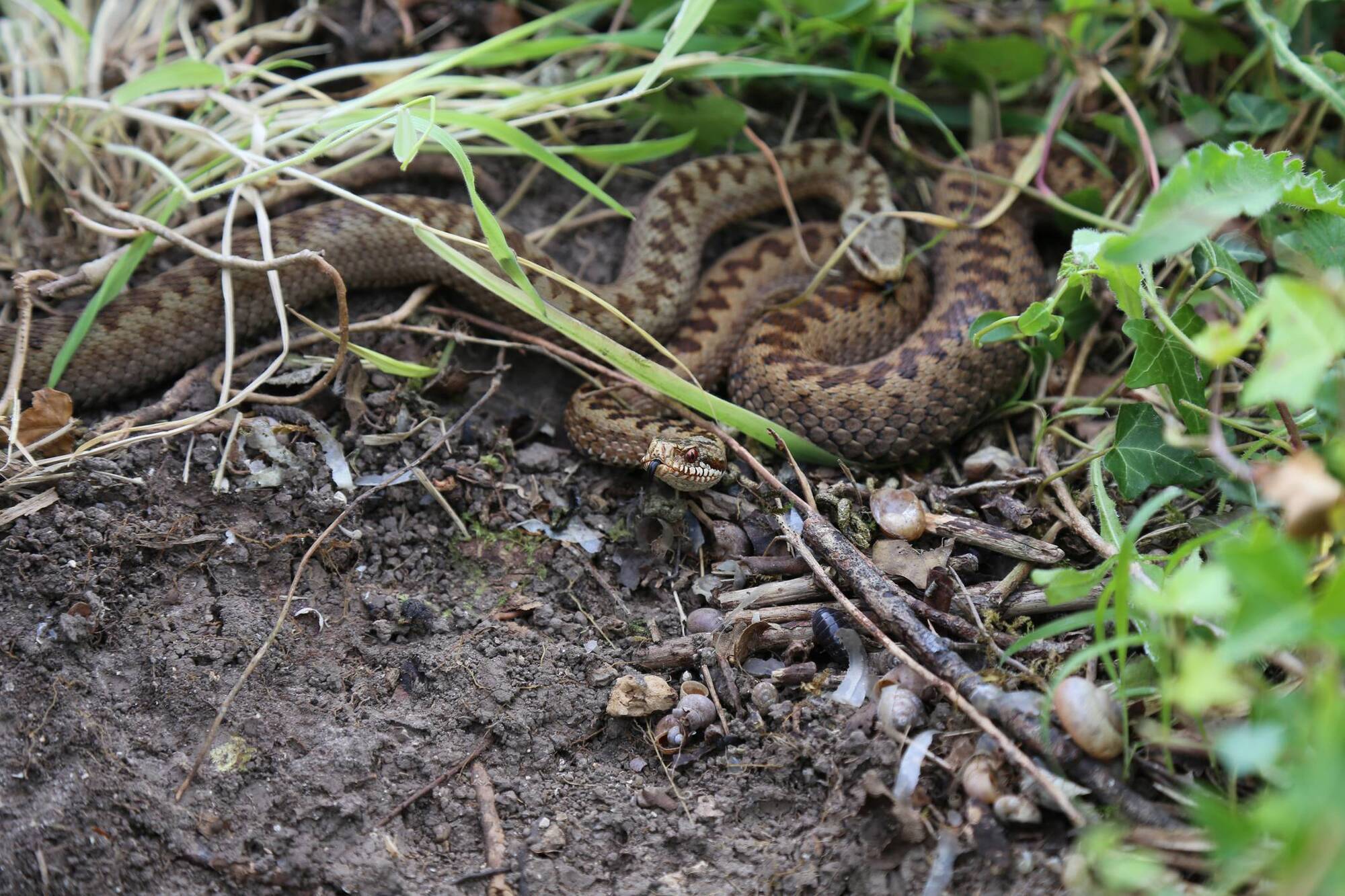
European Adder (Vipera berus) — this shy adder can be spotted basking in the sunshine. Unlike mammals, snakes can’t warm their bodies internally; they depend on the sun to heat up their muscles
In September 1981, a group of Welsh women began a protest at the Greenham Common airbase. They sought to prevent nuclear-armed cruise missiles being deployed there. In December of the following year, 30,000 women joined hands and encircled the airfield. They won — the last missiles left the base in 1991.
Now Greenham is back in the news: other armed creatures are living there... adders. It’s chemical, rather than nuclear, weapons this time around. The Common, now a nature reserve, is one of the few remaining strongholds of these vipers in England. And despite the fears that venomous snakes evoke among the public, the adders are most welcome and are being encouraged to stay.
Happy Monday folks - if you're feeling a little groggy this morning then this 'yawning' adder might be able to sympathise!
— BBO Wildlife Trust (@BBOWT) March 7, 2022
We've already had sightings of adders emerging at Greenham Common, so keep your eyes peeled - and if you see them, please show them respect 😊 pic.twitter.com/Ns7xHw9bkQ
But the reptiles have a problem at Greenham. A busy road divides their habitat in two. Driving in Africa, you are careful to avoid running over snakes warming themselves on sun-baked roads. Their English cousins, however, are more streetwise — they are afraid even to cross a busy road. Split into two separate populations, the Greenham adders can’t interbreed freely. This reduces the genetic diversity of their offspring.

The local wildlife trust has a solution; it is providing tunnels under the road to enable the adders to cross. But ordinary ducts won’t do. Unlike mammals, snakes can’t warm their bodies internally; they depend on the sun to heat up their muscles. When crawling through a long tunnel, they risk developing hypothermia and dying. Heating the passage electrically is not a viable option; the adders might become too fond of their comforts and never stir out of the tunnel. The solution is to provide a grid of openings along the roofs of the passages, allowing the sun to warm the snakes as they cross.

Britain has three snake species but the adder is the only venomous one. Adults tend to be slightly more than half a metre long, dark coloured with a distinct zig-zag pattern along the back. Despite their fearsome reputation and Shakespeare’s many negative allusions, they are not aggressive and will bite only if molested. Nor is an adder’s sting likely to be fatal, unless anaphylactic shock sets in. You are not at risk walking in leafy places, although your dog may be. And it’s no use talking loudly — snakes are deaf.

We don’t need snake-tunnels here, thanks to Patrick, the 5th Century Romanised Briton who was considered a national hero for expelling the snakes from our island. But how times change! The holy man would be regarded as an environmental vandal nowadays and have his statues pulled down by angry mobs, had archaeologists not restored his green credentials. They point out that there were never any snakes here for him to banish.
During the last glaciation, Ireland Britain and much of mainland Europe were smothered under massive blocks of ice. When the great thaw set in, plants and animals, including snakes, spread gradually northwards. The slow-moving serpents managed to colonise Britain, but failed to reach Ireland before rising sea-levels cut us off from the European mainland, putting a stop to the serpents’ gallop.
Every great story seems to begin with a snake — Nicolas Cage