Richard Collins: Fowl play or winging it? — bird mimics police siren
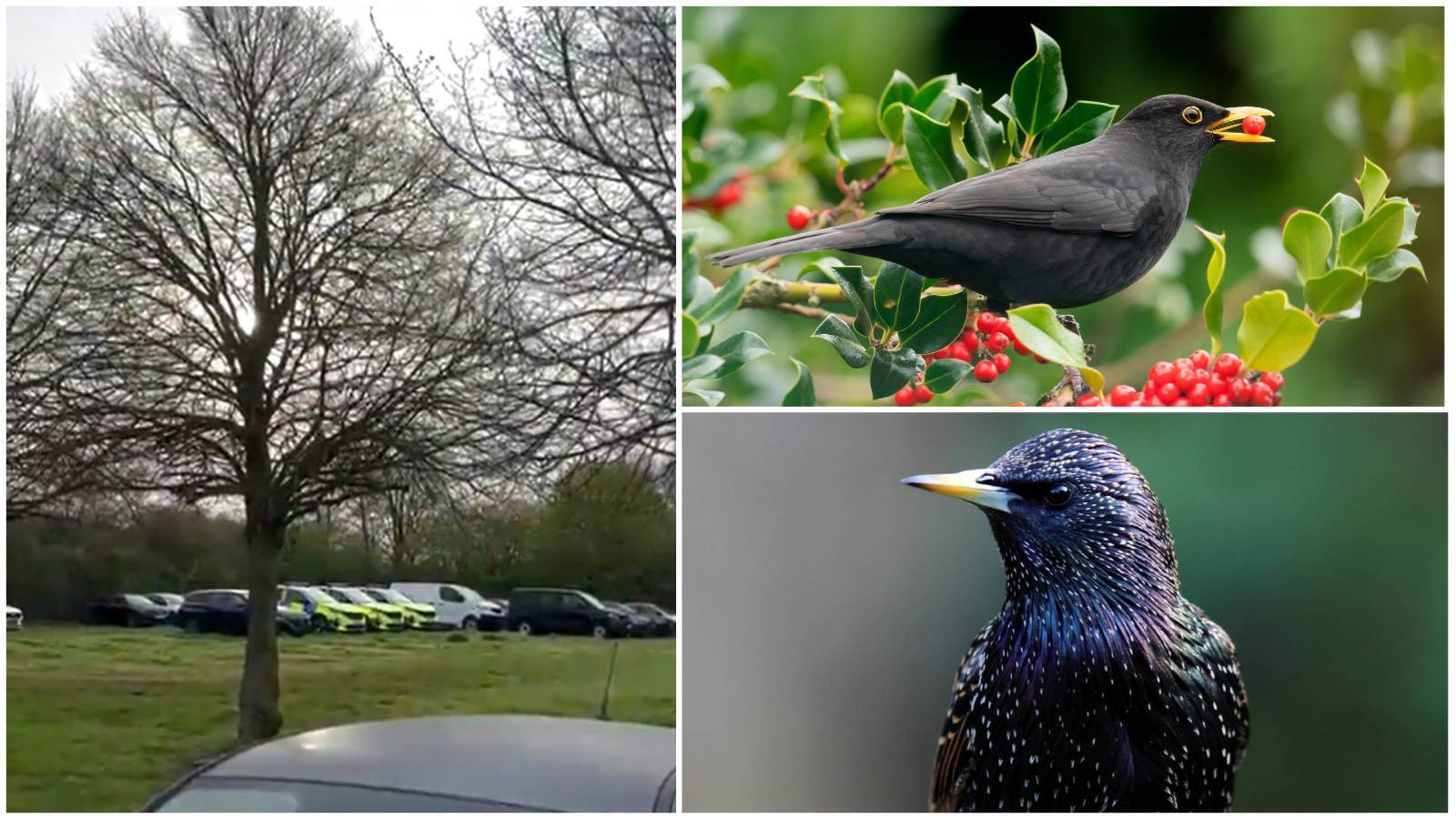
Thames Valley Police: "Officers at our Roads Policing base in Bicester have been left a little confused this week, after finding out one of their resident birds has learnt to mimic the sound of a police siren. From our workshops that test out the two tone tune to officers deploying to jobs, this little fella has been sat patiently observing the noise to recreate it!" The 'culprit' may be a starling or a blackbird.
I love doing impersonations of people — Benedict Cumberbatch
A bird in Bicester, Oxfordshire, is committing a serious offence — ‘wasting police time’.
Perched in trees close to a local police facility, it mimics the sirens of patrol cars, distracting constables from their important work. Is the bird taunting the police deliberately? Does it harbour a grudge against the ‘limb of the law’, or is this just an avian April fool’s joke?
From our workshops that test out the two tone tune to officers deploying to jobs, this little fella has been sat patiently observing the noise to recreate it! 🐦⬛ pic.twitter.com/p49FhZ3HMj
— Thames Valley Police (@ThamesVP) April 10, 2024
The prime suspect, which detectives presumably want to interview, is a starling. A photograph released to the media, however, seems to show a larger and stockier bird. Blackbirds are about 20% heavier than starlings and they occasionally indulge in mimicry. Could the culprit be one of them? At any rate, a file can’t be sent to the Director of Public Prosecutions just yet.
‘Cui bono’, Cicero would have asked; what kind of bird benefits from such behaviour? Males sing but the females of most species don’t. At this time of year an aspiring daddy stakes out a territory and declares ownership of it by singing. He must also persuade a suitable female to become his mate. As with humans, song is an important inducement.
The vocalisations of some species are hard-wired into their brains; young cuckoos, for example, never hear their father’s song. Daddy is on his way back to Africa by the time the egg hatches. Most songbirds, however, need music lessons.
During the 1950s, British ornithologist W H Thorpe studied the development of song in young chaffinches. Nestlings, he showed, learn their songs by listening to their fathers and other males. On fledging, they begin producing ‘plastic’ songs, crude rambling versions of the normal score. In the following spring, these develop, and are refined, into ‘full’ songs.
Did the Bicester offender fledge from a nest near the station? If so, as a youngster growing up, it might have heard a constant stream of sirens, the sound of which it incorporated into its musical repertoire.
But why mimicry evolved at all is a puzzle for ornithologists. There are some obvious benefits. Females, for example, are impressed by sophistication. Having a rich and varied song can advance a would-be suitor’s romantic prospects. Pat Smiddy lists eight records of the marsh warbler in Ireland, five of them from County Cork. This little brown bird, which commutes between Africa and Europe, borrows phrases from the songs of species it hears on migration. The marsh warbler’s extraordinary song is a vocal equivalent of the peacock’s tail.
The songs of chaffinches I heard in Italy recently were similar, but not quite the same, to those we hear in Ireland. Species often have dialects. A bird ‘blow-in’ might more easily secure a mate if can pass itself off as a local by mimicry.
But, as always, there are downsides to dishonesty. Imitating other species spreads confusion. A bird’s vocalisations serve as a passport proclaiming valid membership of a tribe. Uttering phrases of other species may mislead, and deter, prospective suitors.
But there is an even greater mystery. I have heard captive hill mynahs of South-east Asia produce perfect human-like utterances. But, despite their extraordinary ability, mynahs don’t use mimicry in the wild.
Can the sleuths of the Thames Valley Police crack this one?

CONNECT WITH US TODAY



Be the first to know the latest news and updates