Islands of Ireland: Reennafardarrig — seven acres with a beach decorated with wild flowers
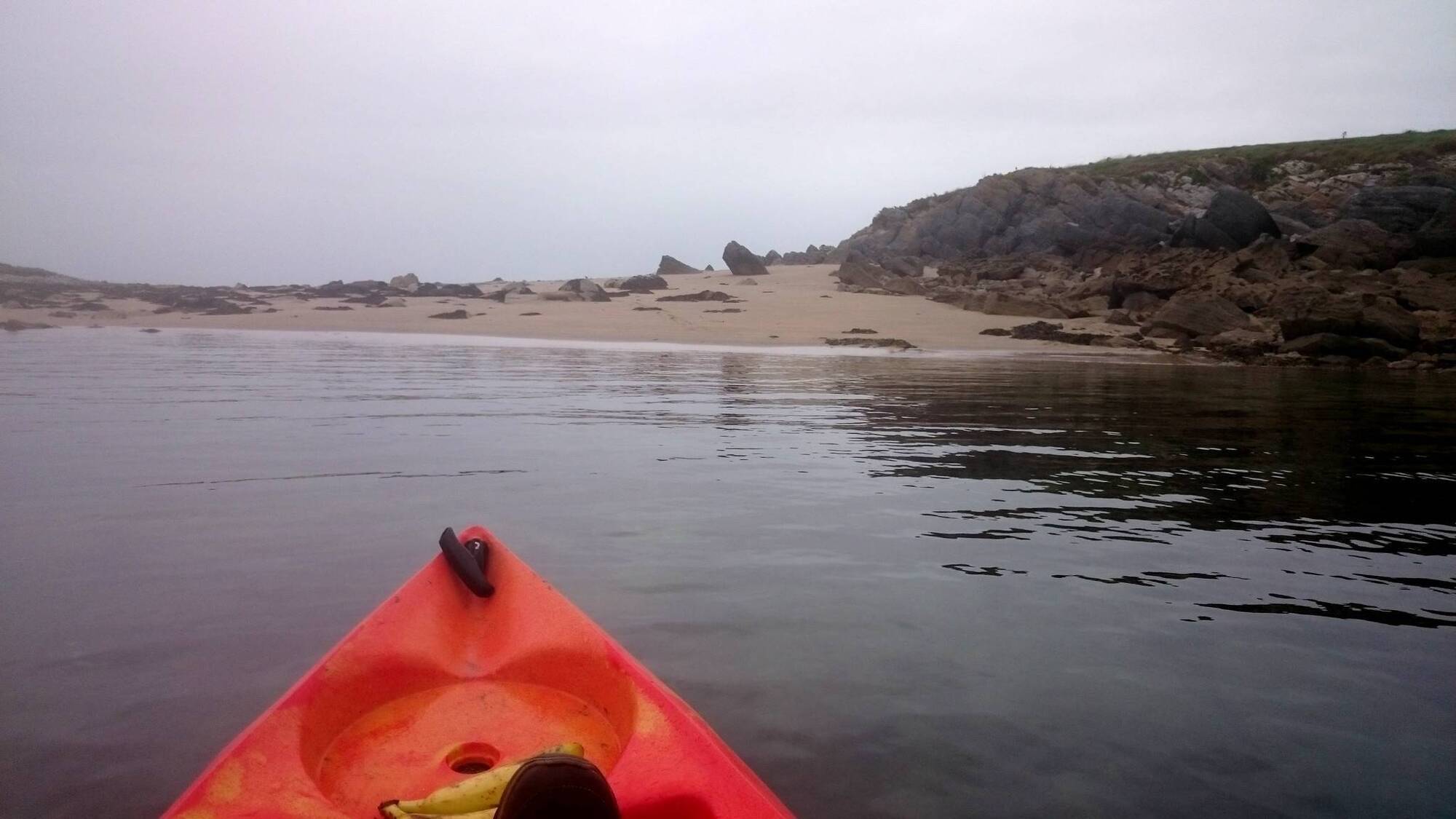
Reenafardarrig Island, the Maharees, Co Kerry. Picture: Dan MacCarthy
The ruins of a monastery dominate the island of Illauntannig which is one of the Seven Hogs (na Seacht gCeanna) in the glorious Maharees on the Dingle Peninsula. That island has already appeared on these pages but it has a companion island which in all likelihood was connected to the monastery in the seventh century. Less than 100 metres separates the two islands and it is possible to walk between them at low tide. They, and the other Hogs, are part of the tombolo system which is an accretion of sand and soil forming an isthmus.
The archaeological record describes the “remains of an oval hut located at the centre and highest point of the island”. Where there was a dominant monastery on one island there was sometimes an associated island where monks went to pray or even live a solitary life for a period. Illauntannig’s monastery was founded by the industrious St Senan in the seventh century. He founded another monastery on Scattery Island, County Clare, and built churches in the Lee Valley, County Cork.
There is some evidence that the smaller of the two Skellig islands was so used. Lough Key in County Roscommon has Church Island plus the minute Hermit Island. And Innisfallen with its monastery on the Lakes of Killarney has Friar’s Island nearby.
So it is entirely possible, if not probable, that Reenafardarrig was an outlier of the main monastery with a rudimentary oratory. The ruins of the current structure are undated but they may have been built on a a previous building. The low-lying, seven-acre island has a pretty little beach and is decorated with wild flowers. As a retreat from human contact it is a little piece of heaven, though when storms roll in from the Atlantic it would have been a different picture. The notion of isolation occurs in many of our placenames: ‘dysert’ or ‘diséart’ refers to a hermitage and usually occurs near a church.
The hut is about 3 metres by 5 metres and faces into the west as if in an act of defiance. There are some field walls which suggest the growing of crops. The archaeology group, The County Kerry Field Club, visited Reenafardarrig in 1942 and observed ‘a cross and other markings’ on a sandstone boulder — again reinforcing the connection to the monastic site on Illauntannig. A recent archaeological excursion did not find any trace of this cross, however.
As for placename clues, Reenafardarrig itself is highly suggestive. One interpretation is the ‘Point of the Red Man’. Like many islands, the naming of this one had its origins in stories associated with a place and for some particular reason was so named. But what reason? A note on logainm.ie records that ‘the old people used to use it’. Another view is that it derives from ‘Rí na Fir Dearg’ or ‘King of the Red Men’. So who were the red men?
Well, we don’t have too far to look. They are members of the same tribe of sprites, púca or leprechauns in which our literature abounds. An entry in a dictionary describes the fear dearg as “a fairy whose name means red man and who is described wearing red clothes and a red hat. Some say that he is a giant, others that he is human-sized and others that he stands two feet tall”.
The entry notes that the fear dearg has an unusual voice which can sound like waves, birds or angelic music.
A more expansive description places them in a European context: “The European peasants encountered ethereal creatures who spoke for trees, groves, fields and streams. All over Europe, shellygoat, fear dearg, fachan and a whole legion of similar creatures lived, snugly attached to specific locales, sometimes demanding obeisance from neighbouring humans, sometimes enjoying the obscurity of wilderness,” writes John R Stilgoe.
They appear in other island names too. Recently, we had a look at Fairy Island in County Sligo and Sheelane Island, (Síodh-Oileán or Fairy-mound Island) County Cork. Reenafardarrig is in good company.
: Inquire locally or kayak from Fahamore Point on the Maharees, north of the village of Castlegregory.
: archaeology.ie; logainm.ie; by John R Stilgoe, Landscape Architecture Magazine, Vol 73, No. 6; , (John Hunt) by Morgan Daimler.
CONNECT WITH US TODAY



Be the first to know the latest news and updates