Slaughter of animals for public entertainment — impact still felt to this day
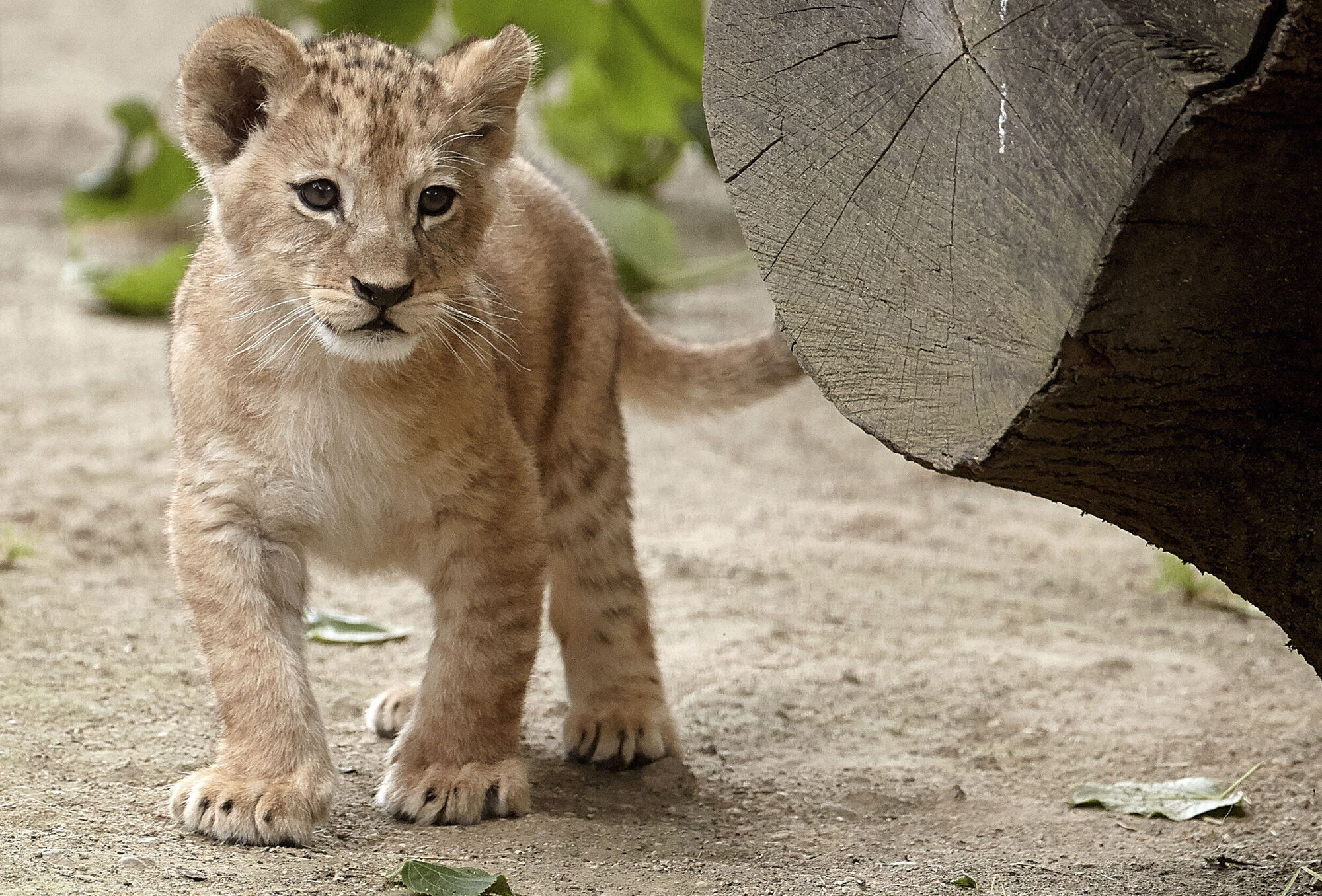
A Barbary lion baby explores its enclosure at the zoo in Neuwied, Germany. The Barbary lion is one of the largest lion sub-species. This big cat can measure one metre in height at the shoulder and up to three and a half metres in length. Average weight can be up to 230 kilograms. Picture: Thomas Frey/dpa via AP
The truly brave bull gives no warning when he charges, except the fixing of his eye upon the enemy — Ernest Hemingway in
I took my grandchildren to Rome last week on what used to be called an ‘educational tour’. Their questions about The Eternal City came thick and fast.
The founders, Romulus and Remus, caught their attention. In his celebrated History of Rome, Livy says that the two infants were abandoned in a cradle on the Tiber, which was in flood. "Left on dry land by the retreating water, a thirsty she-wolf from the surrounding hills, attracted by the crying of the infants, gave them her teats to suck and was gentle with them," he wrote.
There are records of the kindness of wolves. In 1926, two young girls, the ‘wolf children of Midnapore’ in India, were found living with a she-wolf and her cubs. Moved to a local orphanage, the pair continued walking on all fours and preferred the company of the local dogs to that of people. So could the old myth have a grain of truth?

The Colosseum was the main attraction for my young charges. Ridley Scott’s , the amphitheatre’s latest incarnation, was one of the highest-grossing films of all time. Are modern audiences just as bloodthirsty as the baying Roman mobs of two thousand years ago? Is Scott’s depiction of the arena and its gladiators, the progenitors of Spain’s matadors, accurate?
Our guide maintained that it isn’t. She castigated its treatment of the Roman ‘games’, but conceded that the portrayal of a gladiatorial training school is authentic. But could a gladiator face the King of Beasts in the Circus and survive? Yes, she confirmed. Like today's bullfighters, performers were so well trained in advance that they faced only limited risk in despatching lions.
The Colosseum’s victims included bears, hippos, leopards, cheetahs, elephants, rhinos, and crocodiles. Birds did not escape. Cranes were induced to fight each other. According to the Greek historian Herodian, the emperor Commodus, who posed as a gladiator, decapitated ostriches, which "continued to run around (headless) as if they had not been injured". Thanks to the Romulus legend, wolves were spared.
The inaugural show of the newly-constructed amphitheatre was staged in 80AD by the emperor Titus. It ran for 100 days during which 2,000 men were killed. Suetonius claimed that 5,000 animals died in a single day, but he tended towards sensationalism. According to the more reliable Cassius Dio, 9,000 beasts perished during the entire festival.

The total number of animals killed during the Colosseum’s 400-year history probably ran to more than a million. But it was just the largest of some 230 amphitheatres scattered throughout the Roman Empire.
Given that the slaughter of animals for public entertainment had begun 300 years before the construction of the Colosseum, supplying victims for the grizzly trade must have been an enormous challenge.
Did the practice render species extinct?

It is impossible to say, but the animal populations of North Africa, in particular, were probably seriously depleted. However, the Barbary lion, the most sought-after species, survived the persecution. It still roamed the Atlas Mountains in the last century but is now locally extinct.