Richard Collins: When climate change denial is the hottest thing for some people
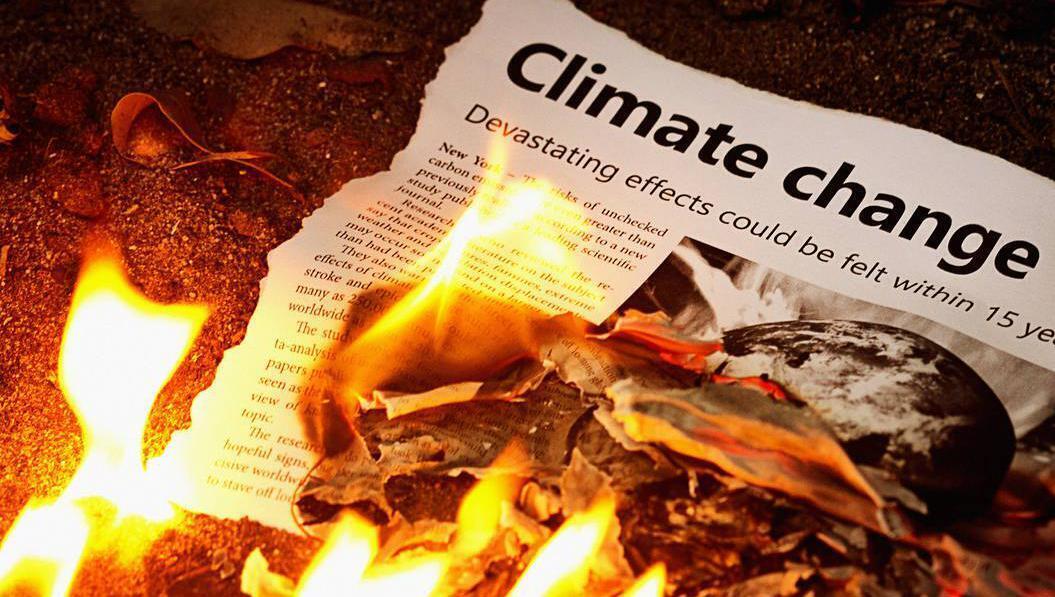
Climate change denial: By turning a blind eye to the evidence, we avoid having to change our destructive ways
— Ovid. [I see the good but I follow the bad]
Temperatures worldwide have been 1.5°C above pre-industrial levels for an entire year. Every month since last June has been the warmest on record. We know that we are undermining the life-support system that sustains us but few seem willing to grasp the nettle. As Leibniz said, human nature is both godlike and weak.
Despite fires floods hurricanes melting polar ice and the halving of species diversity worldwide, many claim that global warming is a myth. A 2019 survey by the Pew Research Centre found that 30% of US adults deny that global warming is happening, and a further 20% claim that human activity isn’t causing it. A 2022 report in The American Mind gave similar results. Judging by our profligate waste of energy and resources in Ireland, it seems likely that climate scepticism is rife here also.
Is a form of self-deception, which psychologists call ‘motivated reasoning’, responsible? Facing an unpalatable truth; we sub-consciously search for what a Trump spokeswoman called ‘alternative facts’. By turning a blind eye to the evidence, we avoid having to change our destructive ways.
Researchers at the University of Bonn selected 4,000 adults living in the US and divided them into two groups. Each participant was offered $20. Members of one group were required to donate the money to either of two organisations engaged in fighting climate change. Those of the second group, however, were free either to keep the money for themselves, or give it to the climate charities if they wished.
Almost half of those in the second group opted to keep the money. "Anyone keeping hold of the donation has to justify it to themselves; one way to do that is to deny the existence of climate change," Florian Zimmerman, an author of the study report, told the university web-site. If motivated reasoning were a factor, many of these people would surely have become deniers, at least temporarily.

But, to the researchers’ surprise, no difference was found between the responses of the two groups. The researchers concluded: "Our study didn’t give us any indication that the widespread misconceptions regarding climate change are due to this kind of self-deception."
Motivated reasoning had not led the participants to become deniers or to justify their inaction concerning it.
This is a heartening result. It suggests that, ultimately, people won’t continue indefinitely with their heads stuck in the sand. As the climate problem worsens, it should be possible, hopefully, to sway public opinion by relentlessly publicising the facts.

This experiment may have ruled out one explanation but it does not answer the fundamental question: why is climate change denial so prevalent? The researchers suggest another possible factor; that deniers define themselves by being climate sceptics. This belief, they think, sets them apart from other political groups. Denial "forms part of the political identity of certain groups of people and they are likely to simply not care what researchers have to say on the topic".
To paraphrase St Augustine... God give me climate action, but not just yet!
CLIMATE & SUSTAINABILITY HUB