Meet the first baby François’ langur monkey to be born at Fota

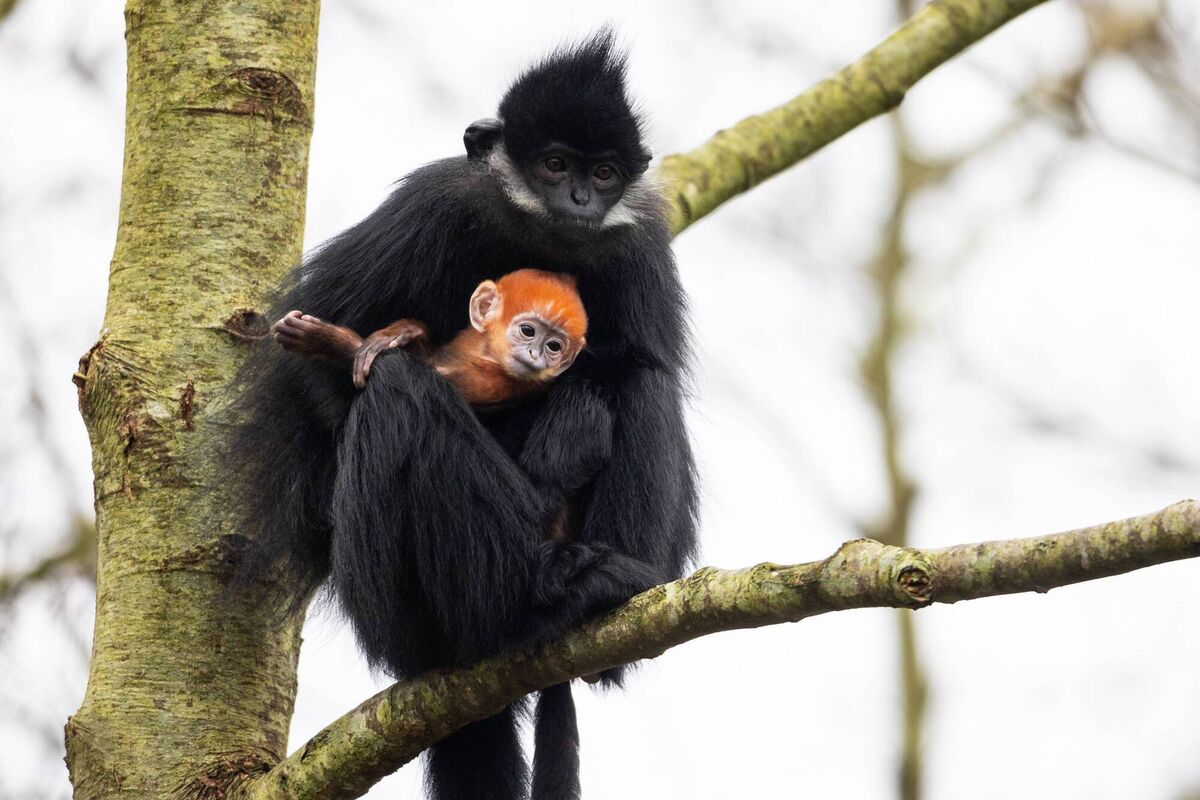
A first for Fota — a baby endangered François’ langur monkey who was born on November 22 to mother, Mei and Dad Shinobi. Picture: Darragh Kane
It's a first for Fota Wildlife Park — a baby endangered François’ langur monkey has been born to mother, Mei and Dad Shinobi.
The baby was actually born on November 22 and recent weeks have seen Mei, Shinobi and baby venturing outdoors, with the youngster often visible through the viewing window of their purpose-built house in the Asian Sanctuary.
Fota Wildlife Park is asking the public to help name the new baby here and to be in with a chance to win a Conservation Annual Pass.
The baby François’ langur monkey (Trachypithecus françoisi), with striking orange colouring, stands out against the contrasting black fur of the adults in the group. The François’ langur monkey is classified as endangered by the IUCN.
The mother, Mei, who was born in 2016, and her younger sister Kaili, who was born in 2018, made their journey to Fota Wildlife Park from Twycross Zoo in Britain in September 2022 as part of a European Endangered Breeding Programme (EEP). Joining them shortly after was Shinobi, born in 2016, who arrived from ZSL Whipsnade Zoo in Britain in December 2022.
Lead Ranger, Teresa Power said: “We hope the birth of this baby will help raise awareness about the critical need for conservation efforts for the François’ langur. There is a wild population of 1,400–1,650 in China and fewer than 500 left in Vietnam. As a member of the European Association of Zoos and Aquaria (EAZA) we will be participating in their 2024 'Vietnamizing' conservation campaign, drawing attention to threats to the country’s amazing biodiversity and animal species, such as the François’ langur, whose wild populations are currently under pressure from habitat loss, hunting, and poaching."
“Since the trio of Mei, sister Kaili and adult male, Shinobi arrived from their respective zoos in late 2022 the animal care team here have been working with them to carefully integrate them into the breeding group. We have been keeping a close eye on the group in the hope that they would successfully breed. The anticipation has been building as we monitored Mei’s behaviour over the months leading up to the birth and we are thrilled to announce the safe arrival of this endangered baby monkey at Fota Wildlife Park."
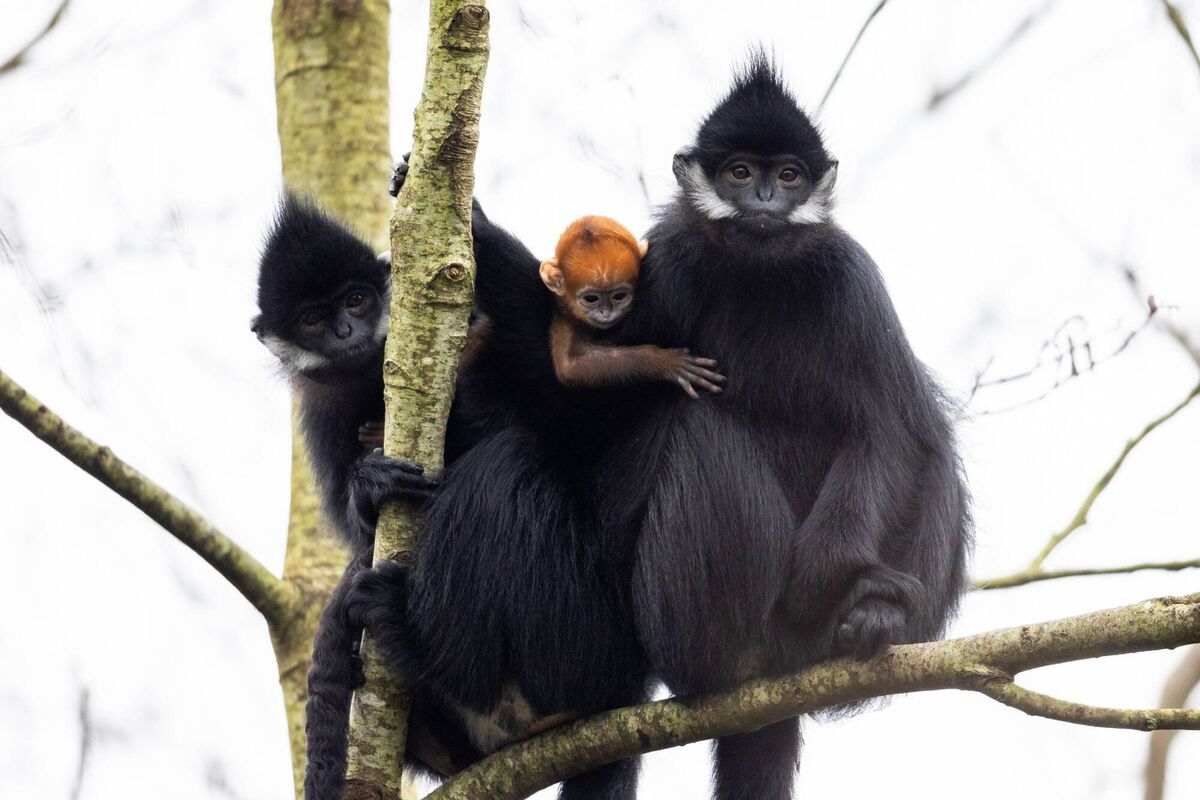
“Kaili, the proud aunt, has taken on the role of babysitter, this is what’s known as ‘allomothering’, where the females in the group will help to care for and raise the young. The baby is already keeping the group on their toes, trying to copy the adult behaviours. The youngster is amusing the animal care team as it tries to copy its mother Mei, especially when it comes to grabbing snacks during mealtimes!"
The baby’s coat is expected to transition from orange to black over the next few months, which is the natural development of François’ langur monkeys.
The range of this species extends from Southwestern China to northeastern Vietnam. François' langur, characterised by its medium size, possesses a sleek coat of black hair. Notably, it features distinctive white sideburns that extend from its ears to the corners of its cheeks.
Fota Wildlife Park, a conservation charity, is involved in many successful breeding and reintroduction programmes for endangered species such as Scimitar horned oryx, European bison, and Natterjack toad.
CONNECT WITH US TODAY



Be the first to know the latest news and updates