Islands of Ireland: Weir Island could have been the site of Cork's airport in a different era
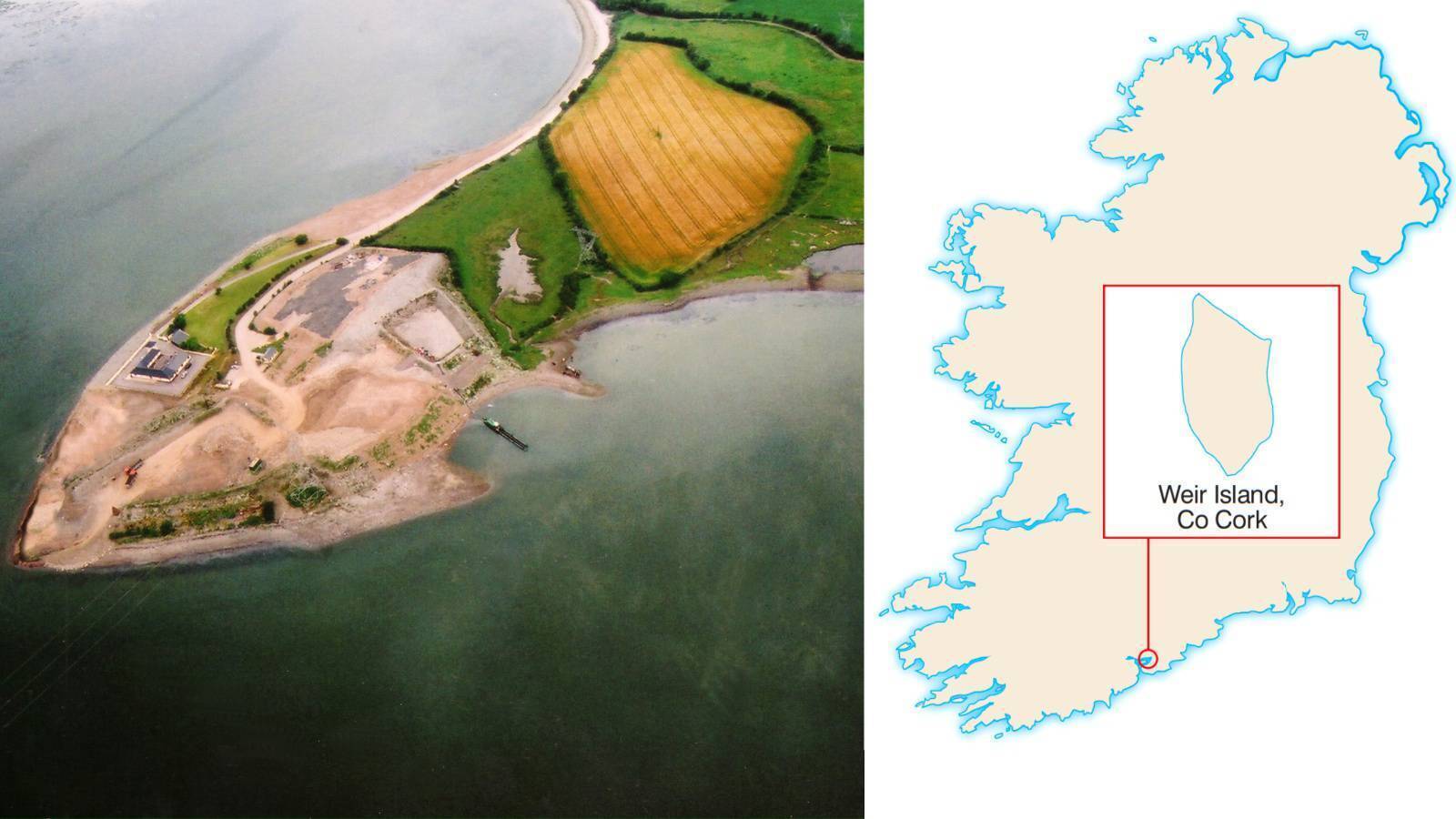
Weir Island, Adjacent to Fota, Aerial View.Pic Billy MacGill
For such a seemingly innocuous island Weir Island in the inner Cork Harbour has had an interesting history that has seen it punch far above its weight. It is one of three islands in this area along with Brick Island and Brown Island — and like them is uninhabited save for the occupants of two houses. This set lies just to the east of Fota Island and to the north of Great Island, with Weir being the westernmost.
The Weir Island Grasses
— Aaron Kenneally (@aaronkenneally) December 28, 2020
Weir Island is an island in County Cork. Weir Island is situated southeast of Slatty Bridge, northwest of Brick Island#weirisland #fota #aaronkenneallyphotography #ireland #irelandphotography #dailyphotography #canon_photos #photosofireland #photography pic.twitter.com/47e0jDpsRF

With the take-off of transatlantic journeys by seaplane inspired by Charles Lindbergh in 1933, Cork looked to the skies to capture some of this incipient market. In the late 1930s, Foynes in County Limerick would see a successful development of seaplane enterprise which saw many crossings of the ocean from there.
Chairman of Imperial Airways, Eric Geddes, stated that within five years the crossing of the Atlantic by seaplane will become an established fact.

A draft report by the county surveyor Richard F O’Connor in 1933 looked at the possibility of building a seaplane base at Cobh and at the northern side, an aerodrome at Belvelly. This aerodrome would partly have infringed on Weir Island and vastly changed its character.

Early Ordnance Survey maps show Weir Island linked by a short shingle bar but over time the area to its north was filled in with considerable amounts of mud. That is referenced also on the maps by an area known as ‘lamanagh’ (the bare marsh). Weir and its neighbouring islands are known roosting sites for grey plover. Had the airport been developed much of the birdlife would probably have vanished. The weir in question was in all likelihood an eel trap/ fishery on the stream to the north of the island.
The rationale for the development of an airport was as a time-saver versus sea traffic. “The saving in time over present schedules is so considerable that air services on these [proposed] lines are bound to draw traffic,” the report stated.
And that: “The only initial expenditure necessary is the cost of constructing and equipping an aerodrome and of equipping landing water for seaplanes. Both requirements can be met at comparatively low cost.”
The report indicated that the optimum location to site an aerodrome was at the tidal mudflats at Belvelly, between Great Island, Fota Island and Weir Island. It stated that it was practicable to reclaim an area of 460 acres of this ground by constructing suitable tidal sluices. It went on to state that there is space to construct runways measuring from three-quarters of a mile to one-and-a-half miles in length. Control buildings would have been constructed on Fota Island "which will give full view of the whole landing ground".

The Belvelly site was examined from land and air by experienced airmen including WR Elliott, C Rae and flight lieutenant Chris Clarkson. The plans would have seen two of the runways touching the edge of Weir island with probable associated developments into the future.
A few kilometres to the south, Great Island would have seen development of a landing area for seaplanes at Cuskinny Bay to the channel running to East Ferry. It was envisaged that the naval facilities at Haulbowline Island could be used for seaplane maintenance.
By 1934 the Belvelly plans were abandoned with the focus moving to Midleton which in turn was abandoned with the outbreak of World War Two. By 1948 attention had switched to the current site at Farmers Cross just outside the city.
In 2015 Weir Island was back in the news when Bord Pleanála turned down an application for an activity known as ‘car drifting’. The council said the location of a racing track next to Natura 2000 sites meant that it could not be considered an exempted development as it is surrounded on two of its three sides by the Great Island channel special area of conservation and the Cork Harbour Special Protection Area.
Weir Island hosts a couple of electricity pylons to enable the provision of electricity to Great Island. Meanwhile, the only thing flying at Weir Island today are the birds.
: Privately owned.
: Cork Examiner 06/07/1933 and 12/08/1933; corkairport.com