Anja Murray: Pigeons and doves — and peace and learning
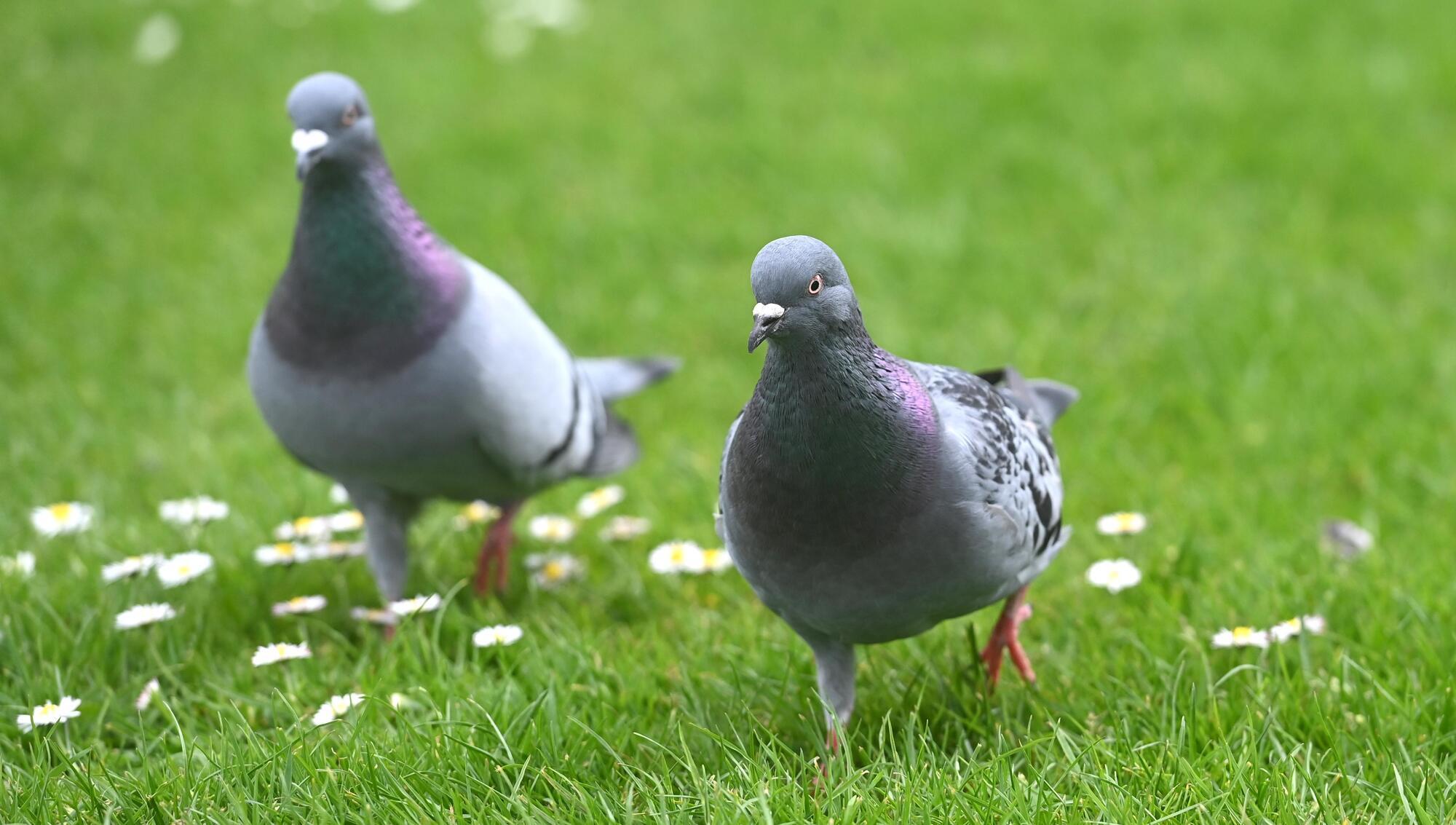
A pair of pigeons at The Lough, Cork: The feral pigeons we see in urban streets and parks have been domesticated longer than any other bird, a result of millennia of selective breeding. Picture: Larry Cummins
As I write, a crab apple tree across the street is bustling with life. Its small, rust-red ornamental apples have drawn in a flock of fluffed-up wood pigeons, each seated comfortably among the branches, feasting on the small fruits plucked apart from the still-green leaves. The birds’ rosy-hued feathers at their nape are accentuated by the soft afternoon sunlight.
I pull out one of my bird identification books, to check again the difference between woodpigeons, pigeons, and doves, and return to the window, but the birds have moved on already. Woodpigeons, pigeons, and doves are closely related, with very similar appearance, shared behaviours and traits. They belong to the family of birds called Columbidae.


Read

Listen

Watch
Play
CONNECT WITH US TODAY



Be the first to know the latest news and updates



Revoiced
Newsletter

Had a busy week? Sign up for some of the best reads from the week gone by. Selected just for you.
Scene & Heard
Newsletter
From music and film to books and visual art, explore the best of culture in Munster and beyond. Selected by our Arts Editor and delivered weekly.