Discover Ireland’s rich history of space exploration, astronomy and astrophysics
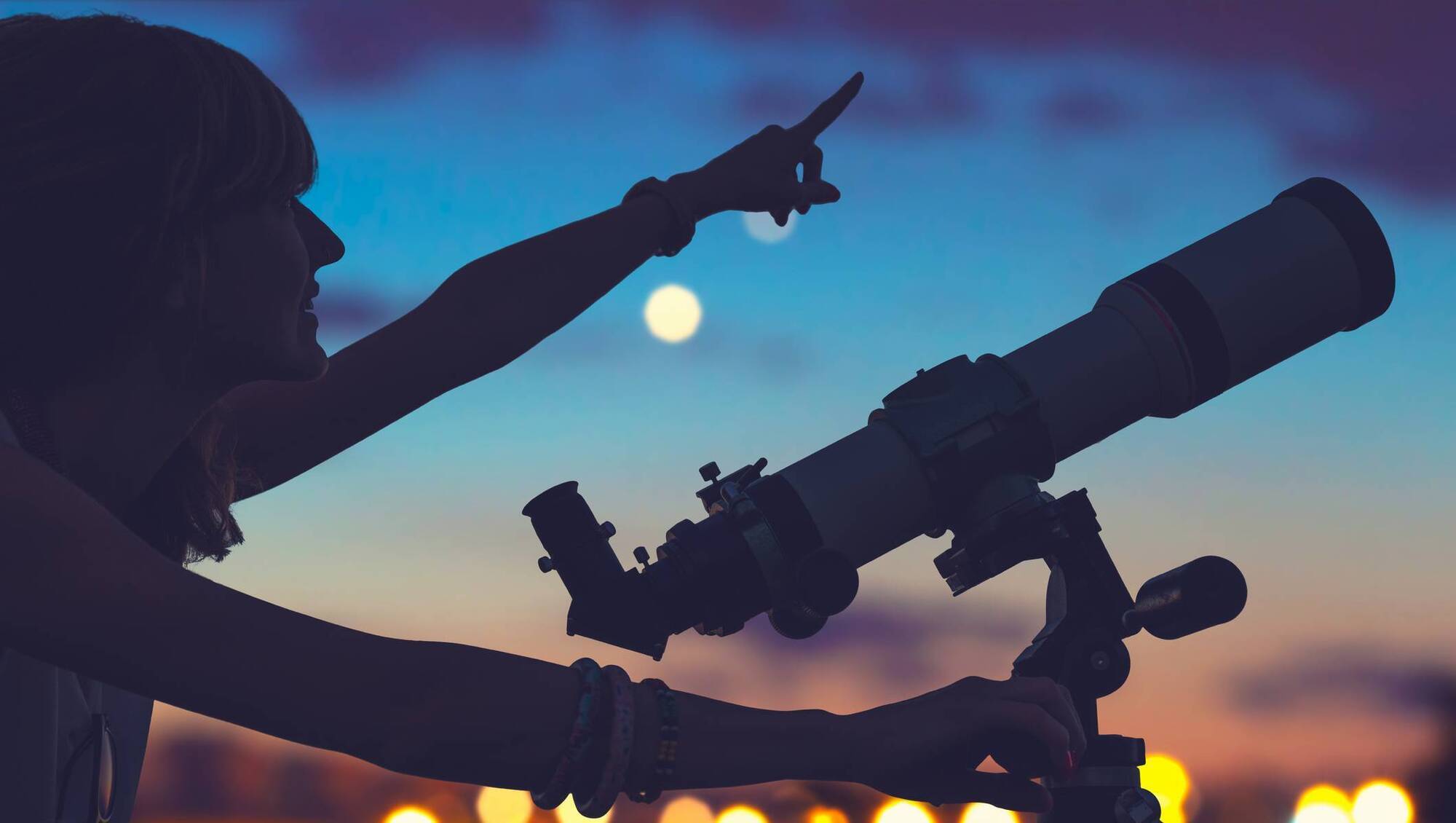
Astronomy has been important in Ireland since ancient times
“I think there’s a great unifier when it comes to the night sky. There are no borders up there. Yes, we look for patterns and constellations, but it’s a piece of shared cultural heritage which transcends borders.”
Rob O’Sullivan is the National Outreach Coordinator for Space Week Ireland. He says that although humans have been looking to the stars in awe generations, few know Ireland’s contribution to space history, exploration and astronomy.
“We’ve a long history of being really good researchers when it comes to science," he explains. "Astronomy is one field that really seemed to capture our hearts. We have Agnes Mary Clerke, whose work saw a crater on the moon named after her. That's even more impressive given the deck was stacked against her at the time because of her gender. We have Annie Maunder who broke science boundaries, and William Hamilton who composed complex maths called quaternions that allowed us to consider the movement of 3D objects in space which was critical to the Apollo mission. We are also hugely lucky in that we have excellent dark skies sites in Mayo and Kerry where there is much less artificial light, so we can see the stars that many people can't".
Interest in astronomy in Ireland can be traced back over five thousand years. The pre-Celtic inhabitants built structures such as those in Boyne Valley, long before the pyramids or even Stonehenge. There’s even one in Newgrange that’s renowned for marking the winter solstice sunrise. For a few days of the year either side of the shortest day, light from the sunrise shines through the roofbox above it’s entrance, travels along a 20-metre passage and illuminates the main chamber within the mound.
The precision achieved is incredible considering it was built 5200 years ago.
In Victorian times, Ireland not only had the largest reflector in the world, but also the largest refractor. Now, complex modern astronomical research takes place in various Irish universities.
As we approach Space Week, it’s a good opportunity to celebrate the stargazers that contributed to everything we know about the Space.
The festival hopes to inspire the next generation of scientists, engineers, and astronauts. Funded by Science Foundation Ireland and coordinated by MTU Blackrock Castle Observation, it coincides with World Space Week. Over the week, the public can explore a space-themed festival of events and a captivating series of workshops, lectures, exhibitions, throughout the country.
Some of those who will be celebrated during Space Week include Annie Scott Maunder who was born in 1868. Maunder was an accomplished astronomer whose contributions to astronomy were made in spite of an environment of overwhelming gender discrimination.
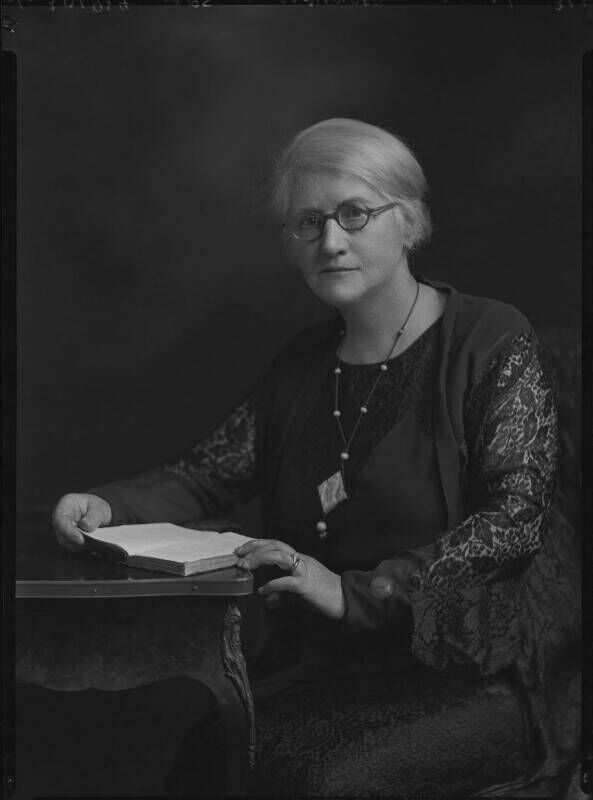
Annie successfully applied to Girton College, Cambridge, but, due to the sexist restrictions of the time, Annie was not allowed to receive the degree that she had earned.
In 1891, she began working at the Greenwich Royal Observatory, where she would meet her collaborator and future husband, Walter. Following their marriage, Annie had to leave her job, as married women were not permitted to work in the public service at the time.
Many of Annie’s contributions to popular journals were made in her husband’s name, to circumvent the oppressive gender norms of the day.
The couple recorded the first evidence of sunspot emergence and migration towards the equator over the course of a solar cycle (about 11 years) and, in 1898, Annie photographed the longest coronal streamer on record up to that point.
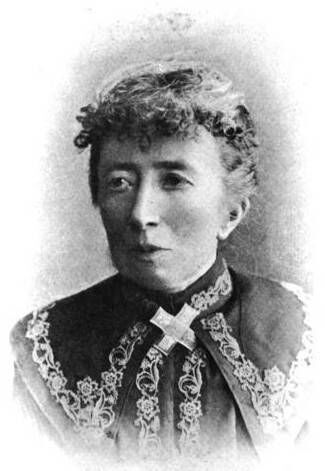
Agnes Mary Clerke was from Skibbereen, Co Cork and was born in 1842. Agnes wrote wrote many books, reviews, and articles, but her most famous and impactful work was undoubtedly her book ‘A Popular History of Astronomy during the Nineteenth Century’.
Clerke believed that the field of astronomy should be accessible to everyone. She went to far as to say the general public have an “indefeasible right of access” to the subject.
But these barely scratch the surface of Ireland’s contribution to astronomy and countless other scientific fields.
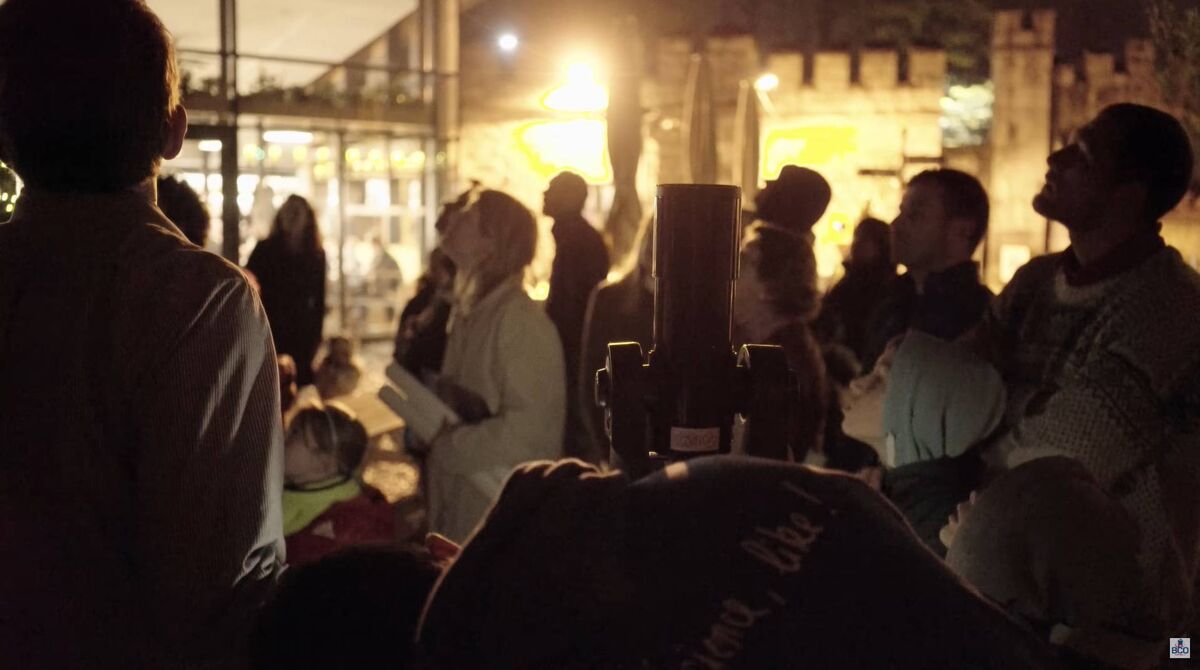
To this day, universities across Ireland continue to study our universe, while Irish scientists and engineers work on ground-breaking space missions with the European Space Agency. Rob O'Sullivan
Rob O’Sullivan says as curious as we are about what's 'out there', there’s another reason we look out, and that’s to look in.
“Few images have had such impact than the picture known as the pale blue dot, an image taken by Carl Sagan from Voyager 1 in 1990. As the spacecraft departed our planetary neighbourhood, astronauts turned back for one last look. Earth appeared as a tiny point of light. It is a tiny oasis in such a harsh universe and it really drives home how special it is, how lucky we are to have it, and just how important it is to take care of it.”
Over the week, the public can explore a space-themed festival of events and a captivating series of workshops, lectures, exhibitions, throughout the country. Full details can be found here.
(until October 31st) Astronomy Club’s Astrophotography exhibition will be in the Bandon Library during Space week. The exhibition includes shots of our Moon, galaxies and more. All photos were captured by CAC members. Bandon Library, Cork.
Dublin: STEM experts and researchers in the community and university will chat to members of the public about topic in which the STEM disciplines pay a key role. The highlight event will be communicating with the International Space Station live using amateur radio. 10 –6pm, TU Dublin City Campus, Dublin Cork: A huge space craft competition and display for kids and the wider community. 9-3pm, St Annes, Charleville.
Kerry: To celebrate Space week, Ballybunion library has collaged all their best space and science resources to enjoy. To get involved simply take out any space-themed book, DVD or other library resource during space week. Ballybunion Library, Sandhill Road, Co Kerry.
Kildare: Maynooth University play host to an all-age event to explore the vastness of space. Using stunning visualisation Maynooth University Astrophysics will examine star and planet formation, peer back in time with our physicists trying to imagine the very edges of our visible universe. TSI Building, Maynooth University, Kildare. 6.30pm until 8.30pm Saturday
Check out Space Week TV, with a selection of shows on everything from space art sessions to night sky guides hosted on the Blackrock Castle Observatory YouTube account.
Connaught/Midlands: A Satellite Communication workshop at Birr Library, NASA International Space Apps challenge in Athlone, and a Space Weekend at Galway Atlantaquaria exploring life on Earth and how it may evolve on other planets!
Munster: A public ‘Watch and Talk’ with SouthEast Astronomy at the Copper Coast Geopark Centre, a Space Adventure Storytime and Crafts at Tralee Library, and an MTU Space Open Day in Cork City hosted by Robin Ince of BBC Radio 4’s The Infinite Monkey Cage. There and Back Again a Universe’s Tale.

CONNECT WITH US TODAY



Be the first to know the latest news and updates