DNA database to be used to crack down on dog faeces in French town
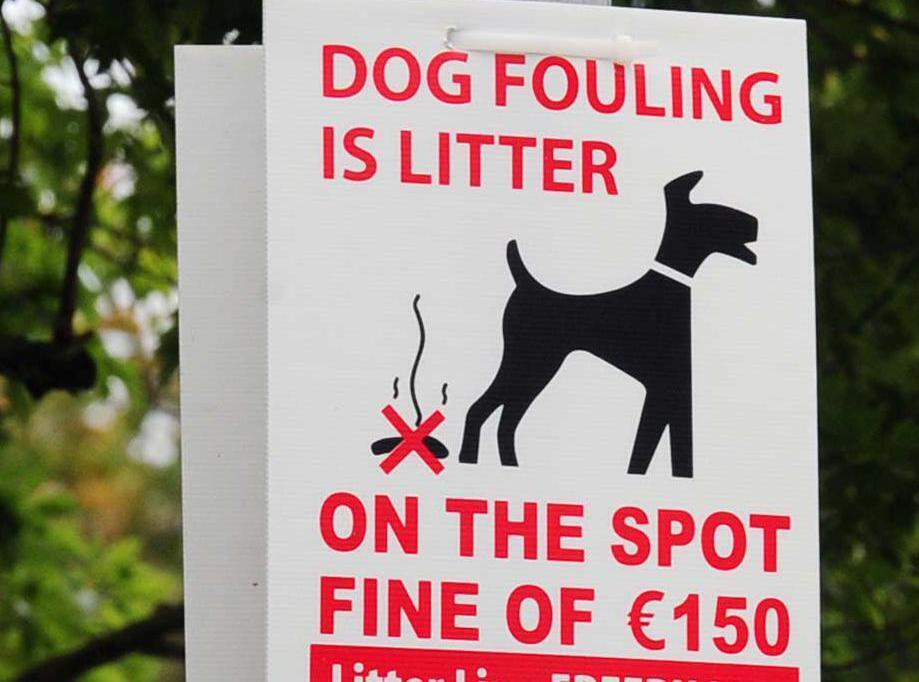
Section 22 of the Litter Pollution Act 1997 states that dog owners have to clean up after their dog if it fouls in public places: for example, public roads and footpaths, housing estates and recreational areas such as a sports ground or a beach
Dog owners in the southern French town of Béziers are to be required to carry their pet’s 'genetic passport' in a trial scheme to reduce dog excrement on the streets.
Local mayor, Robert Ménard — a former journalist and co-founder of Reporters Sans Frontières — says inhabitants and visitors are fed up with faeces on the town’s pavements. He plans to introduce a two-year experiment to trace and fine those who fail to clear up after their pets.
“We have to punish to make people behave better,” Ménard, elected on a far-right ticket in 2014 and reelected in 2020, told France Bleu radio.
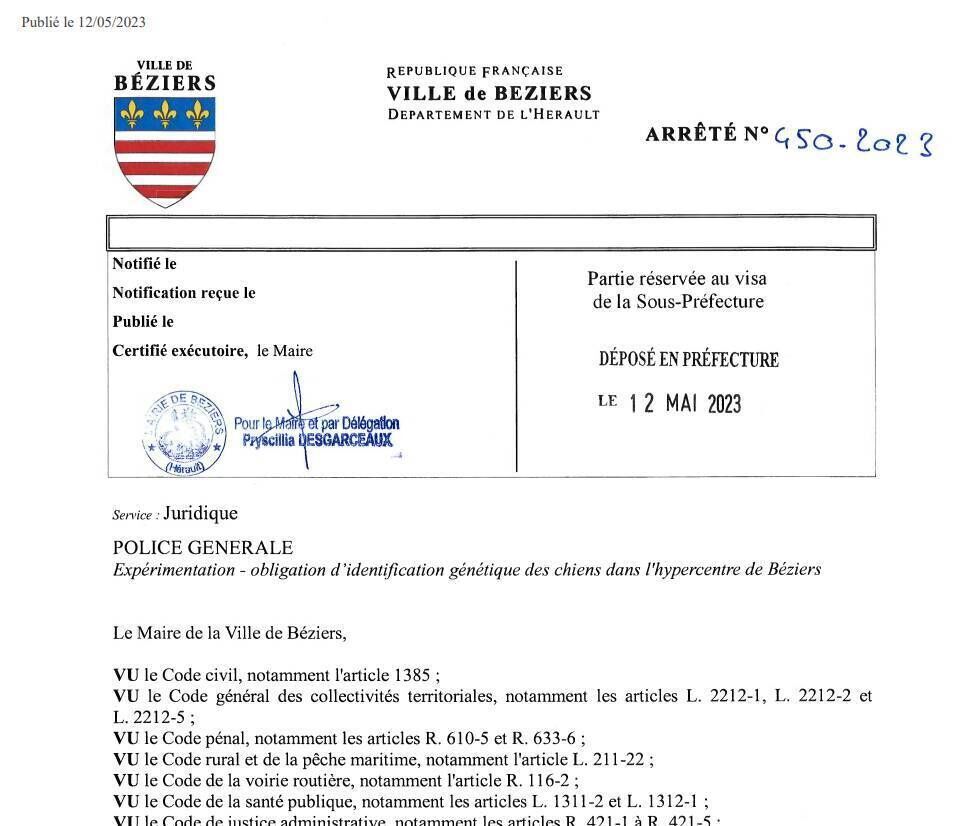
Under the planned scheme, dog owners will be required to take their pets to a vet or ask one of the town’s veterinary specialists for a free saliva sample, which will be genetically tested and a document issued. Those subsequently stopped without their dog’s genetic passport will be fined €38.
Dog excrement found on the pavement will be collected and tested and the details sent to police who will consult the national pet registers and match it to a specific owner who will face a bill for street cleaning up to €122, Ménard said.
Ménard first proposed collecting DNA from the estimated 1,500 dogs in the centre of Béziers in 2016 but his request was rejected by the local administrative court as an attack on personal freedom. The scheme was then estimated to cost €50,000 a year.
He said the new genetic passport measure was submitted to the local prefecture earlier this year and no objections to its implementation were raised this time.
Ménard told French radio: “I can’t take any more of this [dog] mess. The state has said nothing against this scheme this time and thinks the same thing. This has to be done and not just in Béziers… We need to penalise people so that they behave properly."
“We did a count and we pick up more than 1,000 messes a month, sometimes a lot more, just in the town centre. It just cannot go on," he explained.
He said the experiment would run until July 2025.
Ménard added: “There will be a certain lenience for those who are not from Béziers. If they pick up their dog dirt we won’t bother them. We’re not xenophobes. Foreigners aren’t the problem, it’s the locals who are not cleaning up.”
On Monday, September 11, a public meeting will be held in Béziers to explain the project. And then on September 15 and 16 there will be two days of free oral DNA samples. After these dates, dog owners will have to do it at their own expense at their vet.
Similar schemes have been trialled in the Spanish city of Valencia, Tel Aviv in Israel and one is planned for some parts of London.
The Dogs (DNA Databases) Bill is currently going through Parliament in Britain.
A dog excrement DNA project has also been planned here in Ireland. Leitrim County Council has said it intends to introduce DNA testing to identify dog owners who neglect to pick up dog waste deposited by their pets on streets, parks, walking trails and housing estates. The Leitrim Animal Warden will take samples of dog waste in areas with high levels of dog fouling and using DNA, match the samples with saliva samples taken from dogs in the same area.
As well as being unpleasant to step on and downright nasty to accidentally track into your home or car, contact with dog faeces carries a very small risk of toxocariasis, an unpleasant infection that can cause blindness and seizures. Also, the excessive levels of nitrogen and phosphorus in dog faeces can upset the delicate balance at certain sites, allowing plants such as brambles, nettles and hogweed to outcompete more fragile species that need low-nutrient environments to survive.
Leitrim County Council notes that: "In addition to dog waste being unsightly, it also poses a risk to health as it can contain bacteria such as E-coli and parasites such as round worm, the larvae of which can cause loss of vision. It has been estimated that a single gram of dog waste can contain 23 million faecal coliform bacteria, which are known to cause cramps, diarrhoea, intestinal illness, and serious kidney disorders in humans."
A similar scheme had been proposed in Cork but was ruled out by Cork City Council in 2022.
https://www.gov.ie/en/policy-information/1e785c-dog-control/#dog-fouling
— Guardian

CONNECT WITH US TODAY



Be the first to know the latest news and updates