Sky Matters: Without thermonuclear fusion there is no me — or you
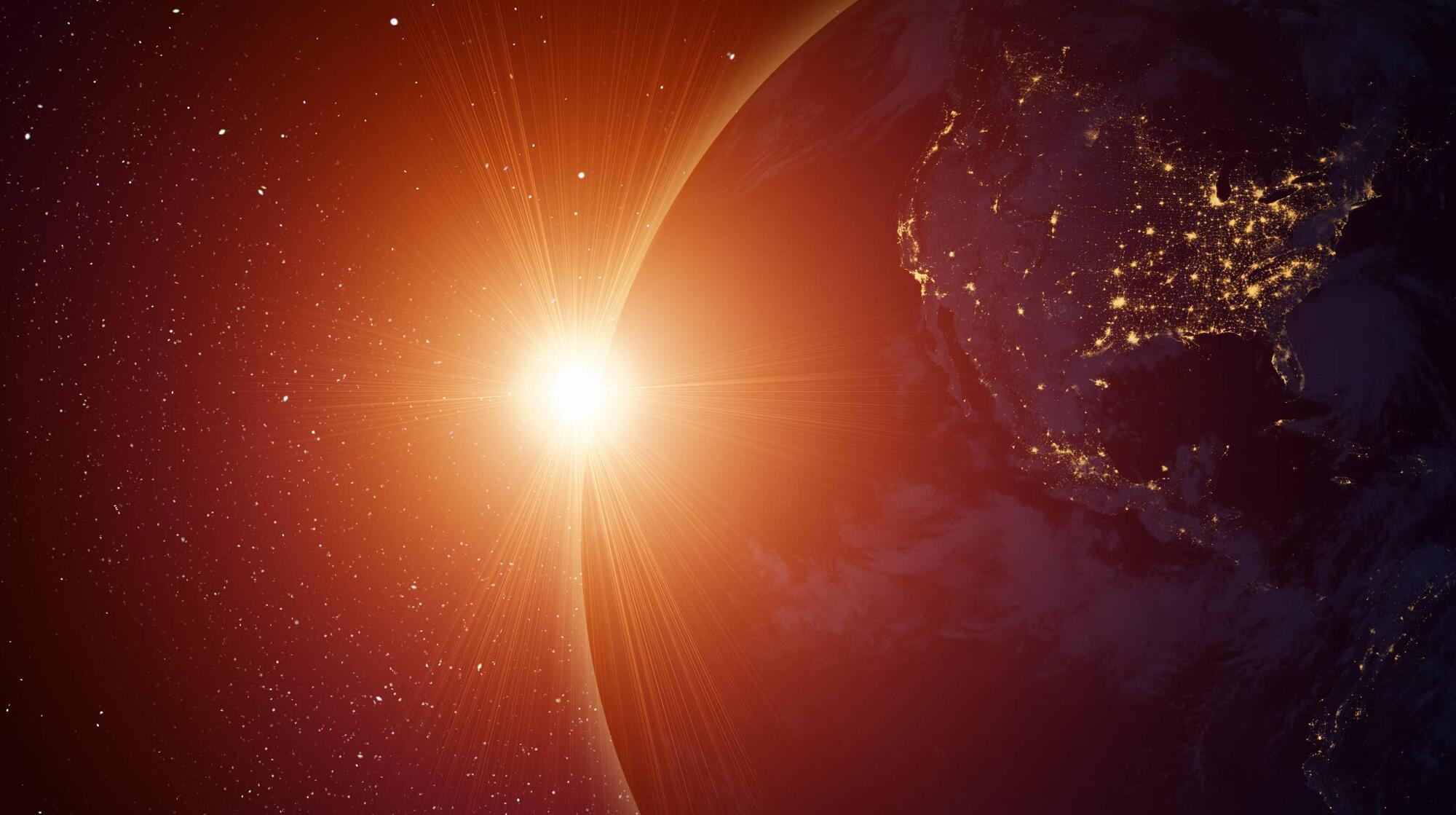
Calculations revealed that the enormous energy emitted by the Sun requires the fusion of four million tonnes of hydrogen into helium every second — but the Sun is big enough to do this for an incredible 10 billion years.
There has been a lot of news coverage recently about “thermonuclear fusion” following a successful demonstration of its capabilities at the Lawrence Livermore laboratories in the US.
Fusion is a process whereby hydrogen nuclei are smashed together at super-high temperatures of around 15 million centigrade, causing them to stick together (or “fuse”). The hydrogen is also converted to helium in the process and furthermore the process releases energy.
If we can capture this energy it can be used to power just about anything we wish. Since the net emission of greenhouse or toxic or radioactive pollutants is zero, thermonuclear fusion is both clean and safe.
The road to the discovery of thermonuclear fusion started in the early 20th century when astronomers asked the question: “How does the Sun and other stars shine?” You can calculate how long the Sun would shine if it was made from different materials — for example, if it was made of coal.
The answer is not very long – maybe a few million years, but astronomers already knew from other evidence found on the Earth that the Sun is at least 4.5 billion years old.
This led them to the realisation that the energy source for the Sun and the stars must be something we had never witnessed previously and ultimately led to the discovery of a new process they called thermonuclear fusion.
Calculations revealed that the enormous energy emitted by the Sun requires the fusion of four million tonnes of hydrogen into helium every second — but the Sun is big enough to do this for an incredible 10 billion years.
Astronomers were also able to calculate other interesting things like how long stars would last, and explain why some throw off layers of material as they get older and why some massive stars explode at the end of their life. In fact it also enabled them to calculate that black holes would be produced as a byproduct of the death of large stars.
On top of this, it became possible to show that stars don’t only convert hydrogen into helium, but they also convert helium to carbon, nitrogen and oxygen.
It wasn’t long before astronomers could show that every element that we find around us in our everyday lives (apart from hydrogen) were formed in the intensely hot and dense interiors of stars via thermonuclear fusion.
Thermonuclear fusion has had profound effects on the structure of our Universe.
Without it there are essentially no elements other than hydrogen, itself made in the first moments of the Big Bang some 13.7 billion years ago.
There are no stars.
The Universe is a perpetually dark place, everywhere at a temperature of about minus 270 centigrade — just a tad above absolute zero at minus 273 centigrade which is itself the coldest temperature possible. And with a Universe composed almost completely of Hydrogen there is no way for it to make the complex molecules that go into you and me. There is no us.
One might wonder whether thermonuclear fusion is a limitless source of energy. It is not.
There is enough hydrogen in our oceans to power our civilization for millions to billions of years, so we can be forgiven for calling it limitless.
Nevertheless, even stars like the Sun will eventually use up all their thermonuclear fuel and fade into a dark oblivion.
At that time the apparently eternal stars above will have been extinguished, never to return.
We live in a golden era. There is light and heat in our Universe. To us mere mortals it may seem like it lasts for an eternity, but to a universe with no known end it is a mere momentary episode enabled by thermonuclear fusion, but preceding an endless night.

CONNECT WITH US TODAY



Be the first to know the latest news and updates