Scientific study: dogs really can smell fear
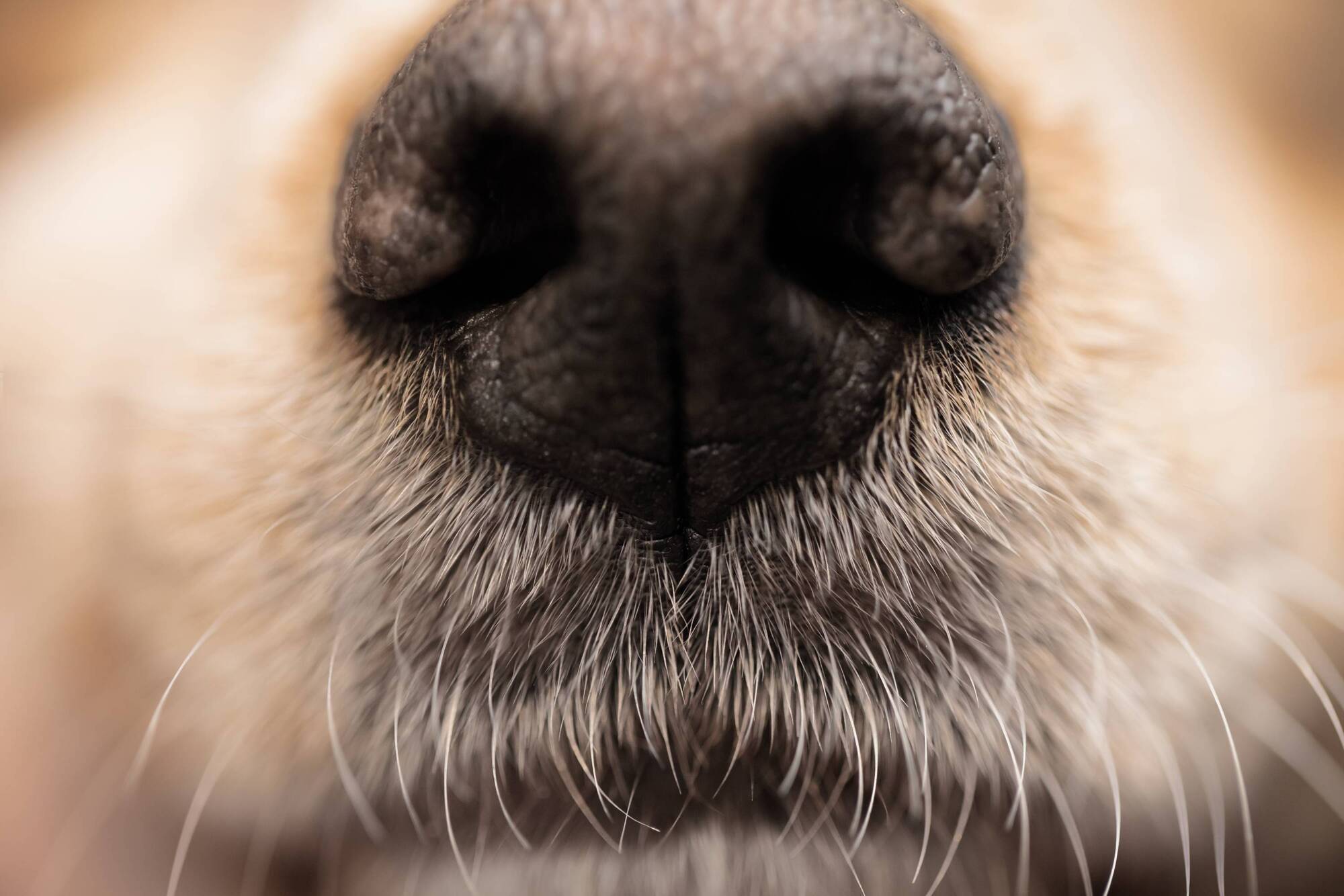
A new study has tested whether dogs can identify the scent of human stress or fear — it reveals that dogs do use smell to read the emotions of their owners
Colin Farrell was bitten by a dog on a film set recently. Such attacks are rare nowadays but encounters with ‘cross’ dogs were common during my childhood. If confronted by a ‘vicious cur’, the advice was: stand your ground, use eye-contact to stare the critter out, and then back off very slowly. That was easier said than done, but if you panicked you were ‘a gonner’. The descendants of the wolf, we believed, would smell your fear.
But could they?
Dogs have a language that everybody understands but almost nobody uses; scent. We model the world through sight and sound, with only the occasional input from the other senses. Indeed, we despise the smelly products of our skin glands and buy deodorants, perfumes, and after-shave lotions to smother them. Humans are almost unique among mammals in treating scent as the poor relation.
Our furry relatives live in a universe of odours. To them, smelling is a prime communication medium. From tiny shrews to huge polar bears, all rely on scent for survival. Your dog sniffs at lamp-posts and pees 'replies' to previous doggy messages at every stop. Canine olfactory virtuosity is prized by police, security guards and customs officers. The Saint Bernard dogs saved people trapped under snow. Helping diagnose disease is a new-discovered doggy skill.
Scent is detected using odour-sensitive membranes folded within our nasal passages. Opened out, these organs would cover an area of about 5cm². Your dog’s membranes reach 200cm²; its ability to detect odours is in a different league to yours.

Anxiety and panic attacks induce chemical changes in our bodies; substances are released which are detectable in sweat and breath. But can a dog sniff them out and, if it can, is it able to infer a person’s emotional state and alter its behaviour accordingly?
Are dogs afraid of thunderstorms or are they responding to fear they detect in their human companions?
Clara Wilson of The Queen’s University Belfast has tested the theory. She and colleagues collected samples of sweat and breath from people subjected to stress. Individuals were tested first when relaxed. Then they were put under pressure, by being required to solve problems in arithmetic, following which further samples were taken. The feelings of stress reported by the individuals were correlated with their responses measured physiologically, such as heart rate and blood pressure.
Samples, taken from 36 people who responded stressfully to the arithmetical tests, were exposed to four dogs which had been trained to discriminate between odours. Each dog was introduced to a line-up of sweat and breath samples. Initially, a dog was exposed to a sample taken from an individual when stressed, together with two blank samples. Then it was offered a sample taken when the individual was relaxed together with one when stressed.
All four dogs were able to identify the ‘stressed’ samples and did so with 90% to 97% accuracy. That they can sense fear is no old wives' tale. Like Goldsmith’s ‘boding tremblers’, who ‘learned to trace the day’s disasters in his morning face’, dogs use smell to read the emotions of their owners.