Richard Collins: Hyper-vigilant hares have almost all-round vision
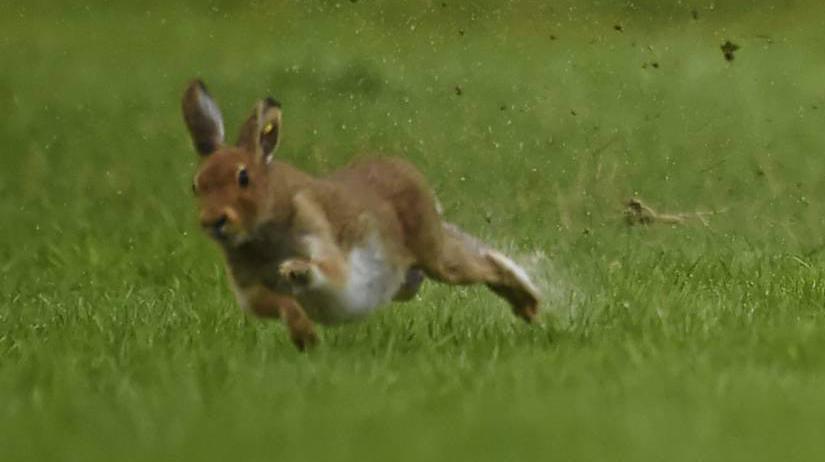
Irish hare — the main threats to this creature are dogs, human disturbance and vehicles. Picture: Stephen McCarthy / SPORTSFILE
The remains of a long dead hare were found in County Waterford. DNA analysis showed that the animal had lived about 28,000 years ago.
Hares managed to survive here when many other creatures went to the wall. They have been so successful that a uniquely Irish species has evolved. Their defensive strategy has paid off.
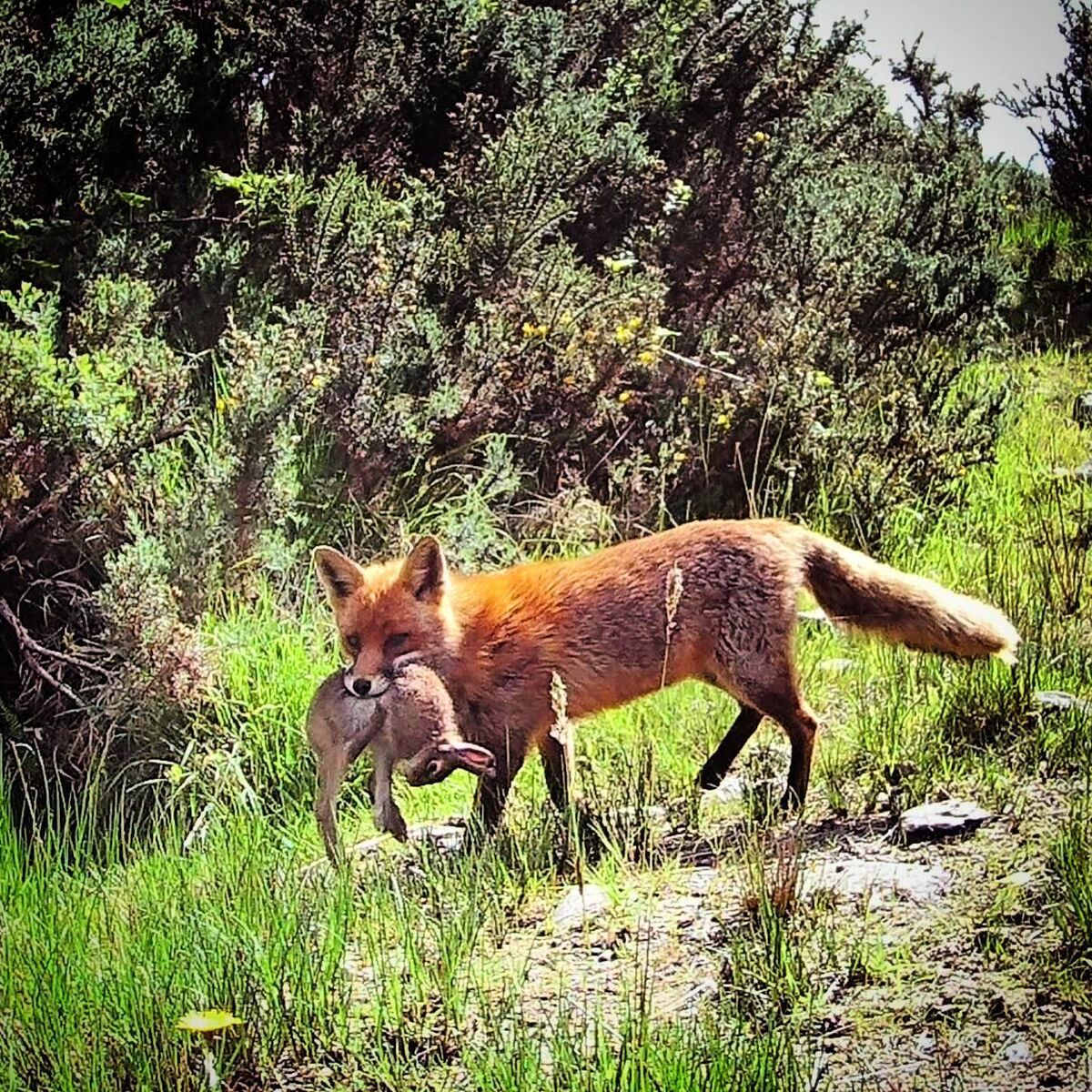
‘Discretion is the better part of valour’ is the hare’s guiding principle. With almost all-round vision, amplified by an upright posture, it can spot an enemy approaching in the open habitats it frequents. Then, powerful hind legs carry it out of danger. A hare may even display to an approaching fox, knowing that the fox won’t bother trying to outrun it.
But this hyper-vigilant strategy comes at a price. Radar-like scanning, and constant processing of the information it provides, require a relatively large brain. To flee or not to flee, that is the question; a wrong decision could be fatal. But false alarms result in unnecessary flights, wasting valuable energy. It’s a kind of dilemma familiar to people. ‘Faint heart never won fair lady’ and ‘nothing ventured is nothing gained’, but ‘fools rush in where angels fear to tread’ and ‘it’s better to be safe than sorry’ etc.
Few creatures rely so exclusively on such an expensive defence. There are alternatives which don’t require costly brain development.
Frogs, like hares, have powerful hind legs. Being able to jump several times their body length can get them out of tight corners. Some frog species, therefore, adopt the early-warning cognitive approach beloved of hares. Others don’t; they rely on camouflage and being inconspicuous to keep them out of harm’s way. Some even alter their colour to suit the environmental background.
But while ‘crypsis’ demands less energy and a more modest brain, it too has a downside. A camouflaged creature is confined to locations where its cover is effective. Being unable to venture out of its comfort zone, a frog’s access to food may be restricted. Nor is camouflage helpful at mating time; potential partners are more difficult to spot; breeding opportunities may be lost.
Biologists at the University of Zurich have studied the evolution of predator avoidance in 49 frog species. They photographed individuals in their typical habitats. The pictures were shown to a panel of 10 people who rated the frogs’ conspicuousness and the effectiveness of their camouflage. The results were compared to the predation pressures the creatures faced.
Analysis showed that frog species living in locations where there are many predators rely mainly on camouflage for protection. Those living in environments with fewer predators opt for the vigilance-and-rapid-escape approach.
Irish hares and frogs provide perfect examples of these adaptations. Hares had to run the gauntlet of wolves, foxes, and large birds of prey — not that wide a range of predators. The large brain and rapid response strategy suited them. The wolves are gone but there are new challengers. Although buzzards take the odd leveret, the signifcant threats are dogs, human disturbance and road vehicles. Hares, ominously, have disappeared from Dublin’s Phoenix Park — nor do you encounter them nowadays on Bull Island.
CONNECT WITH US TODAY



Be the first to know the latest news and updates