Islands of Ireland: A restful sleep at King’s Island, County Longford despite feral goats
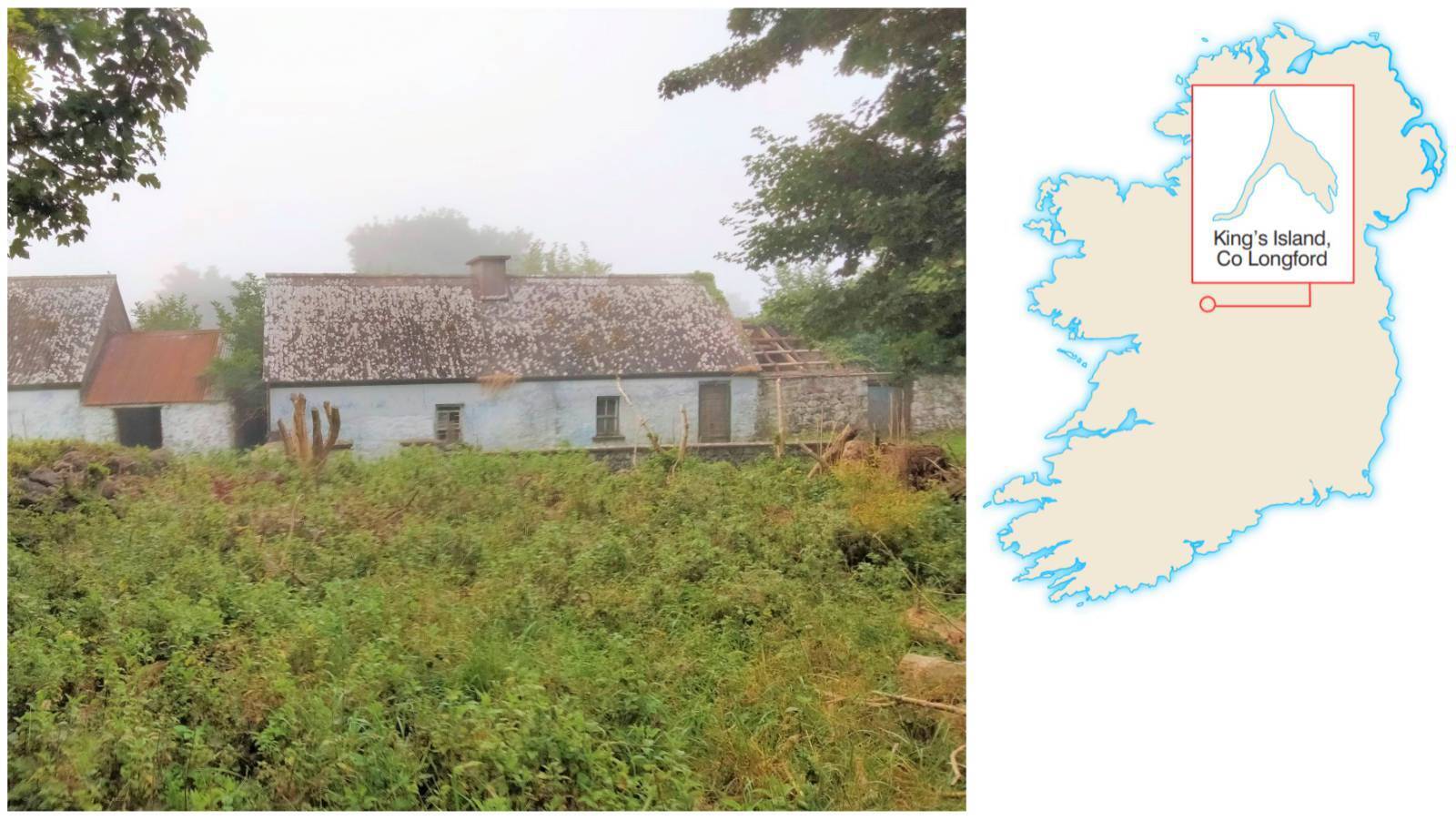
The 'street' on King's Island, County Longford on Lough Ree. The island was home to two families in the mid-20th century: The Hanleys and O'Haras. Picture: Dan MacCarthy
It is inevitable that this column will follow in the footsteps of botanists, philosophers, photographers, writers and artists and hopefully glean a little of their insights along the way. Robert Lloyd Praeger visited Clare Island for his monumental analysis of its flora and fauna; philosopher, Ludwig Wittgenstein, visited the County Galway island of Inishbarna; and travel writer, Paul Clements, visited King’s Island, County Longford and himself travelled in the footsteps of travel writer, Richard Hayward.
To set foot on the same island as such august souls is a sobering thought: the over-arching question being, is there anything left to write about?
Clements landed on King’s Island as part of his research for published two years ago. And to continue the theme of continuity, he was brought to the island by the nephew of one of the last inhabitants:
King’s Island is part of the Black Islands archipelago on Lough Ree in the River Shannon which as well as itself comprises Nut Island, Long Island; Sand Island; Horse Island; Red Island; Girls’ Island; and the Brearoge Islands. The archipelago lies just to the east of Rindoon Peninsula halfway up (or down, depending on your perspective) on the western shore of the Lough. This is a fascinating peninsula in its own right with the ruins of a medieval village. The archipelago is shared among three counties: Longford, Roscommon and Westmeath. The lough is just under halfway from the source of the River Shannon at Shannon Pot, County Cavan, to its estuary in County Limerick.
About the only way to live up to these illustrious figures is to spend the night on the island and record some impressions. So, in that sense, this is a 'live' report. Arriving as the sun falls from Rindoon Peninsula is a dislocating experience as the Black Islands seemingly present a continuous line of wooded shoreline, not vastly dissimilar to the Florida Everglades. A quick visit to the swampy Brearoge Islands is the precursor for arrival at King's Island.
One of the houses appears into view as the kayak drifts in. A heron settles into its nest at the top of a tree. Several groups duck scoot past just above the surface. The lake attracts several species including common scooter, great crested green, pigeon, teal, and tufted duck.
A series of old stone 'slips' were the means of landing for the long-gone Hanley and O'Hara families. The slips lead to a derelict garden which is lined by massive ash trees. Opposite is the village 'street' with just two main houses, each with a shed for animals. At the end of the street is a complete ruin, in contrast to the other houses which are in apparently good condition. Doors padlocked. Through a window can be seen an old bed, wardrobe, wallpaper, fireplace, and some personal effects as if the owners departed in a hurry.
Clements writes that the families made their living from eel and trout fishing. He returned to the island in the company of Paddy Hanley who lived there with his aunt and uncle from the mid-50s before leaving for good in 1985.
"T'was a normal enough life I suppose," Hanley tells the writer. "You just got on with a bit of farming and fishing. There was no running water or electricity, they never had it on the island. My uncle and aunt were happy with their life, though they hadn't a lot."
Hanley forms another continuity to the story as he had met the earlier writer, Hayward, in 1939 when Hanley was aged four. Clements says that the place seethed with memory.
As the stars come out, it is time for the leaba. A disturbance behind a cypress tree turns out to be a pair of feral goats. Next morning, an early departure after a restful sleep is the order of the day. The islands are enveloped in fog but a trusty navigation app returns the visitor to base. A family of swans cruises past, white on white.
: No ferry. Inquire at Lecarrow Harbour — or kayak, being mindful of the need to powerhose kayaks in advance to stop the spread of invasive species.
: by Paul Clements, Lilliput.

CONNECT WITH US TODAY



Be the first to know the latest news and updates