Juanita Browne: Carnivorous plants, reptiles, newts — and so much more in our bogs
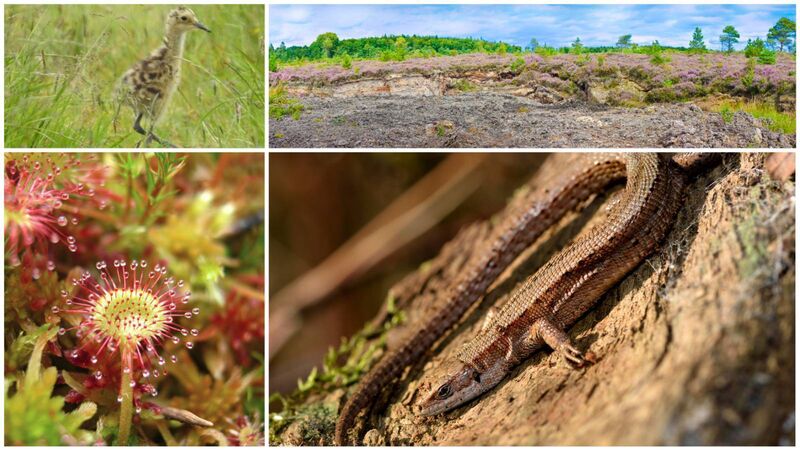
Clockwise, from top left: A five-day-old curlew chick. Picture: Joe Shannon; Irish bog peat layers; the common lizard, Ireland’s only native reptile; and round-leaved sundew, Drosera rotundifolia — a small carnivorous, or insectivorous, swamp plant
I went to the bog just a few times as a child, with my uncle and cousins. I think I was about eight years old, and all that mattered to me was that I got to hang out with my favourite cousin, who didn’t seem as excited as I was when we all squeezed into the car, and the trailer was hitched on.
All I knew was that a big picnic had been packed, and we were all going off for the day, and the sun was shining. Of course, us younger kids were no help at all — we just ran around the bog lanes and played games, while my uncles and the older kids worked hard footing the turf.


CLIMATE & SUSTAINABILITY HUB
CONNECT WITH US TODAY



Be the first to know the latest news and updates
![<p> The International Union for the Conservation of Nature says that “an ecosystem is collapsed when it is virtually certain that its defining biotic [living] or abiotic [non-living] features are lost from all occurrences, and the characteristic native biota are no longer sustained”.</p>](/cms_media/module_img/9930/4965053_12_augmentedSearch_iStock-1405109268.jpg "<p> The International Union for the Conservation of Nature says that “an ecosystem is collapsed when it is virtually certain that its defining biotic [living] or abiotic [non-living] features are lost from all occurrences, and the characteristic native biota are no longer sustained”.</p>")
