Islands of Ireland: Manx shearwater puffins thrive on Cruagh Island but dogs haven't fared well there
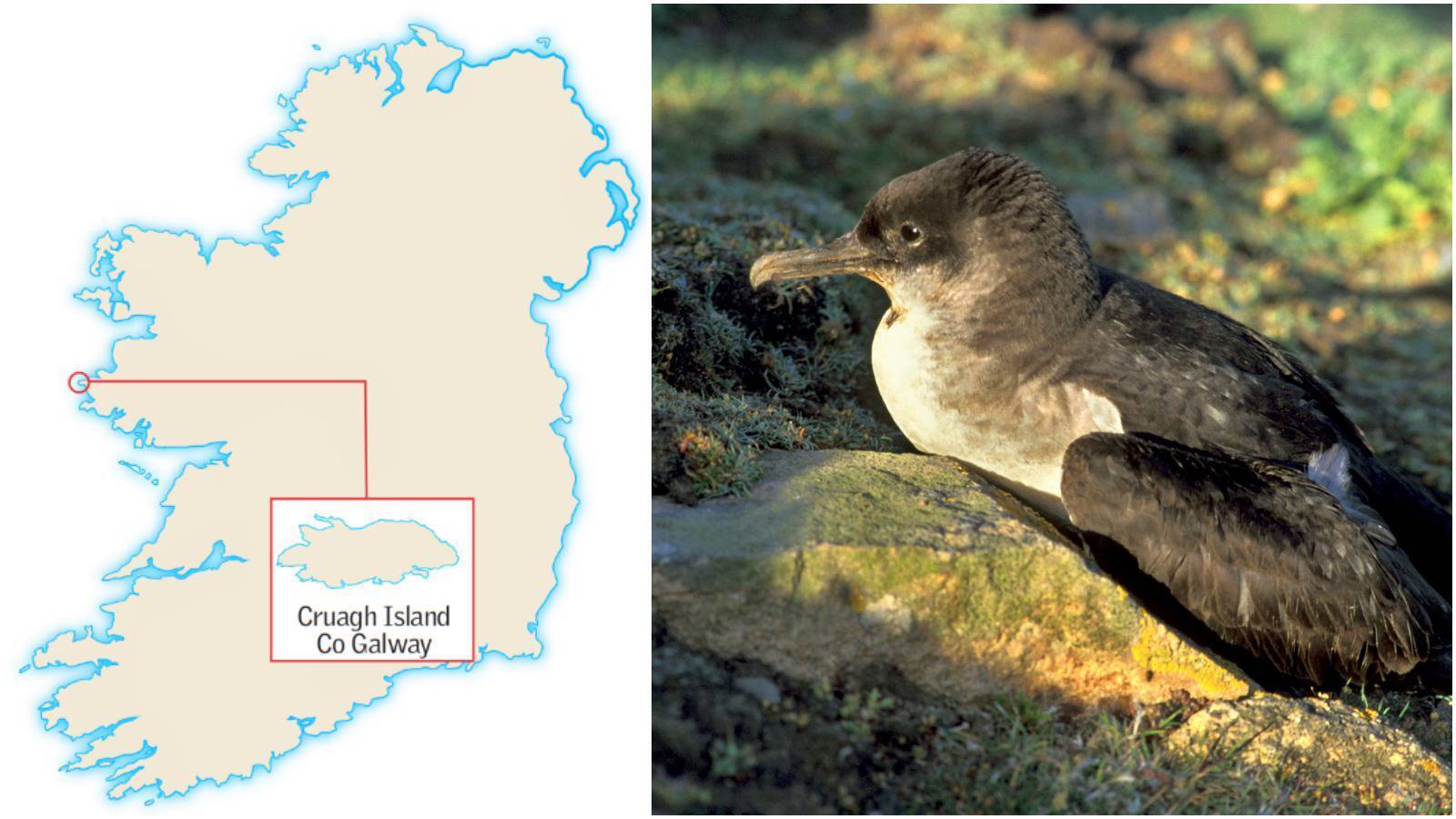
Cruagh Island, County Galway: a renowned site for the Manx shearwater which has been the subject of an in-depth study by UCC ornithologists
Here is a mini-archipelago that has attracted monks and poets and many others for more than 1,000 years. Even the occasional island hunter.
About 5km from Cleggan in Co Galway lie three islands of similar size that if seen from the mainland, as the sun sinks, just cry out to be visited.Â
They are situated just to the south of the glorious Inishbofin and the now-abandoned Inishark.
The low-lying Friarâs Island has as yet eluded a visit from this columnist; the well-named High Island was the site of a still-extant abbey dating from the seventh century.Â
The monks are long gone of course, but their legacy lives on: A hermitage, church, and cross-slabs testify to their piety.
The poet, Richard Murphy, owned High Island for about 30 years up to 1999 and sailed these waters for many years.Â
Cruagh is an 83-acre island to the south of High Island which is exceedingly pleasant to visit.
Over the centuries it has been written as Cruagh-ar-Nimay, Crua, Crooa, and Cruadh.Â
John OâDonovan writes for GalwayLibrary.ie that the above lengthy name probably derives from âair n-aghaidh Iomaigheâ which would have been the âcruachâ or âstackâ opposite Omey Island.Â
He also writes that the island was referred to by the 17th-century Irish historian James Ware in Latin as âInsula Cuniculorumâ or âIsland of the Rabbit Warrenâ.
Though there is no record of anyone ever having lived on the island it is reasonable to speculate that the monks of High Island may have availed of it, perhaps even as the location of an oratory.Â
There is one archaeological record for Cruagh which refers to a hut site on the north side.Â
This may well be the same spot to which OâDonovan refers as âCaibidil na mBratharâ or the Chapter of the Friars, where, according to tradition, the friars of Illaunnambraher (Friars Island) held a chapter (a meeting to advise the bishop).Â

The island was once reputed to be a bane for dogs which died soon after landing there.
The island is a renowned site for the Manx shearwater which has been the subject of an in-depth study by UCC ornithologists.
The group of islands has long been a target for daytrippers from Cleggan.
The newspaper reported in 1850, in a region barely out of the Famine, how âthe good, humane, charitableâ landlord Dr Magee arranged a day trip to the islands.
The Reverend Anthony Magee possessed 203 acres of land in Connemara including on the islands of Cruagh, High, Friar.Â
Of the occasion of this trip the writer for the newspaper didnât hold back in his euology to the good reverend: âThe good humane, charitable landlord whom Connemara hails as the morning star of its prosperity had it arranged to take possession of that portion of his property composing High Island, Cruagh and Friars Island.âÂ
The reverend invited up to 30 of his friends to join him for a âcold dinnerâ on one of the islands having âtaken care to send out stacks of bread and plenty of beer for his tenantry who it was rumoured intended to meet him and compliment him on the occasionâ.
A very evocative description in ornate language described âthe sea studded with boats, some wafted by the âwinged sailâ, the others plied by the oar, and leaping beneath the strokes of the hardy native".
The article enthused about a long row of well-cooked mutton, "as of good a quality as you could wish to see and a very large supply of as fine beef and bacon as my eyes ever beheld".Â
The picnic was complete with lashings of âgood whiskey, punch for a washdownâ.
Safe to say, that the provisions were of a richer fare than those consumed by the monks a thousand years before this trip, though probably not as satisfying.Â
Having alighted on Cruagh, the reporter noted an island of âgreat beauty and choice pasturage, though not possessing the attractions for the antiquary for which High Island is conspicuous".
Inquire at Cleggan pier or kayak from there.