Richard Collins: Roadkill monitoring identifies wildlife most often killed on roads
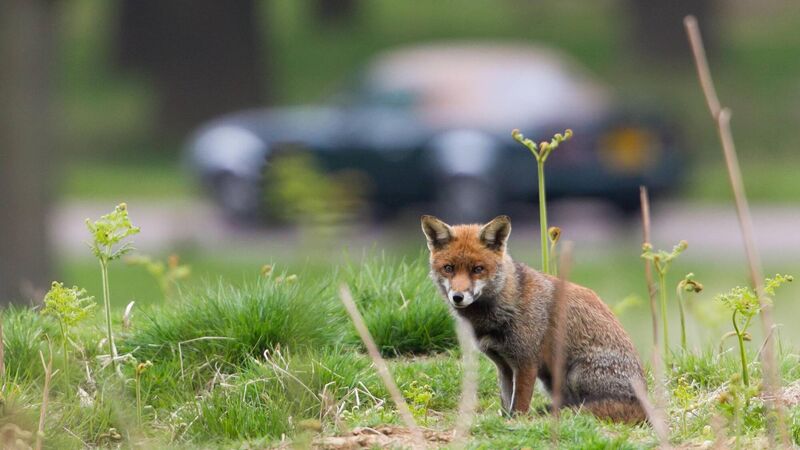
Foxes are among the mammals most frequently killed on European roads
We have 2.2 million registered road vehicles in Ireland. There are 1.4 billion worldwide and numbers are increasing relentlessly. Transport takes a huge toll on wildlife everywhere, but determining the number of victims is notoriously difficult. ‘Dieren onder do weilen’, ‘Animals under wheels’, is a Belgian citizen-science roadkill monitoring project.
Flanders, with 478 inhabitants per km2, is one of Europe’s most densely populated areas. It has over 5km of road per km2, an extremely concentrated network. Some 70 million kilometres were driven on Flemish motorways in 2019, the year prior to the COVID -19 pandemic.
Beginning in 2008, citizens were asked to keep an eye out for carcasses along roads and report any found to ‘Animals under wheels’, for inclusion in a roadkill database. From 2013, participants were encouraged to use a standardised method. They were invited to select a stretch of road and check it for victims once every two weeks. Most importantly, a report had to be submitted even if no carcass was found. About 6% of the survey data gathered was generated from these ‘transects’.
According to a paper just published, almost 90,000 records were logged by over 4,000 citizen-scientists between 2008 and 2020. "A small number of users contributed most of the records," the authors note.
Surprisingly, roadkill reports declined in Flanders over the decade, even though the number of people participating in the survey increased during the period. Road improvements, such as fencing and underpasses to discourage animals from venturing onto roads, may have helped reduce the carnage. However, there is a more ominous possibility; with declines in wildlife populations generally, it may be that there are progressively fewer animals left to kill.
"Over 147,000km of transects were monitored, resulting in 1,726 mammal and 2,041 bird victims," say the authors. Photographs were submitted with many of the reports. Senders had correctly named 98% of the creatures shown in them. "This high proportion of correct species identification is an indication of the quality of the database."
There were differences between casualty lists generated from transects and those derived from opportunistic reports. Blackbirds, for example, were "ranked third by monitoring from the car but first on other lists." The species is believed to have the highest roadkill mortality in Western Europe. Foxes came in second on the mammal list, but only 6th in transects by car and 9th in bike transects.
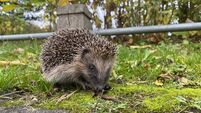
The paper identifies 17 particularly vulnerable mammal species. Hedgehogs, foxes and red squirrels were the most frequent victims. The number of polecats found dead on roads declined over the decade but there were increases in the casualty rates of seven species, including roe deer and wild boar.
The authors are ‘up front’ about the survey’s limitations; there are biases in the data. Carcasses of large creatures, for example, are more easily noticed, and take longer to decompose, than those of small ones, but they may be removed more promptly by local authorities. Small victims’ bodies are soon dispatched by carnivores.
‘The detected and registered roadkill observations’, the authors conclude, ’are only the tip of the iceberg’.
- Kristjjn Swinnen et al. 'Animals under wheels: wildlife roadkill data collection by citizen scientists as a part of their nature recording activities'. Nature Conservation. 2022.


CONNECT WITH US TODAY



Be the first to know the latest news and updates