Damien Enright: Travel is a great education that teaches more than just geography
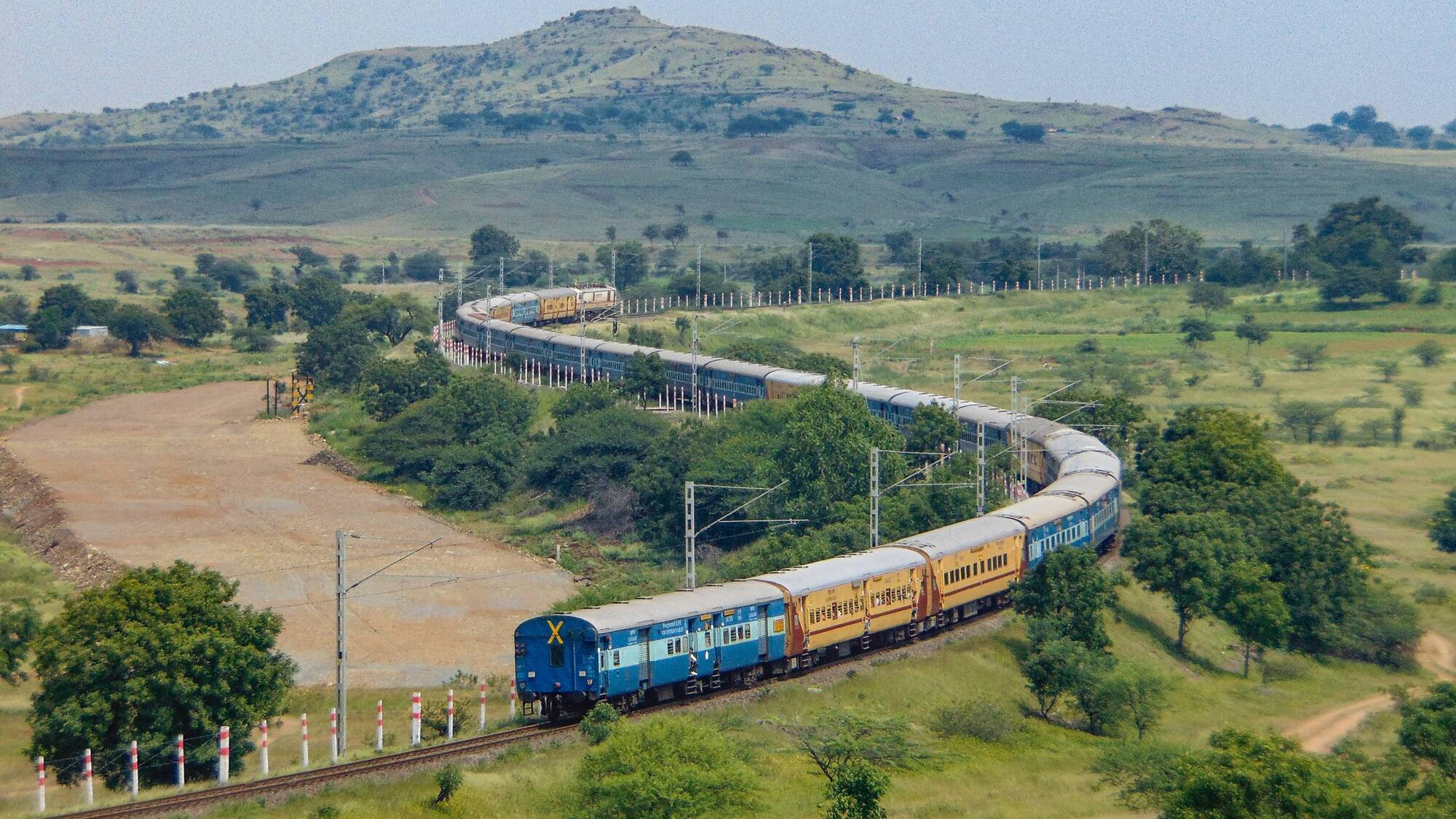
A train making its way through the Indian countryside. Picture: iStock
When I meet kids, and ask them what they'd most like to do, the answer is almost always "travel..." Travel before college or after college and before starting "work". This is as true of my grandchildren as it is of the "kids next door". Where? I ask my granddaughter, Tilda. "Colombia and Bolivia, I've saving up by working nights..." Well done, girl, I say.
I've always travelled. My pre-teenage grandchildren, the bouncing half-Czechs, once asked me to list the countries I've visited and which one would I recommend to them. Well, some of them they could no longer go to, not now anyway. I'd like to tell them that a ride in a 30-year-old Russian Volga taxi from Peshawar in Pakistan through the Khyber Pass to Kabul is an iconic experience, or to cross the Pyrenees at night with no walk map, just a pocket compass and a small torch, is fun, but I wouldn't want to be getting them into trouble.
I would tell them, however, that travel is a great education, and it teaches more than just geography. Travel teaches tolerance, an invaluable attribute in today's often intolerant world. It was a sign I once saw in an Indian railway station but didn't understand it until some years later my wife and I took a railway journey from Agra to Londa in Karnataka with two of our sons, the youngest aged eleven, the other at university age. It doesn't just teach tolerance, but it teaches resignation as surely as might any Zen master. Independent travel has always worked for us but on that journey, some professional info might have helped. The following is taken from an article in The Irish Times. It's how the teachers learnt a lesson.
In the 1960s, questing souls sought enlightenment at the feet of Indian gurus. A faster track to wisdom might have been a week on Indian trains.
In India, 11 million people of all classes are travelling on trains at any given moment of night or day. A pink Irish family, with a son of twenty and a son of eleven, we travelled 6,000 miles amongst them. We enjoyed meeting the many Indians of all castes and classes that we met on trains, and they enjoyed meeting us. We were already subscribers to the creed of tolerance – otherwise, we'd have been fish out of water in India – but Indian trains were a PhD-course in "resignation". If wisdom is learning to resign oneself to what can't be changed, then we returned to Ireland a highly enlightened lot.
Today – I wrote – we are travelling from Agra, city of the Taj Mahal, to Goa, the one-time Portuguese colony on the Arabian Sea. We are on the Goa Express, second class sleeper carriage, A/C [air-con]. My wife and I have been in India before and travelled its length and breadth: we are 'experienced' — we think.
Indian trains are marvelous but information is hard to come by. Stations teem with travellers; ticket windows are small, surrounded by unruly queues. Documents, naming the train, its number, the passengers' names, age and sex must be filled in. According to the platform information the trip will take 24 hours. Our first night aboard the train has passed. It is mid-morning, of the next day. We discuss our arrival time, 5pm at Vasco de Gama station. From there we go south to Benaulim beach not yet developed. Maybe we'll catch a swim a swim before the sun sets.
Hearing our plans, the man opposite sympathetically rolls his head in a way that tells us there is bad news coming. The news is that we have been misinformed. Notwithstanding that the train is it called the Goa Express, it does not go to Goa, and, regretfully, it is not an Express. It is bound for Londa, 100 miles east of Goa. It is a slow train. We will de-train not 5pm today in Goa but, in the middle of the night, 4am tomorrow, in Londa.
We have in fact been hugely enjoying, and have remarked upon, the leisurely progress of our Express train. No rush, apparently. We have been sitting in the sun in the open door of the carriage that contains our compartment, watching India go by. We now know that, like it or not, we have another 16 hours to enjoy the views. To de-train at the next stop and hail a taxi to ferry us a few hundred miles is out of the question and there are no track-side airports, even if we could afford a flight.
We decide that “The reward is not in the arrival but in the journey..." (as the guru said).
Meantime, India's ever-changing tapestry of colour, event, villages and landscapes unfurl outside the train windows and inside them, we move about between carriages and meet interesting people and they meet us. We are travellers in a capsule detached from time; we have no option. We have deadlines, no promises to keep or miles to go before we sleep – we have nowhere to go except back to sit on the running board in the sun or to sit in our compartment or another and converse with fellow passengers.
On the Londa slow-train, there is no hurry. The sooner we embrace resignation, the sooner will we profit from the situation. Resignation we know, can be a transforming virtue.
Goodbye preoccupations with arrival time. What will happen in Londa, at 4am is obscure and unworthy of speculation. Nobody has a map on which Londa appears. The ticket collector wallah, the sole authority aboard, has no suggestions as to how we might reach Goa from Londa Station. He is a nice man, but to advise us is not in his 'competence', he regretfully says.
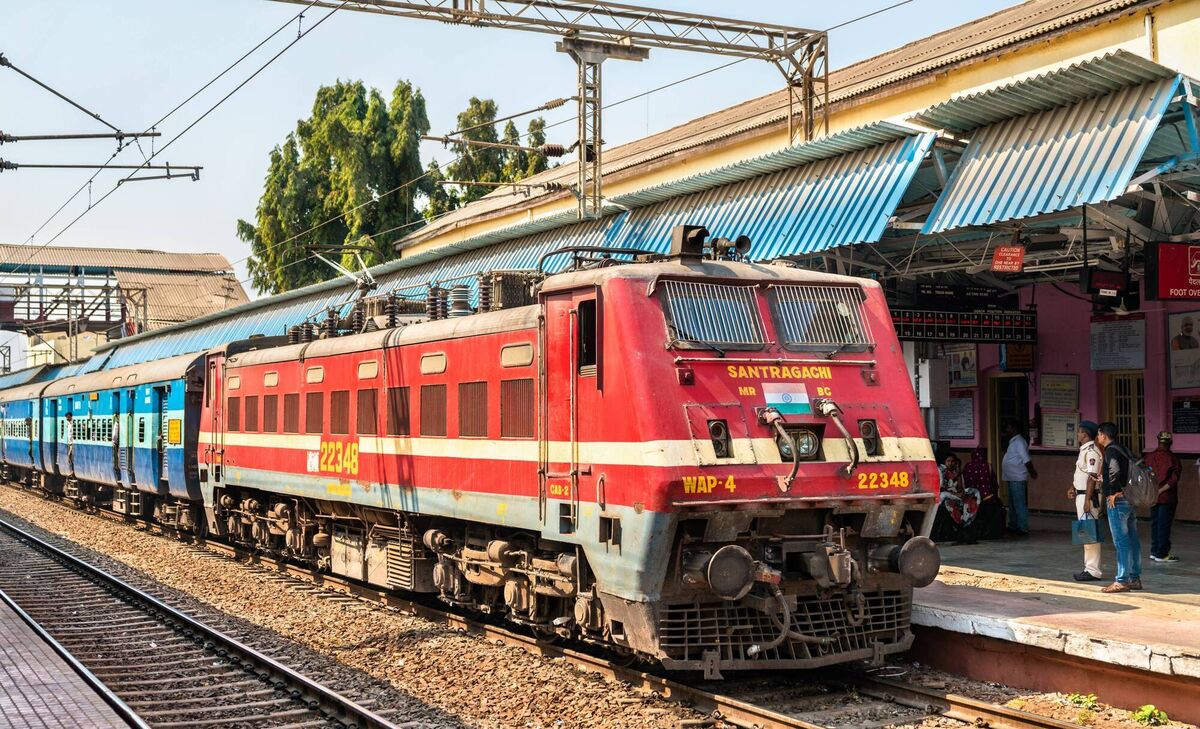
Up front, the big, tank-like locomotive plunges on. Back at the open door, the boys and I enjoy the last sun as it descends over the Deccan and the landscape and its villges resign themselves to night. It's our second train night; soon, we know, we'll see oil lamps twinkling in track-side hovels and know that, in the vast darkness, there are other lives.
The sleeper carriage waiter comes around. We order dinner, a curry affair. The veg is better than the meat. After we've finished and the dishes are taken away, fresh sheets and pillows arrive. Junior son does his Irish schoolwork. We bed down early; the bunks are comfortable. The TC promises to call us at 3.50am.
Londa station is illuminated by a single naked light bulb. We can pick out a chai stall, and persons sleeping on the platform here and there. We sip chai of tea brewed with milk, sugar, and spices – an invigorating brew - as we negotiate ongoing transport with drivers. The usual commission-seeking middlemen intervene. Having negotiated £25 for the 100-mile journey, we climb into a rickety camouflage-green jeep for the four-hour drive to Goa, over the Western Ghats.
On the front bench seat, I sit knee-to-knee with the driver, who has warned me to stay as far from the door as possible because he says, the doors are “unhinged". On the road, he dodges unlit farm-carts, bicycles and buffaloes, and takes hair-raising risks passing trucks. In the darkness behind me, the family is silent but sanguine, bundled together against the airflow through the sprung doors.
Then, joy of joys, we stop at a village on the Karnataka-Goa state border where there is not only a tea shop but two tiny booze shops, open at 6am, selling Indian beers and grog. Karnataka, devoutly Hindu, does not allow the sale of alcohol; Goa – as Catholic as Ireland – certainly does.
With great gusto that I pour a stirrup cup into my chai masala. It brightens the already brightening day. Thirsts sated, and now wide awake, if frozen, we ride on, warmed internally, to Benaulim. There, at 9am, we re-rent our two pleasant rooms amongst the gardens and the hovering sunbirds, with balconies and one en suite bathroom at £8 total per night. Benaulim, a village in the coconuts alongside pristine miles of sand, is a place we know, having stayed there two weeks before.
The beaches we lived on in north Goa in the 1970s, are already changed, lined with beach-shack restaurants, crowded with package tourists, infested with traders that arrive with ragged bundles from the hinterland of India to hawk the contents to tourists and bring home, perhaps many days walk away, pockets full of rupees.
Our eldest son, who 20 years before was carried over those sands in his mother's womb, rents a motorbike to make a young man's pilgrimage. There are, he says, still some 'jungle raves', and that the relict hippie population, although intimidated by the 'hippie cleansing' police, still dance beneath the diamond sky, and forget about today until tomorrow. Calingut, Anjuna and Bhaga, those empty beaches that his mother and I once wandered, have undergone "sterilisation" into package-holiday venues. Benaulim beach is 30 miles farther down the coast. We'll have to go yet farther next time.
In our guest house, it turns out that a power cut has shut down the quaint bathroom water heaters this morning just when, after 72 hours travelling, we especially need a shower. But "travelling teaches resignation", our home-made mantra, consoles us again. Towels under arms, we set out for the beach, crossing the paddy fields, with the paddy birds and the chestnut breasted kingfishers, with the lines of brightly clothed women planting rice. Tall palms and white sands beckon. Better than a shower, we'll soak in the warm, bath-salt sea

CONNECT WITH US TODAY



Be the first to know the latest news and updates