Damien Enright: Renting a car in Morocco, you can access wildlife and nature usually beyond reach
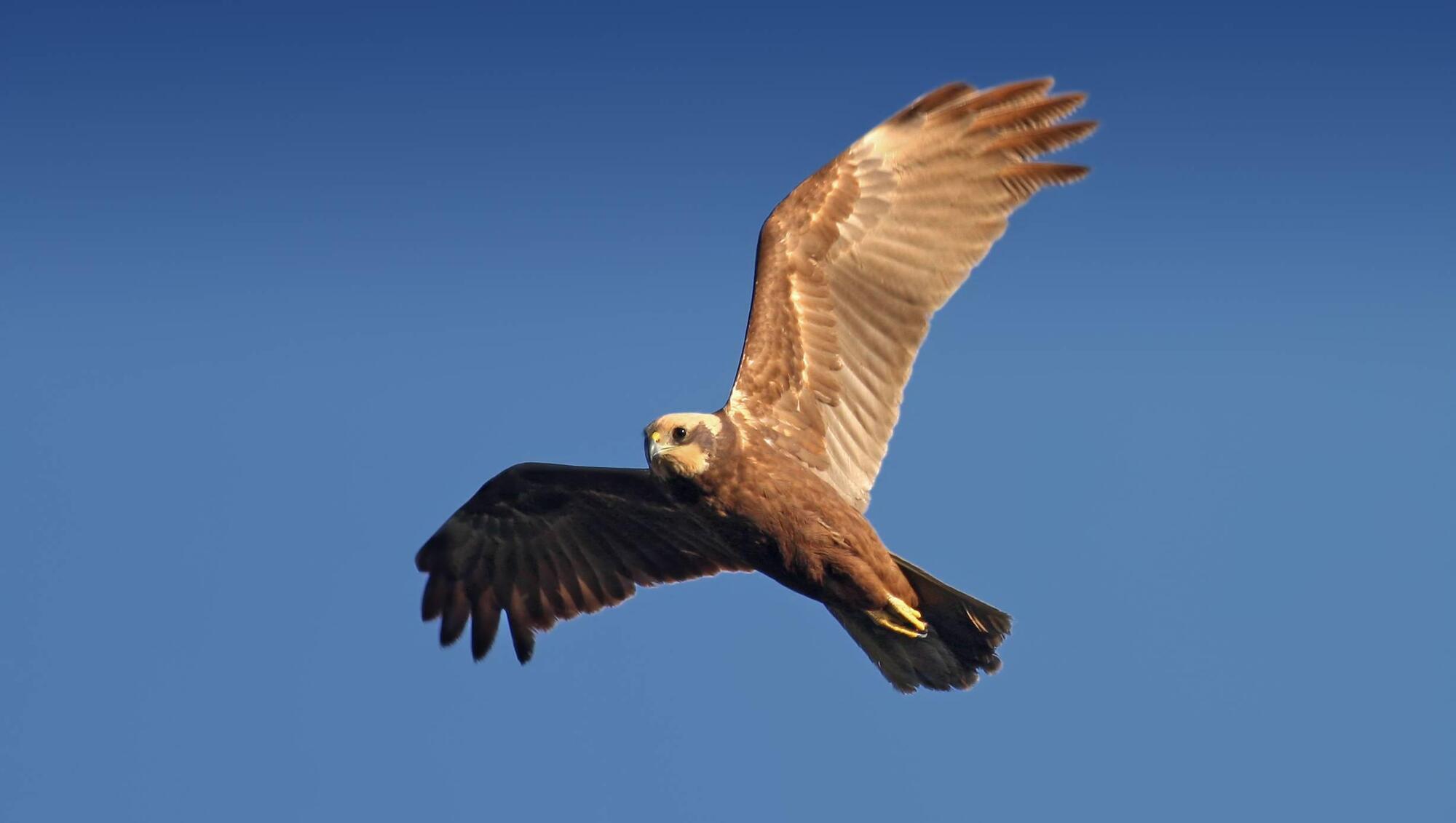
Marsh harriers are big birds, long-tailed and long-winged, almost twice the size of our kestrels. We have hen harriers in Ireland, but they are rarely seen
Resorts on the east coast of Spain—Costa Blanca, Costa de Almeria, Costa del Sol—are first choice for many Irish holidaymakers venturing abroad. Last week, I wrote about the magic on the other side of the Mediterranean in Morocco. This week, I recall a Moroccan journey in a battered car, the farmers selling fruit on the roadsides, the breathtaking beauty of a marsh harrier hanging in the wind, and "that everyday closeness to fellow humans that feeds the soul."
Driving in Morocco is no hassle at all. It is a vast country, with green or dry mountains, deserts, extensive forests, verdant river valleys, lakes and rich farming land. An hour’s ferry ride from the south of Spain takes one to Tangier, gateway to exotic North Africa. For those interested in wildlife and nature a rented car allows access to areas otherwise beyond reach.

Local hire companies charge about €40 a day, 40 percent less than big-name international renters. The man behind the desk will speak English, French, Spanish, Arabic and possibly Mongolian. His office will be small, and his cars may have a dent or two. However, I’ve never had one let me down. There is nothing to fear but fear itself.
While the cities are a melee of honking horns and death-defying pedestrians, the roads outside towns are easygoing and slow. There is little traffic and one can stop where one pleases. On a recent trip, I pulled in to watch a marsh harrier hunting and, later, to eat pomegranates in the shade of some olive trees. We’d bought the pomegranates at the roadside a few minutes earlier. Under the tough skin, the hearts were full of seeds and translucent, their pink flesh shining like jewels. The only traffic that passed was a Grand Taxi or two, the ancient Mercedes workhorses that ply between cities, crammed with passengers. Otherwise, the day was silent, and we looked out at the green mountains and fed ants some pomegranate seeds.
I saw the harrier, a female, one morning as I drove between Fes and Chaouen. A steady wind was blowing and she drifted, without a flap of the wings, over clumps of low bushes on a hillside, hovering above each, suspended on the wind.
Marsh harriers are big birds, long-tailed and long-winged, almost twice the size of our kestrels. We have hen harriers in Ireland, but they are rarely seen.
After a minute over each bush, she would swoop or drift on. Sometimes, she would tack and come upwind, never moving her wings but sliding on a current of air like a skater on ice, skimming across a floor I couldn’t see.
We bought the pomegranates from a man standing beside a small pyramid of fruit on a road running across an empty landscape. Even on backroads, where no more than one car passes every five minutes, farmers sit all day beside melon mounds and pomegranate hills or frames of sticks so densely festooned with onions that they make huts; perhaps the vendors sleep in them at night.
Traceability is hardly an issue. The dark earth of the nearby fields is strewn with lemon-coloured melons or lined with rows of onions or pomegranate trees.
In the vegetable souks of the cities, the shops lining the narrow alleys display dates of all sizes, olives of all hues, boxes and sacks of spices. The spuds still have earth on them, tomatoes are of uneven size, the apples are knobbly, and the mint is so fresh the smell fills the air. Mint-tea is available at every café, although the men who frequent them prefer coffee and cigarettes. “Toothpaste tea”, a girl I met called it. For everyday tea-drinking, she should try Barry's Irish, I told her. She could probably buy it online.
Wandering through the teeming commerce of the souks — the meat souks, egg souks, vegetable souks and spice souks — one could not but think of the contrast with the neon-lit, soulless aisles of our great supermarkets.
Every square inch of the shops, often no larger than the shower rooms of our homes, is crammed with goods. Each owner sits inside for twelve hours a day. Why not? The street-life is all around him, coming to visit or to trade or passing in the alley outside. Family members stand about; the business supports an entire family. Their clothes are decent and, clearly, they are not in dire need.
One cannot but reflect that many more people are employed here, with greater dignity, with greater sense of ownership, responsibility and community than in the western superstores. One cannot but think that, on the altars of bankrolling and shareholders' dividends, we have lost ownership and control of the very food that feeds us and, also, perhaps that everyday closeness to fellow humans that feeds the soul.