Damien Enright: An evening in Morocco, the sky full of Alpine swifts
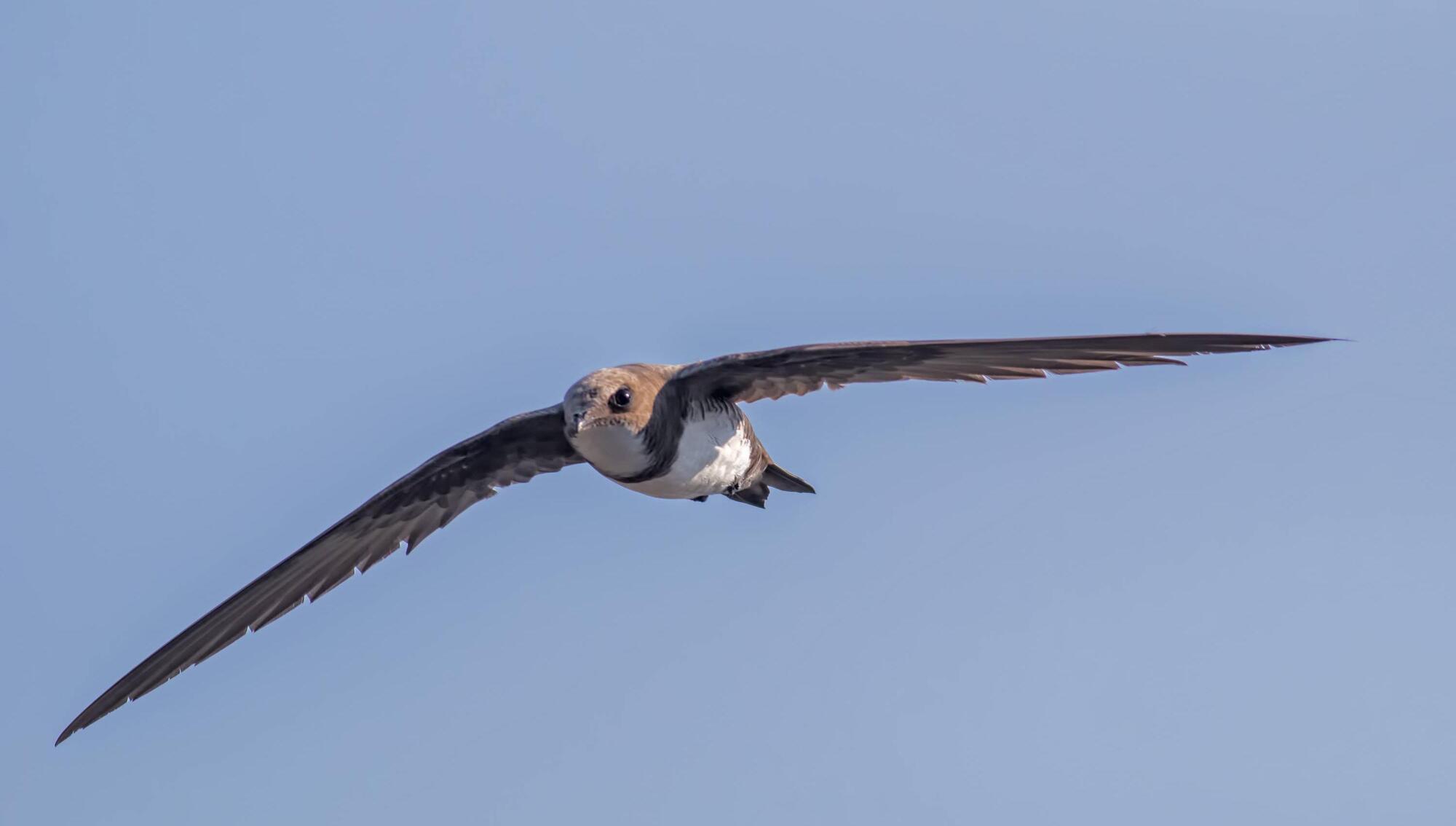
Alpine swifts are far bigger than our swifts, and their aerobatics are breathtaking
Recently the travel and lifestyle pages of the Irish Times, the Irish Examiner and UK newspapers of all demographics – the Guardian, the Times, the redtops – have enthusiastically recommended Morocco as a 'new' holiday venue. I've spent time there many times, travelling from the Rif Mountains on the Mediterranean coast to the desert border with Western Sahara. I've written about its culture and its wildlife in this and other papers. I've found it to be a magical place: here's why...
Last week, as the sun set over the dusky walls of the ancient city of Fes in Morocco, the sky was full of Alpine swifts. At breakneck speed, they dashed and dived like big, spinning swallows, shrieking as they hoovered up insects in the warm evening air.
Below them, I was part of a teeming river of humanity flowing through the streets, caught up in a wedding procession bearing a bride to the house of her husband. I never saw the bride; she was carried, shoulder high, in a curtained sedan chair, cloistered from the world of music and colour that accompanied her.
Around me, drums beat and lines of men, ten abreast, danced, arms linked. Riders, in robes and turbans, mounted on white horses, blew sonorous wooden trumpets and beat tambourines. Above, the swifts screamed and flashed, their wings, sharp as scimitars, catching the sun. It was hard to know which best to watch, the spectacle on the ground or the spectacle in the sky.
Alpine swifts are far bigger than our swifts, and their aerobatics are breathtaking. With wingspans of over half a metre, I could not but marvel at how, in their myriads, they weaved and dived without colliding, and shot into crevices in the walls at the same pace — up to 70mph — somehow braking in the space of inches, such is their mastery of the air.
In April, 2002, a small flock found its way to Ireland, roosting on the wall of the Metropole Hotel in Cork. Hawking up and down McCurtain Street above the traffic, they were a spectacular sight. At the time, I wrote: “Oh, for the aerobatics of swifts, that feed on the wing, sleep on the wing, mate on the wing and only ever return to earth to nest. If clouds had crevices, swifts would nest in the sky.” During twelve days of travel by rented car, train and bus, I sought out places where I could watch wildlife and mix with ordinary Moroccans. In my three visits to that country, I have found the people to be honest and hospitable. The Rif Mountains, easily reachable from southern Spain, were, unquestionably, the most verdant and culturally rich area I’ve yet come upon and Chaouen, where the houses and streets are painted shades of blue, is perhaps the most magical town I’ve seen anywhere in the world.
Rural Morocco is still in the donkey age. While Spain mounts cut-outs of the iconic fighting bull on the skyline as a national symbol, Morocco might consider a cut-out figure of a man sitting side-saddle on an ass. For us, from the ‘affluent’ west (we’re not much farther west and may soon be no more affluent), it is quaint to see men, and men and women together, aboard spindle-legged donkeys in vast landscapes on tracks that seem to lead to nowhere. It is notable that there are no cars to be seen outside the farmhouses surrounded by rich fields of melons or corn or thriving olive groves. No cars, at all. The houses are simple but solid and there seems to be little real poverty, while the pastoral idyll hearkens back to another age.
The water-meadows along the banks of the river Oued Laou at Chaouen are broad and green commonage with the green Rif Mountains rising beyond. Here, local people graze their animals, a boy minding a herd of sheep, a man with goats, a woman in tribal dress of red-and-white skirt and white headgear watching her three cows.
It might seem simplistic for us, from ‘the West’, to romanticise this scene but it is hard to avoid doing so. The sight of women in bright tribal dress sitting on rocks in the evening sun, chatting and laughing together while a small herd of goats, plump and pretty, grazes peacefully around them somehow invokes a nostalgia for an age when people had time on their hands and enjoyed a pace of life and a certainty we may have lost or be in danger of losing.
That same evening, I watched clouds of white cattle egrets gather to roost in the trees along the river. Kingfishers flashed over the narrow reaches and waterhens cruised the slow-flowing, clear channels between the gravel beds. Blackcaps — cousins of which we may find in our Irish gardens this winter — sang from oleander bushes, still in pink flower.
- Damien Enright's columns can be found at irishexaminer.com/outdoors/
CONNECT WITH US TODAY



Be the first to know the latest news and updates