Micro habits: A lazy person’s guide to making self-improvements in January 
Making tiny lifestyle changes can boost how you feel and help maintain motivation, says Jonathan deBurca Butler, who took up a two-week health and wellbeing challenge
Micro habits: A lazy person’s guide to making self-improvements in January 

Jonathan deBurca Butler: Adopt micro habits to make big changes in the long term, Photo: Gareth Chaney

I’m face down on my bedroom carpet, trying hard to catch my breath. To my left, I hear the soothing (but slightly smug) American tones of my new yoga teacher as she concludes a pivot on what I have just learnt is called the three-legged dog.

She calmly returns to her cross-legged starting position, clasps her hands together, and encourages me to feel the spiritual satisfaction of Sukhasana.
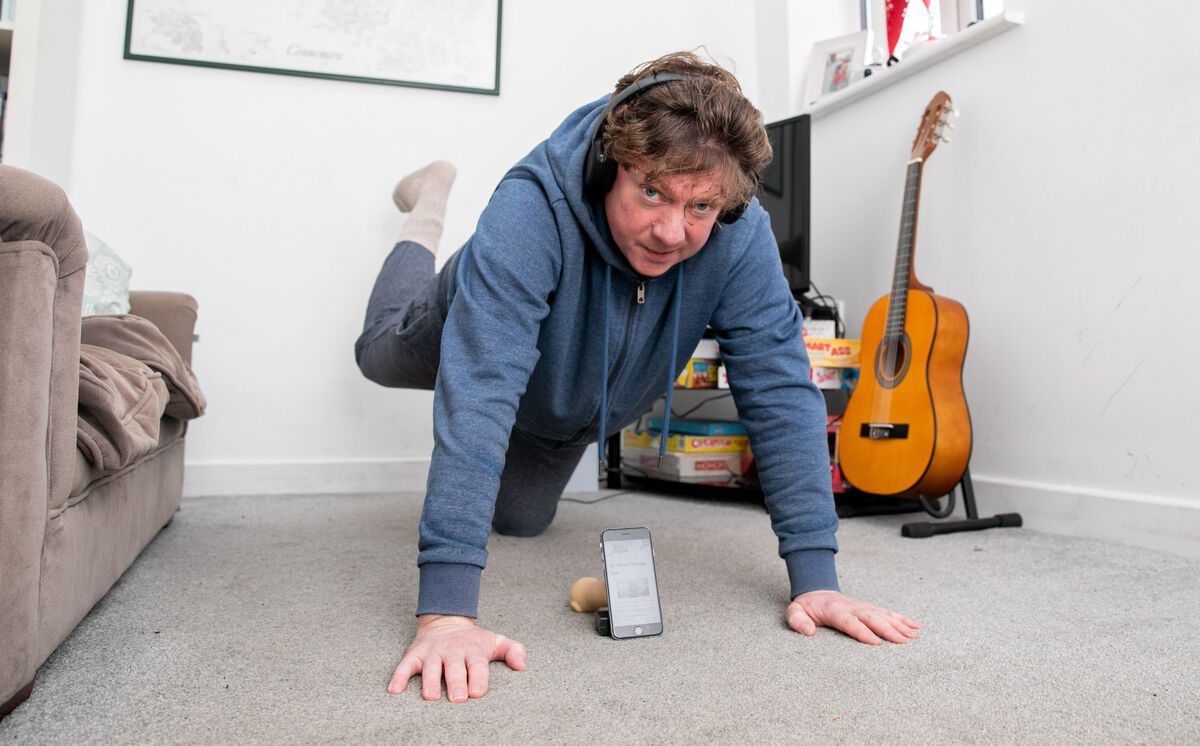
Jonathan deBurca Butler, who is adopting small new healthy habits for the new year at his home in Kimmage, Dublin. Photo: Gareth Chaney

It’s probably best not to repeat my response. Luckily, we hadn’t signed a contract. No money exchanged hands. In fact, Adriene didn’t even know that I was taking part in one of her online Yoga Snacks. And it’s probably just as well.

I have been assigned a task by Feelgood: For two weeks, I must adopt some micro habits and track how they change my life.
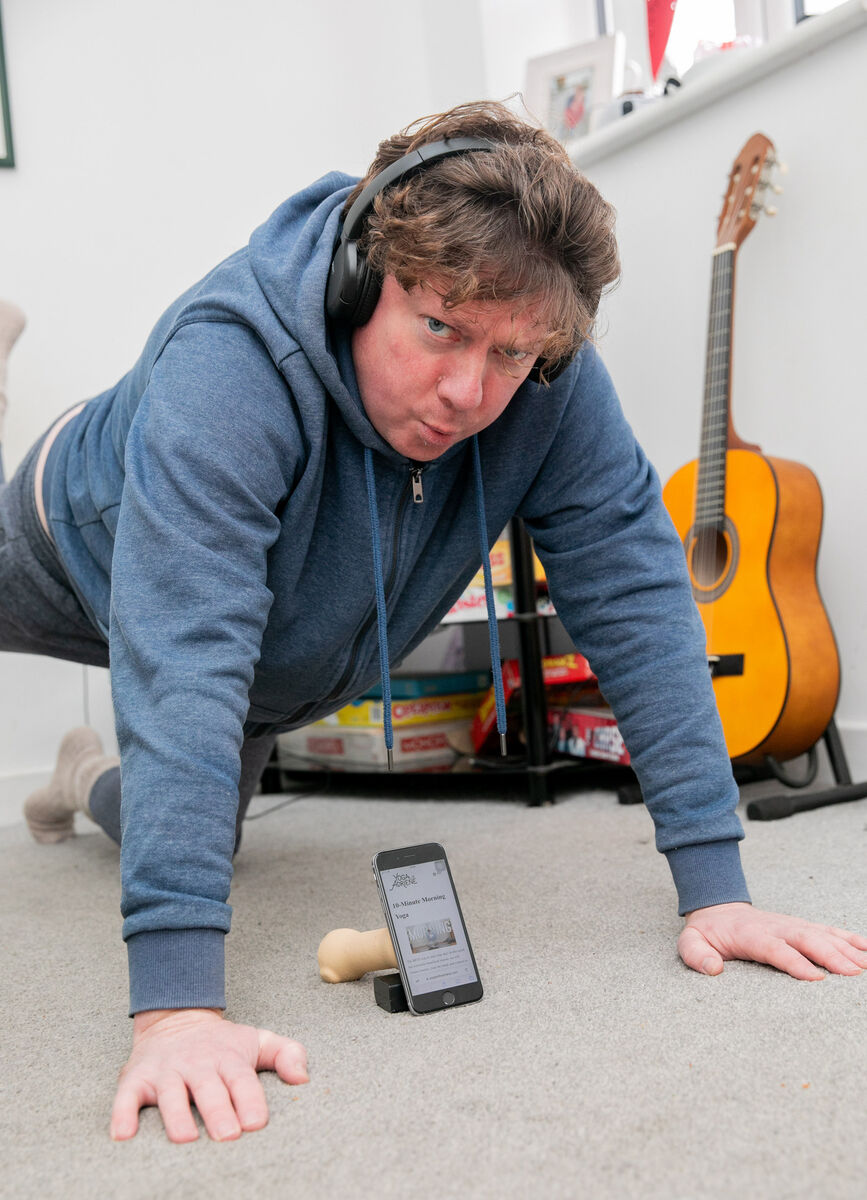
Jonathan deBurca Butler, who is adopting small new healthy habits for the new year at his home in Kimmage, Dublin. Photo: Gareth Chaney

“This one’s a real peach,” writes my editor encouragingly. To me, on day one at least, it feels more like a burst tomato. I have never felt so old, so tight, or so full of skeletal mass as I do now, lying on the floor.

When I eventually unfurl myself and look towards the clock, I’m relieved to see that it’s time for my regular morning coffee and croissant before it hits me that my window for eating has yet to open under this new regimen. It’s called intermittent fasting, and I’m now only eating for a period of nine hours from 11am to 8pm.

I’m forced to tell my now gurgling stomach that it has to wait another hour before we’re allowed to indulge.

I throw myself up on the scales — 14st 1lb, and none of it is muscle.
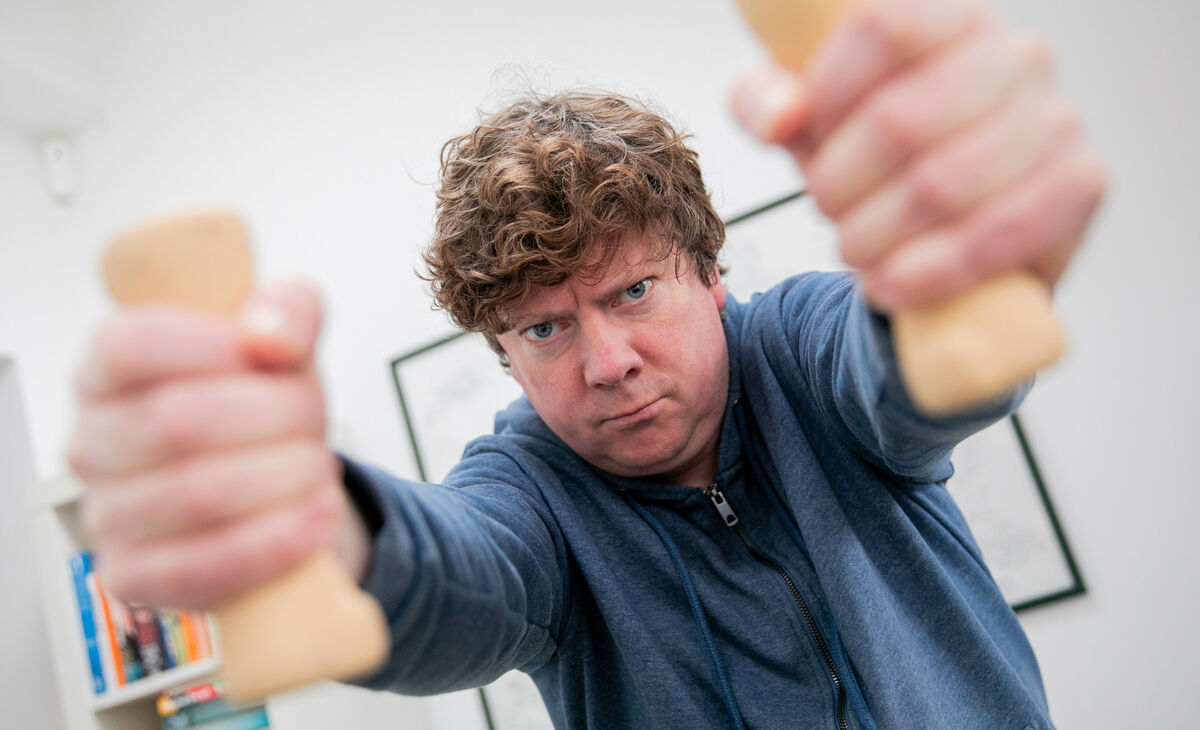
Jonathan deBurca Butler, who is adopting small new healthy habits for the new year at his home in Kimmage, Dublin. Photo: Gareth Chaney

I’m overweight by at least a stone. I wonder where we’ll be in two weeks.

I’m not hopeful, but as I wait for the metaphorical sun to shine through my eating window and brighten up my day, I decided to tune into a recording of some affirmations on YouTube.

I pick one that’s duly “micro” — three minutes long and full of positive vibes.

“I believe in myself,” it begins.

I repeat this, but quickly follow it up with “I wish others did.”

We move on to the next one.

Jonathan deBurca Butler, who is adopting small new healthy habits for the new year at his home in Kimmage, Dublin. Photo: Gareth Chaney

“I choose to look for the good in my life.” No argument from me there.

“I’m grateful for my life and the people I share it with”.

Again, no argument there but I wish they’d empty the dishwasher more often without having to be asked.

By the time I get to the end of this three-minute symphony of xylophones and positivity, I am feeling rather calm if a little too self-centred.

Take smaller steps

After three days of unsuccessful three-legged downward dogs, relatively successful fasting , and various affirmation soundbites, I’m feeling slightly wiser, none the lither and the scales are telling me I’m none the lighter.

I need to call in some help.

Kristina Shea is an organisational psychologist and, when it comes to micro habits, she’s something of an expert.

Kristina Shea, positive organisational psychologist

“Setting big goals, like saying I’m going to get fitter, for example, are too vague and when it’s too vague it becomes far away,” she explains.

“But there are a lot of interventions that can help you get to your goal by taking smaller steps. We call them proximal indications. So rather than saying ‘I’m going to get fit’, you aim to run for five minutes before you walk the dog or do two push-ups after you brush your teeth, which, by the way, is a micro habit that most people are very successful at.

“When you complete that tiny behaviour, you get that boost of intrinsic positive emotion and intrinsic motivation. That’s why these micro habits work so well.”

Shea’s assertion is based on Peter Gollwitzer’s 1999 publication entitled Implementation intentions: Strong effects of simple plans, based on decades of research showing that the so-called “if-then” approach, where plans linked to the desired outcome (the “if”) to a goal-directed action (the “then”) increases follow-through rates by two to three times compared to simple goal-setting.

The same paper also explains why anchoring micro habits to existing routines works effectively.

“Build things into the routine you already have,” says Pádraig Walsh, chartered behavioural psychologist at ChangeAble.ie.
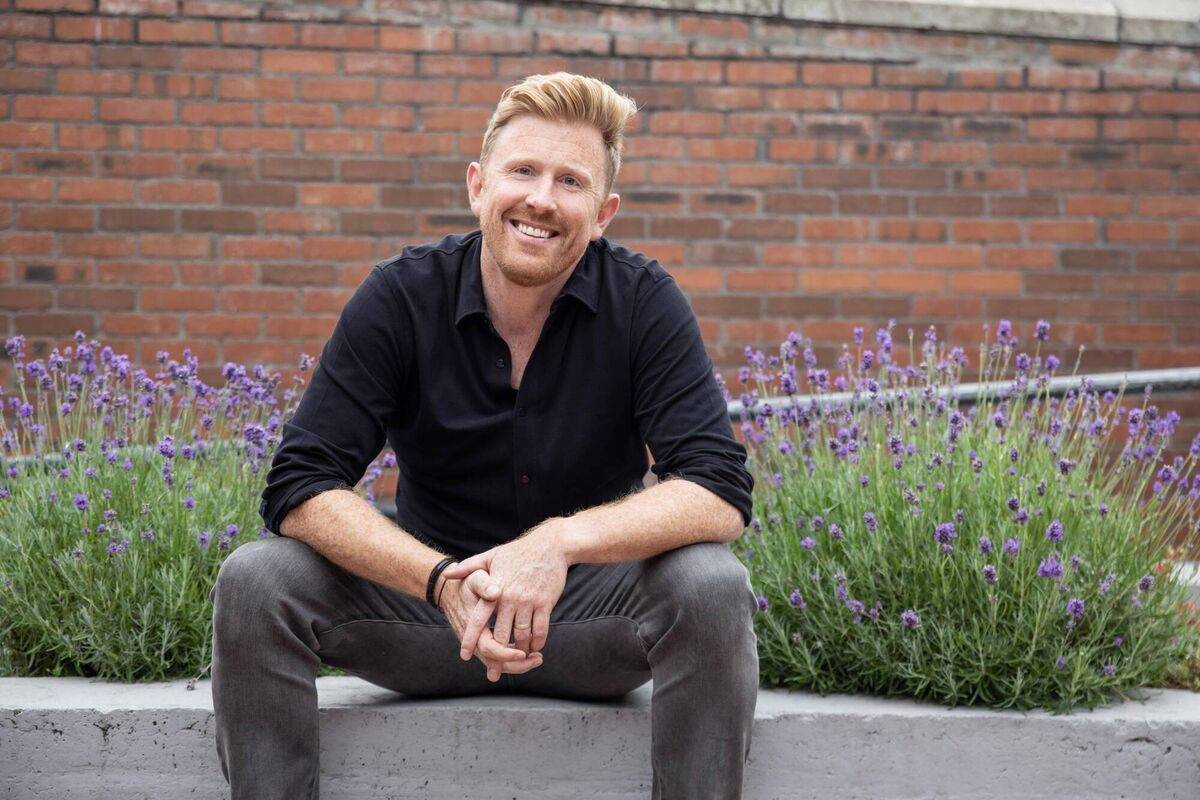
Pádraig Walsh, chartered behavioural psychologist

“Instead of trying to get up at 6am and going to the gym, which is something you’ve maybe never done before, try building a walk or a run into your commute in the morning, or cycle to work instead of getting the bus. Incorporating new habits into your already existing routine is more achievable than trying to manifest a whole new lifestyle.”

Our lives are just so busy that “adding something that’s unrealistic isn’t helpful versus building a micro habit into what you’re already doing,” says Shea.

The following day, I take Shea’s advice on self-determination. While I don’t quite ditch yoga completely, I tailor it to what I think is achievable.

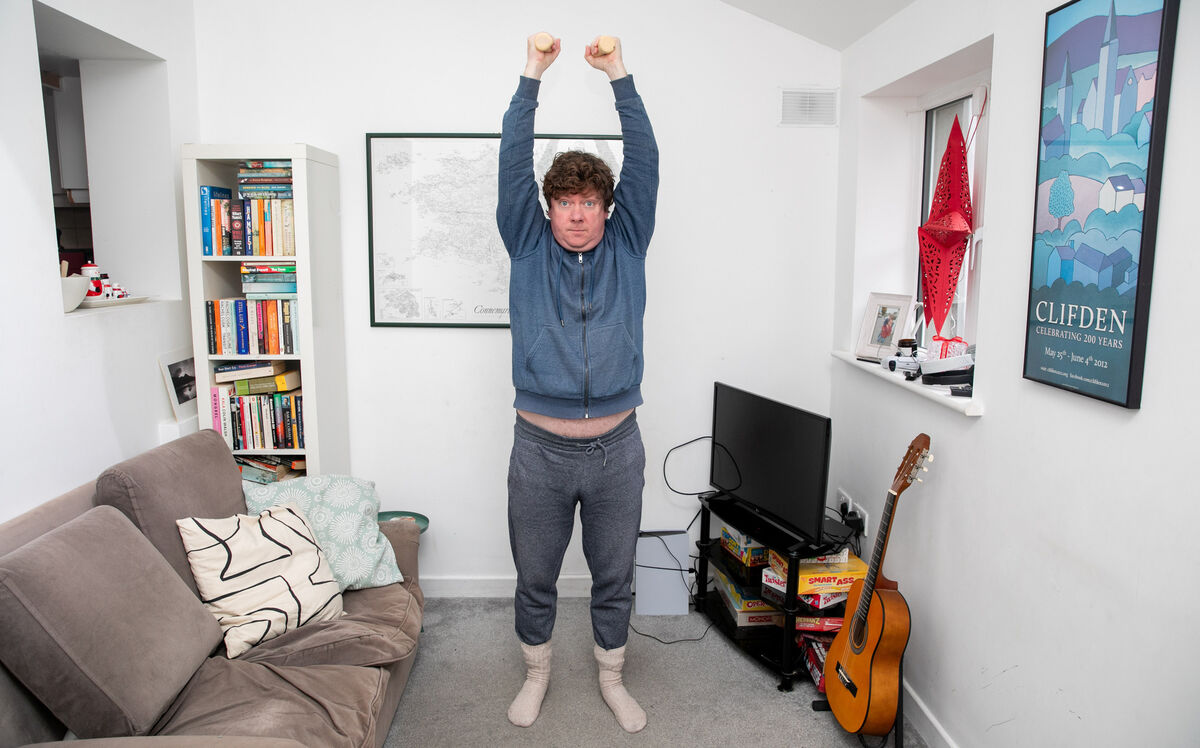
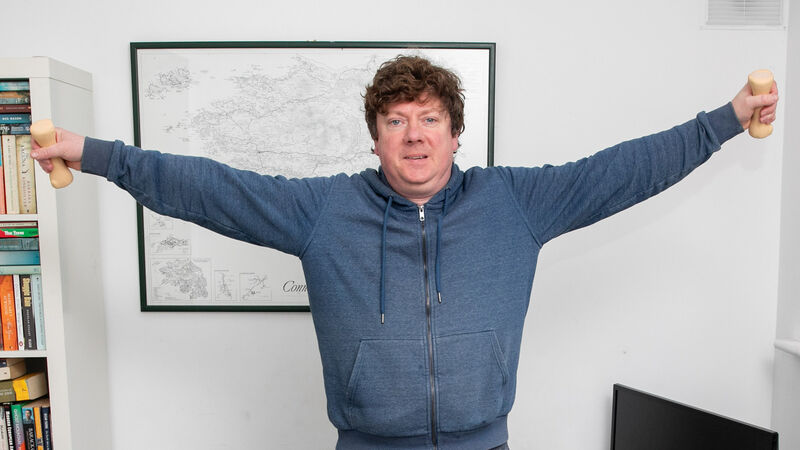
That means no more difficult three-legged dog, but I keep on the first few stretches. To replace the parts I’m not doing, I pick up some small weights and make up a routine of my own that I hope will eventually help my shoulders, biceps, back and neck. This lasts approximately six minutes, but I’m feeling good about myself on this one, and I keep up the whole routine for the next 10 days.

Now, I find myself looking to incorporate micro habits into everything I do. In the shower, I spot a pumice stone that was bought for me (really for herself) as a present from the volcanoes of Tenerife, and I scrub each foot for about 30 seconds.

“I am scrubbing my foot and stretching my back,” I say to myself. Is this an affirmation?

At lunchtime, instead of standing there waiting for the kettle to boil, I nip outside and pluck some weeds from the muddy garden.

“I am stretching my back and keeping the back tidy,” I say to myself. Another affirmation?

I’m going great guns now, but then the weekend before my copy is due, I falter. I’m out with school friends for lunch (it’s Christmas, give me a break), and the next day the only thing I want to do is sit on the couch and watch Spaghetti westerns.

I feel guilty, but then I remember that I shouldn’t. That’s mainly down to Philippa Lally’s research on habit formation entitled How are Habits Formed: Modelling habit formation in the real world. This landmark 2010 study found that habits take, on average, 66 days to become automatic, but, crucially for me, missing a day did not derail habit formation.

Amen to that.

“When things are going well, and you’re getting gold medals all the time and achieving goals, that’s great, but you should have a silver and a bronze for the days the golds are not achievable,” says Walsh.

“Days you can say to yourself, ‘You know what, this is good enough’. You’re also allowed a day off here and there.”

With this in mind, and Sergio Leone’s haunting musical ending to The Good, The Bad, and The Ugly in my ears, I decide to hit the shower.

When I’m done, I get out and jump on the scales. 14 stone it reads. In two weeks, I’ve lost…a pound.

“Oh well,” I say to myself as I sit on the edge of the bed and look down onto the garden, “at least it’s looking well and, wow, my feet are very smooth.”

x

More in this section

Lifestyle

Newsletter

The best food, health, entertainment and lifestyle content from the Irish Examiner, direct to your inbox.

Cookie Policy Privacy Policy Brand Safety FAQ Help Contact Us Terms and Conditions

© Examiner Echo Group Limited