Jonah Hill episode highlights how 'therapy speak' can act as a trojan horse for control
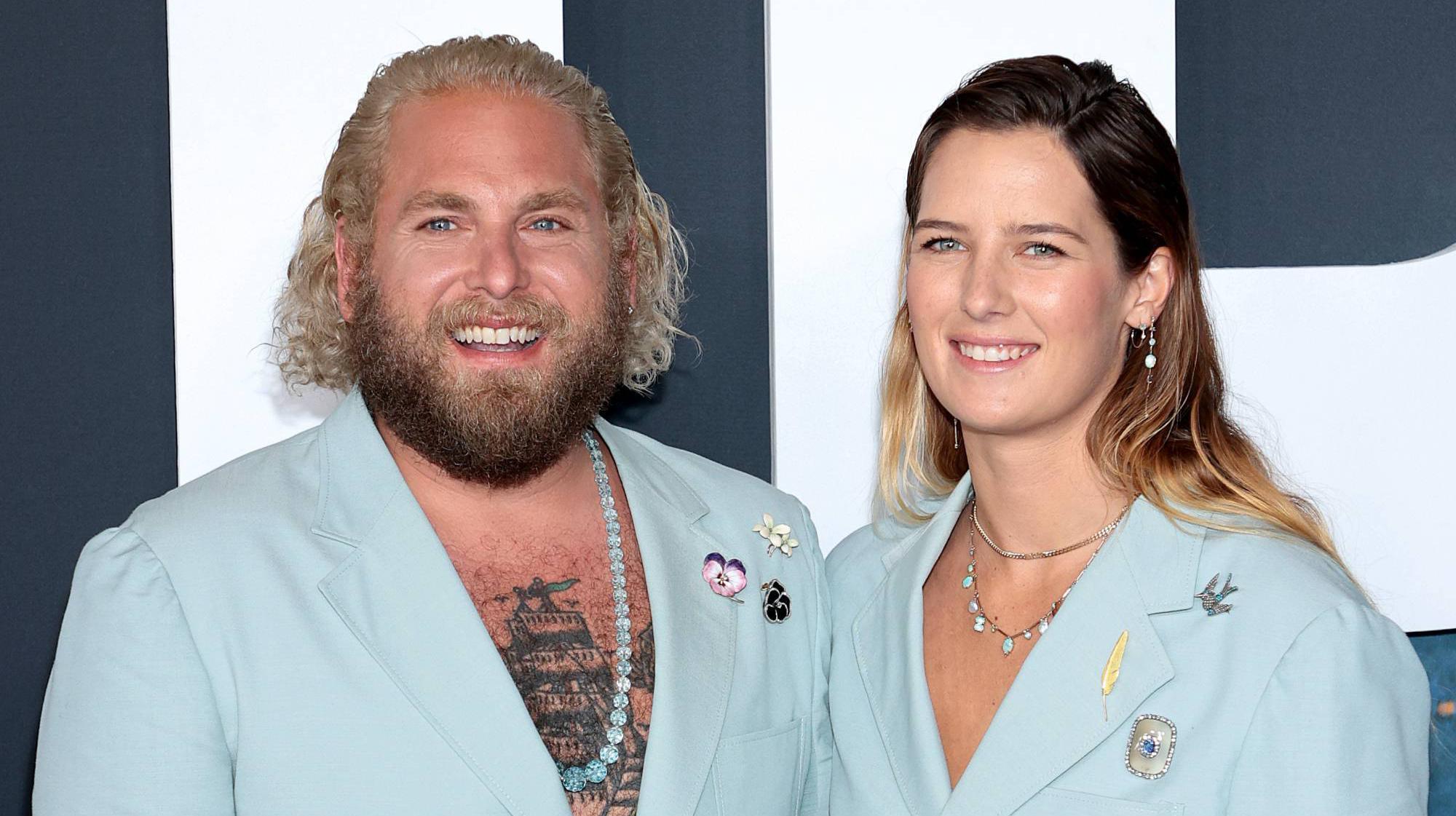
Jonah Hill with ex girlfriend Sarah Brady at the the premiere in 2021 in New York City. Picture: Kambouris/Getty Images for Netflix
The rise of ‘therapy speak’ is the discourse du jour, made all the more prevalent this week in light of new allegations of emotional abuse against actor and producer Jonah Hill by his ex-girlfriend, Sarah Brady.
Brady, a 26-year-old professional surfer, shared screenshots of alleged text messages she received from Hill to her Instagram stories on Saturday. In them, the 39-year-old Hollywood star expressed his "boundaries for a romantic relationship".
"If you need: surfing with men, boundaryless inappropriate friendships with men, to model, to post pictures of yourself in a bathing suit, to post sexual pictures, friendships with women who are in unstable places and from your wild recent past beyond getting a lunch or coffee or something respectful, I am not the right partner for you," he wrote in one. In another, he appears to ask the professional surfer to take down a specific image of herself from her Instagram, in another, he comments "good start" in response to a message from Brady detailing posts she has already removed.
“It’s been a year of healing and growth with the help of loved ones and doctors to get back to living my life without guilt, shame and self-judgment for things as small as surfing in a swimsuit rather than a more conservative wetsuit," Brady shared after posting the screenshots, "And I’m sure there’s still much more healing from this abuse ahead of me."
While it can be empowering to find the language to describe the way someone has hurt you or how we feel, often we are adopting these labels without the correct context or guidance of a therapist to help you accurately and healthily apply them to your circumstances. Applying these terms not just to ourselves, but to those around us.
Therapy speak is the trend of taking concepts and phrases from therapeutic practice — using ‘I’ statements, setting boundaries etc — and using them in your everyday interactions. At best it is a case of oversimplification and misuse of certain phrases. But at its worst therapy speak is a trojan horse for control and abuse. It is a weaponsiation of terms intended to empower people.
Sex and intimacy educator Grace Alice Ó Sé says of these messages: “Two words popped into my head immediately; 'insecure' and 'control'. I found the list of boundaries quite startling — to see them laid out like that in bullet point format is unusual to me. Often we see these rules being imposed in a much more subtle, insidious way.

“Using 'therapy speak' makes it all sound so much more fair and reasonable. It really sugarcoats what is actually being said."
What Hill is doing in these exchanges is becoming common to varying degrees, Ó Sé says, adding that she has picked up on this tendency towards improperly using expressions like this through her work.
“I have noticed a huge increase in the use of 'therapy speak' online, mainly on social media, but also with young people in my sex education workshops. The terms I most commonly hear being misused include; boundaries, narcissist, empath, gaslighting, grooming, predator, abuser and toxic”
“I am fully supportive of learning about and using this language as this can be incredibly empowering, but it needs to be used correctly, or it really loses its power”, she said.
Jonah Hill has to an extent re-branded based on the version of himself he managed to achieve through therapy, even releasing a documentary on Netflix about his adored therapist, Phil Stutz. raised concerns about this method of therapy which ring even more true now.
That he has made his relationship to therapy so public makes these allegations somewhat less surprising but no less concerning. Psychotherapist Judy Moloney, who specialises in boundaries, agrees that it appears Hill is using tools he has learned in therapy as a way to control his relationship.
“This type of behaviour can be common when people begin their journey of personal development, they can take on themes and ideas from their therapy without fully integrating them into their lives or doing the work on a deep level. If people do not fully do the work and lean into the vulnerability of it, they can use those terms as another form of defence for their behaviour”.
The reason this language is so effective is because it is almost impossible to argue with. Who is going to begrudge someone they love the adjustments they need to be comfortable and content in your relationship? It sounds so reasonable to begin with.
“Boundaries are very personal, and should be the rules you set for yourself, not rules for others. Yes, they can be used as guidelines or signposts in a relationship, however, they do not entitle anyone to put others down or shame people because they do not hold the same values or boundaries” says Moloney.
Ó Sé echoes this sentiment. She says, “Boundaries are not used to impinge on our partners' sense of identity, autonomy or wellbeing”.
This story has, rightfully, captured the public's attention as it is a convergence of recent culture. A beloved Hollywood man is accused of being abusive? Check. By adopting a zeitgeisty behavior? Check. And it all came out on Instagram stories sparking untold amounts of content across every platform imaginable? Check.
While we should be wary of taking a real, complex relationship that was potentially controlling and manipulative and chalking it up to a misuse of ‘Therapy Speak,’ this episode does provide the opportunity to reflect on how language, once almost solely used by trained professionals in a clinical environment, can be misunderstood and, at its worst, weaponised, by the masses, particularly online.
After all, while in this specific instance Hill may have learned these concepts in therapy, often the place we learn them is online. ‘Therapy speak’ may begin on the therapist's couch but it is the dilution and dissemination of it in the form of content after the fact that lets it spread.
We have created the perfect environment for this to grow in the petri dish that is social media. What else could we expect when we use platforms which champion centering yourself above all else, short and snappy content designed to grab you above informing you and hollow, detached communication?
The genie is out of the bottle when it comes to the internet taking an idea, compressing it and spewing it back out, but we could all have a little more critical thinking when we engage with things online. Proper education about these things and media literacy are vital if we want to stop the label maker.

CONNECT WITH US TODAY



Be the first to know the latest news and updates