Why we should all be embracing more playtime in our lives
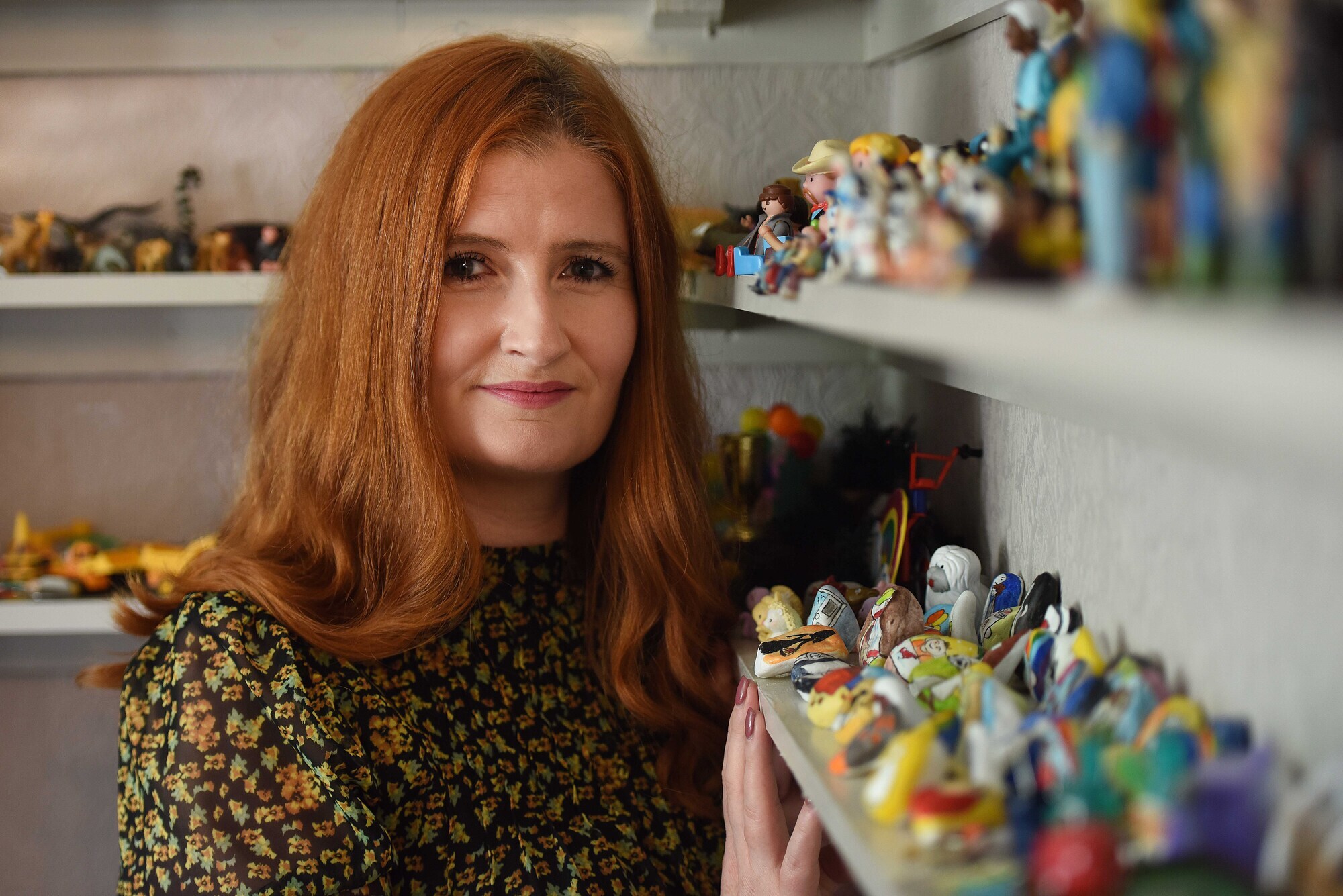
Joanna Fortune, child psychotherapist and author. Picture: Moya Nolan
When I catch up with Joanna Fortune, it’s the end of a busy week for the psychotherapist and author.
She has been doing a lot of talks about her new book, , so just before our interview she did a playful breath-control exercise.
“I took a small canvas, some blow markers, took a deep breath and exhaled through the markers. As you blow through, it sprays colour onto the canvas.
"I switched colours and I made a painting of my breath.”
She did it because “the idea of just taking a breath and calming down when I’m agitated doesn’t really work for me”.
But when she focuses on the canvas and the blow markers in a playful way, she can take that breath.
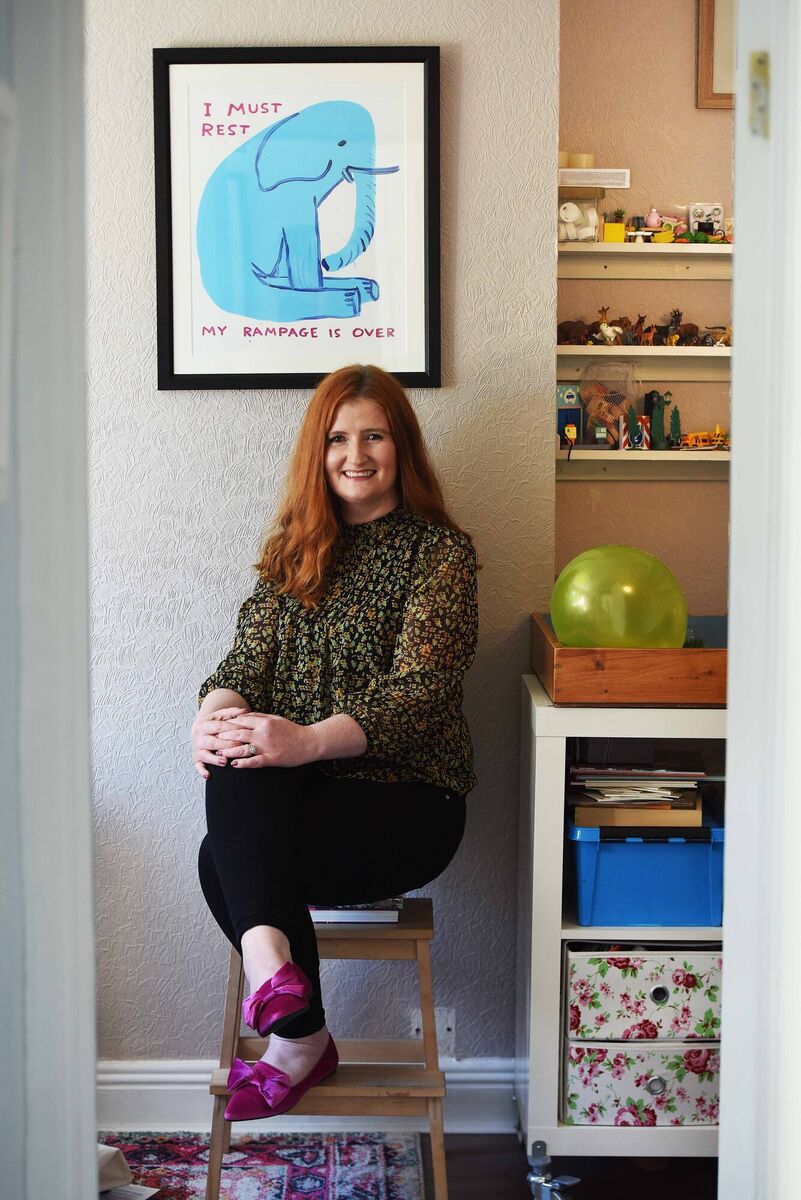
“It helps me to engage in breath regulation. It calms me, brings me down from that heightened state. It speaks directly to my nervous system.”
Fortune says she has been “in pursuit of play” for most of her career – whereas most of society tends to relegate play to the realm of childhood.
“The adult world tells us to place seriousness above playfulness, to remove nonsense, silliness. But play is a serious business – it has a serious impact on our lives. Without it, we wouldn’t have poetry, theatre, song.”
Without play in our lives, there’s also a vast amount more we cut ourselves off from, Fortune argues.
Play isn’t a box of toys in a corner of a room, she says – it’s a state of mind, a way of being.
“Play is not just something nice we do. It is a neural exercise – it has a positive impact on our brains.
"It fuels flexibility and adaptability, which always helps us in times of crisis and stress. Because when we’re more flexible in ourselves, it’s easier to find solutions.”
Fortune sees play as relational too, fuelling connections – to ourselves, to others and in the world around us. “Research shows that play – across our lifespan, including our adult lives – establishes safe, secure relationships. It brings us closer together and is essential in enabling relational repair following rupture.”
is subtitled ‘How to Find Joy and Meaning in Everyday Life’, and Fortune wants people to approach it in “a holiday state of mind”.
The book takes us on a journey, where we reflect on our play history and understand the role of play – and the lack of it – in our lives. The book aims to help us plan for a more playful life.
“I use play to slow myself down because I tend to work at a frenetic pace,” says Fortune, who keeps a ziplock bag in her desk drawer, including items like crayon and paper, Play-Doh, balloons, bubbles and a handful of random Lego blocks.
“I use playful strategies to ground, regulate and anchor me in the present moment so as to take a break. I play every day.”
She wants us to ring-fence time every day, where we stop what we’re doing, put down our phones, turn off the screens and take out a jigsaw, board game or deck of cards.
Or spin around until we’re dizzy. Or blow bubbles and pop as many as we can with just our pinkie finger or our thumb or our elbow.
Because when we take ourselves, even for five minutes, out of the ordinary, work-a-day routine to do something playful, that becomes our state of mind for those minutes. And in that new freer, fun and joyful space we become more creative.
“This shouldn’t be confused with skiving off, or not taking work seriously,” insists Fortune.
“Nurturing your capacity for mentalisation, embracing opportunities to mind-wander and making time for boredom while building in mini play-breaks in your day is precisely what will drive your creativity, solution-focused thinking and critical-thinking faculties.
"It’ll allow you to generate new ideas and ways of doing things – and ultimately make you a happier, more well-rounded, productive member of the team.”
In fact, she says, drawing on the more creative parts of your brain is very useful in the workplace, especially if your role isn’t a particularly creative one.
“Immersing one part of your brain in intense cognitive, cerebral activity can lead to a staleness in your efforts. Mixing it up – engaging the more creative and playful part of your brain at regular intervals – allows you to become more adaptable to changes in your role and in the work environment.
"It keeps energy levels higher and increases job satisfaction.”
Fortune doesn’t intend us all to become like presenters on a kids’ TV show and she acknowledges that, while some were lucky to grow up in an environment that encouraged play, others didn’t – they were instead told to ‘grow up, that’s messy, tidy up’.
Her book has oodles of play ideas, pitched at wherever your comfort play level is, whether mild, moderate or high-intensity invitations to reconnect with your playful self.
She identifies several different ‘play personalities’ and credits her young daughter, Maisie, with teaching her to play in new ways.
“She brings me from intellectual play – cards, jigsaws – into more kinaesthetic play.
"She has taught me not to be afraid to get down on the floor, to roll over, get messy, to get more physical in my play. We climb, bounce, jump, and dance.
“And she has helped me rediscover my own love of whimsical play and silliness.” Fortune firmly believes that we’re all wired to play – and wired through play. And if we give ourselves some prescribed playtime every day, we may well discover play is the small change that makes a big difference.
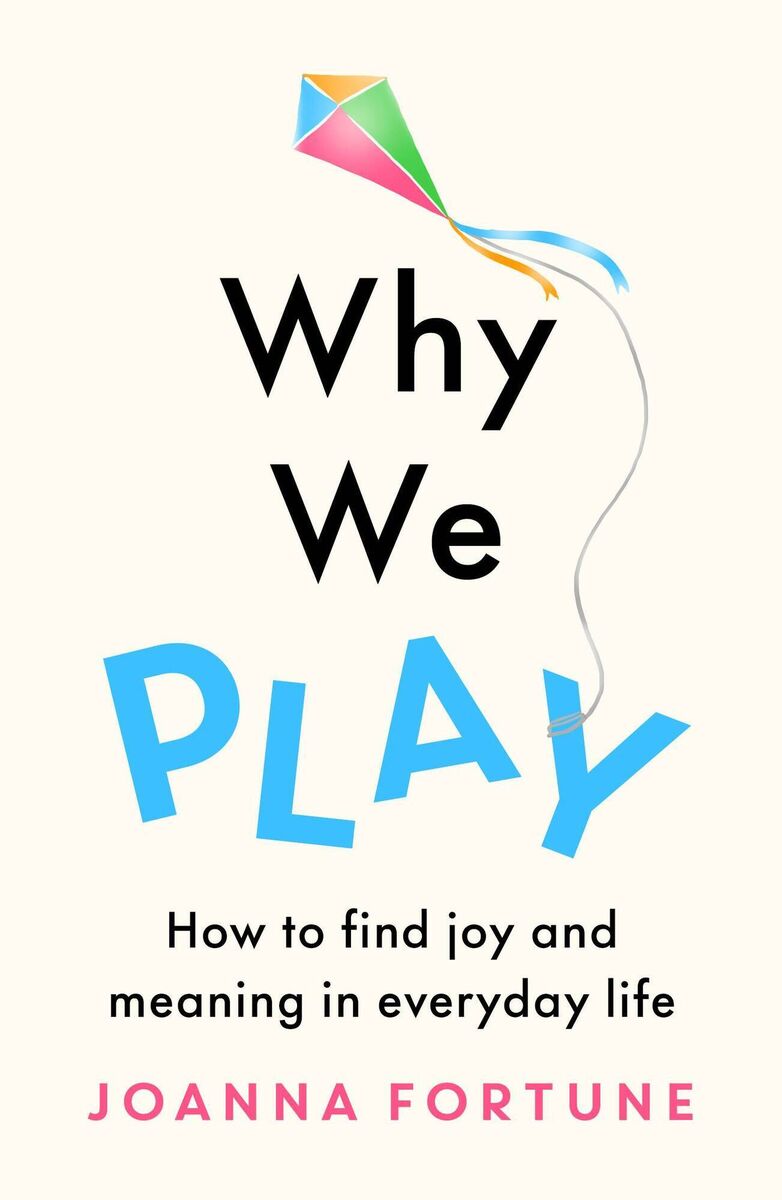
Why We Play: How to find joy and meaning in everyday life by Joanna Fortune is out now
CONNECT WITH US TODAY



Be the first to know the latest news and updates