There was a lot I didn't realise about bowel cancer — here is what I learned the hard way
From a bloated tummy to a cancer diagnosis, Ali McCormack talks to Helen O'Callaghan about how she got through her surgery and chemotherapy
There was a lot I didn't realise about bowel cancer — here is what I learned the hard way

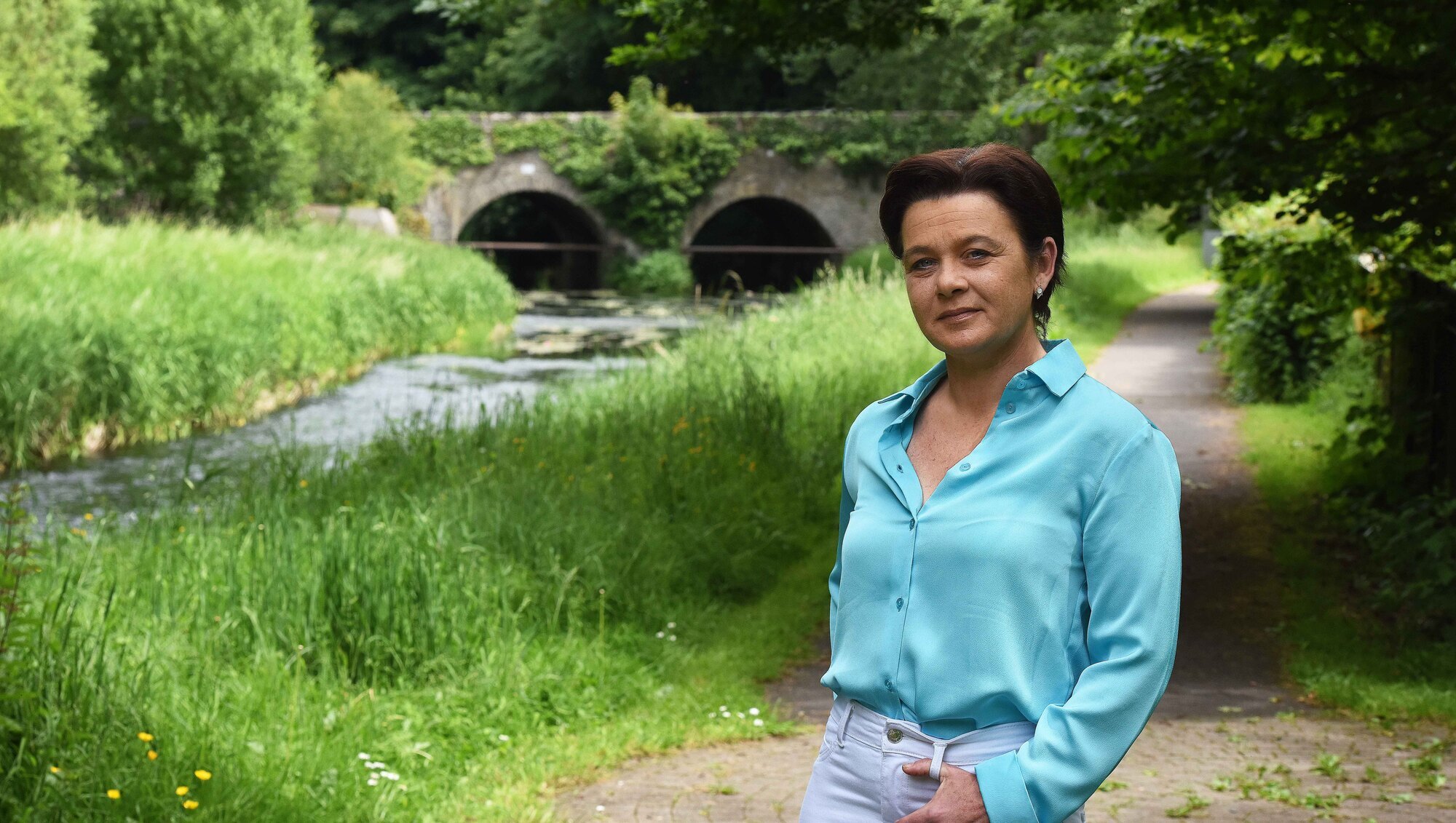
Ali McCormack from Rathangan, County Kildare, was diagnosed with bowel cancer in 2021 and is now in remission. Photograph: Moya Nolan
Ali McCormack had a lot to celebrate. It was her 47th birthday. The re-opening of the hospitality sector had just begun, and her husband, Tommy, was taking her away for a hotel break in Waterford.

Like most of us, Ali had been living in tracksuits and PJs during the lockdowns and now — on that first weekend in June 2021 — she got a nasty surprise.

“I’d brought some nice clothes with me for going to dinner, but they didn’t fit me. I noticed my stomach was quite bloated. First I just laughed it off. I’d never been able to put on weight. I was always a size six or eight, and I thought this must be the famous ‘Covid stone’.”

But looking at herself in the mirror — Ali even took a photo — something about her stomach didn’t look right.

“As a woman, you know there’s a difference between bloating and fat. I noticed it was more of a swelling than weight.”

Admitting she felt a bit silly ringing her GP when she got back home to Rathangan, Co Kildare — “I felt I’m ringing the GP in the middle of Covid to say ‘I’ve put on weight’!” — Ali still made the call.

The GP examined her, felt there might be “some sort of obstruction”, and recommended she go immediately to A&E in Naas Hospital.

“I was reluctant to go. I didn’t feel ill, other than the bloating. I felt I was wasting everybody’s time. This was during the HSE cyber-attack, and the hospitals were under severe pressure.”

A follow-up call from her GP the next morning was the spur Ali needed. At the hospital, the mum-of-three — Thea, 26, Sam, 16, and Max, 14 — had an X-ray and ultrasound, but the cyber-attack meant her results couldn’t be readily accessed.

“They said I was to come back for colonoscopy because of a history of bowel and breast cancer in my family.”

When Ali awoke following the colonoscopy she asked the nurse to phone Tommy, to come and get her.

“She said no. The surgeon wanted to speak to me. I got nervous then — everybody else was leaving and I was being held back.”

The surgeon confirmed that Ali had tumours on her colon and needed surgery.

“I didn’t ask was it cancer. I asked ‘was it sinister’. I couldn’t say ‘cancer’. He said he’d taken a biopsy and in three days he’d be able to tell me.

“I didn’t cry. You imagine you would. My immediate thought was ‘if this is bad, what about my children?’ And how was I going to tell my husband, who’d lost his mother to cancer as a child? I knew this was going to frighten him.”

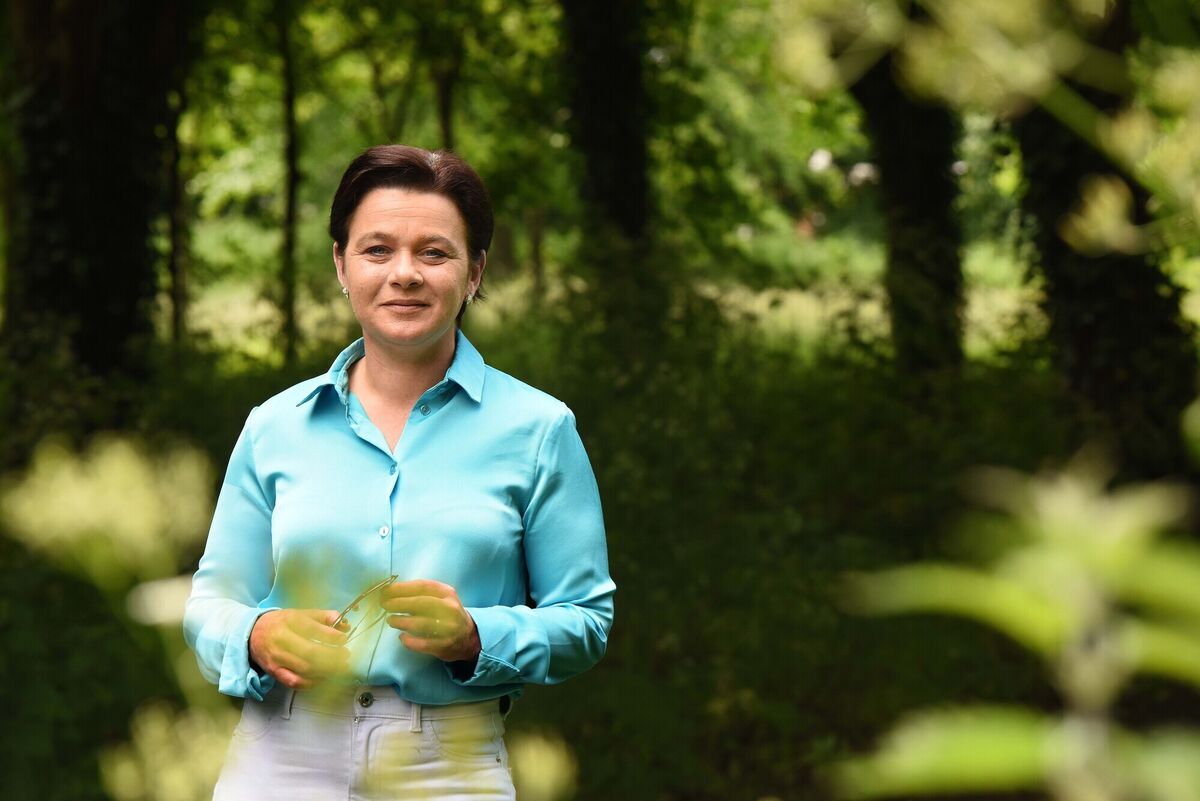
Ali McCormack's advice is straightforward — and definite: “If you notice anything that’s different in any way, shape or form, you need to go to your doctor.” Picture: Moya Nolan

Ali feels hugely grateful to the nurse who offered to tell Tommy.

“By the time I went down to him, he was aware. It was very compassionate of her, because I didn’t have the words. We drove home the 20km from Naas and I don’t think we spoke one word the whole way home.”

Within days, Ali learned she had stage-three bowel cancer, and it had spread to her lymph nodes. The few weeks before surgery to remove her colon were tough.

“It was very difficult to sit down with my parents, who are in their 70s, and tell them. And the children — Thea was old enough to understand what it meant.

“Max said ‘do you promise you’re going to get better?’ And I said ‘yes, you know me, if I promise something I’ll do it’. And he said ‘that’s grand then’. But you could see they were worried, upset. I was going to be in hospital for a while, and with Covid there was no visiting. I wasn’t going to be at home and I’m always at home.”

Ali had the surgery last July, and in September she began chemo: 12 sessions over 24 weeks.

“That was tough. I refused to Google anything. I only went on the Irish Cancer Society website. I had plenty information but, until you go through it, you don’t realise the amount of side-effects.”

She was bowled over by the practical, kind support from friends, family, and her parish priest. “I wouldn’t be that religious, but he was a great friend to me.”

Friends organised lifts for her, and sat with her when she was feeling bad so Tommy could work. The GAA club made a roster to get the boys to and from matches and training.

And Ali got up every day, no matter how bad she felt: “I never allowed myself stay in bed. I’d get washed, dressed, even if it was only clean PJs. I was up when the kids came home from school.”

She finished chemo in March, and feels she’s 90% back to what she was pre-diagnosis.

“I’m officially in remission, and I’m very lucky to have been accepted in the new nurse-led oncology unit in Naas, which is very one-on-one, intimate care. I can ring anytime I’m not feeling well and they’ll organise for me to see a doctor. It’s a safety net.”

Never a big eater, when she looks back, Ali can see subtle signs something was wrong.

“After a big meal I’d have cramps and constipation. I just put it down to eating a large amount. I honestly considered bowel cancer a disease of older men. I never thought young, fit, healthy women could get it. I didn’t realise there could be a family connection. There was a lot I didn’t realise about bowel cancer.”

Her advice to others is straightforward — and definite: “If you notice anything that’s different in any way, shape, or form, you need to go to your doctor.”

What we need to know about bowel cancer

Donna Spillane, a cancer nurse at the Irish Cancer Society, outlines what we need to know about bowel cancer

* Incidence in 2020: 2,819 (NCRI annual report).

Warning signs:

  • A lasting change in your bowel habit — going more often, looser motions or constipation.
  • Blood in your stool or bleeding from your back passage.
  • Pain or discomfort in your tummy area or back passage.
  • Trapped wind or fullness in your tummy.
  • A lump in your tummy area or rectum.
  • Feeling you haven’t emptied your bowel fully after going to the toilet.
  • Unexplained weight loss.
  • Feeling tired and breathless due to anaemia (fewer red blood cells).

All these symptoms can be caused by conditions other than cancer, but it’s important to visit the GP and get any unusual changes checked out, especially if they go on for more than four to six weeks.

What increases risk:

  • Previous cancer: If you’ve had bowel cancer before, you’ve a higher risk of getting it again.
  • Family history: If a member of your immediate family (mother, father, brother, sister, child) or relatives (uncle, aunt) on the same side of the family had bowel cancer; if an immediate family member was diagnosed with bowel cancer at a young age (under 45).
  • Inherited bowel conditions: If you/someone in your family has/had an inherited bowel condition, e.g. familial adenomatous polyposis or hereditary non-polyposis colorectal cancer.
  • Other bowel conditions: A history of a bowel condition such as polyps, ulcerative colitis, Crohn’s disease or coeliac disease.
  • Lifestyle: Unhealthy lifestyle factors, e.g. being overweight, not being active, drinking alcohol or smoking.

Worth noting:

Sometimes bowel cancer may cause a blockage. If so, you’ll feel bloated or constipated or you may vomit. You’ll likely have gripping abdominal pains. If you have these symptoms see your doctor as soon as possible.

x

More in this section

Lifestyle

Newsletter

The best food, health, entertainment and lifestyle content from the Irish Examiner, direct to your inbox.

Cookie Policy Privacy Policy Brand Safety FAQ Help Contact Us Terms and Conditions

© Examiner Echo Group Limited