Sound as a bell: CHI patients ring out the end of cancer treatment
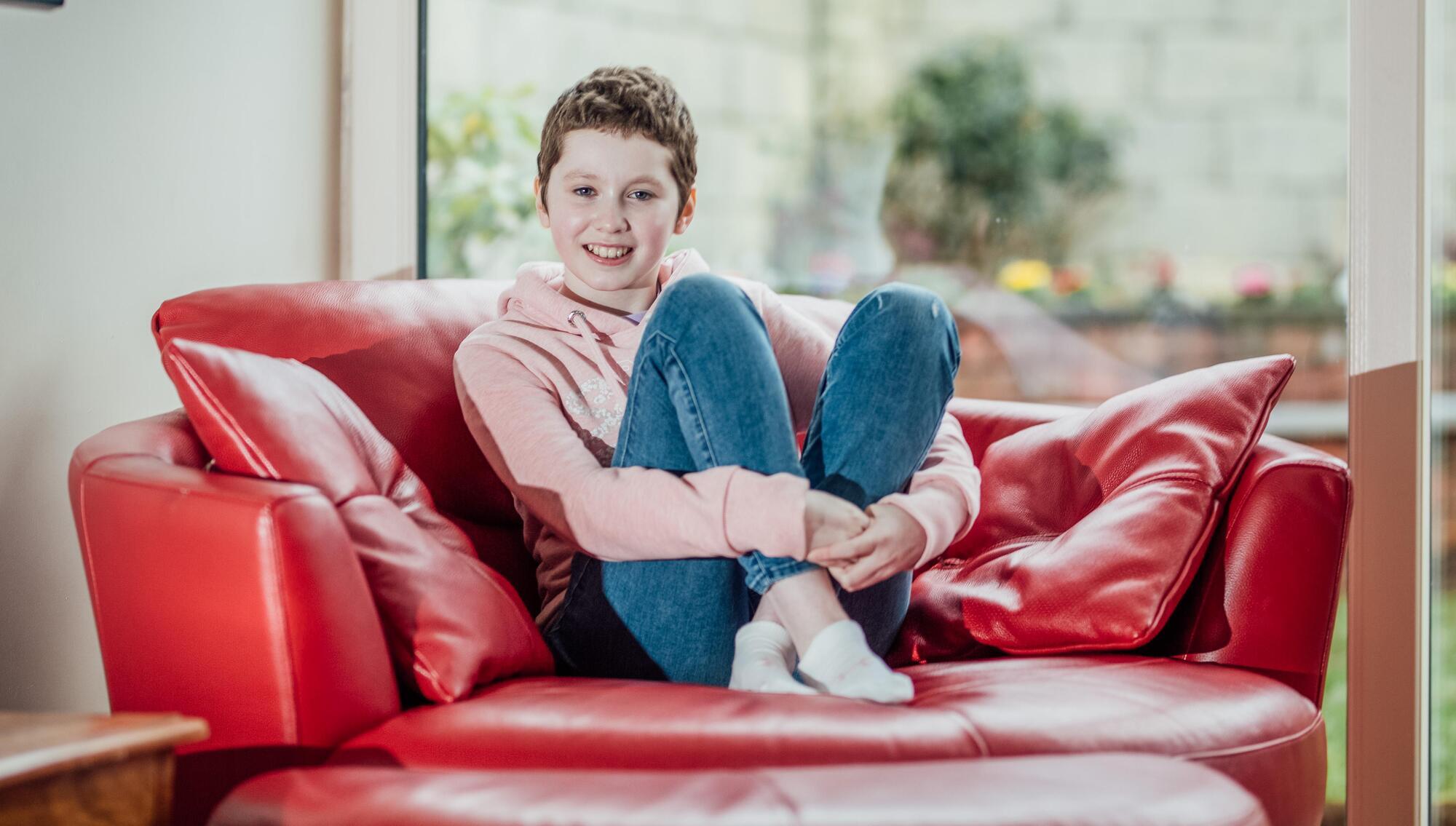
Gráinne Beattie, who rang the bell at Crumlin last July, having finished chemotherapy for brain tumour is pictured at home in Nenagh, Co Tipperary today. Pic: Brian Arthur
Deborah Furey will never forget the day her daughter, Maggie, got to ring the treatment bell at Children’s Health Ireland (CHI) at Crumlin. It was April 15 last year, a Thursday.
It meant Maggie, now aged four, had come to the end of cancer treatment, a journey that began in January 2019 when she was found to have a tumour covering her whole left lung — when detected, it was starting to go around her windpipe.
“She spent over 200 nights in Crumlin. She had a very bad time and there were some definite low moments. But watching her ring that bell was a glorious moment. We waited so long for her to do it,” says mum of two Deborah.
At her Kiltiernan home in Dublin 18, Deborah recalls some of the lows she and husband Kevin O’Donovan endured as they supported their daughter through cancer. “One night we ran with her through the halls of Crumlin up to ICU. She had pneumonia. She was very sick. It was a close call.”
Another low point was seeing Maggie’s blonde hair fall out in clumps. “Not that she had much hair, but to see it coming out in your hands, seeing her little bald head, it really hit home how sick she was.”
At these times — and during the nine months from January to September 2019 when Maggie was receiving aggressive chemo, and during the two long years of her maintenance chemo — Deborah very often heard the bell ring at Crumlin. And it flooded her heart with hope, that someday it’d be her little girl’s turn.
“When we first arrived on St John’s Ward in the spring of 2019, I asked a member of staff, what was that bell? And he told me how the bell was about ‘out with the old, in with the new’, a time to make wishes.
“And anytime I’d see a family coming to ring the bell, I’d stand and I’d cheer and cry along with them. It was so amazing to see them — clapping and happy — because that’s what they’d been aiming for all along. And it was such a joyous moment, to look at the parents’ faces when they’d see their child ringing the bell.”
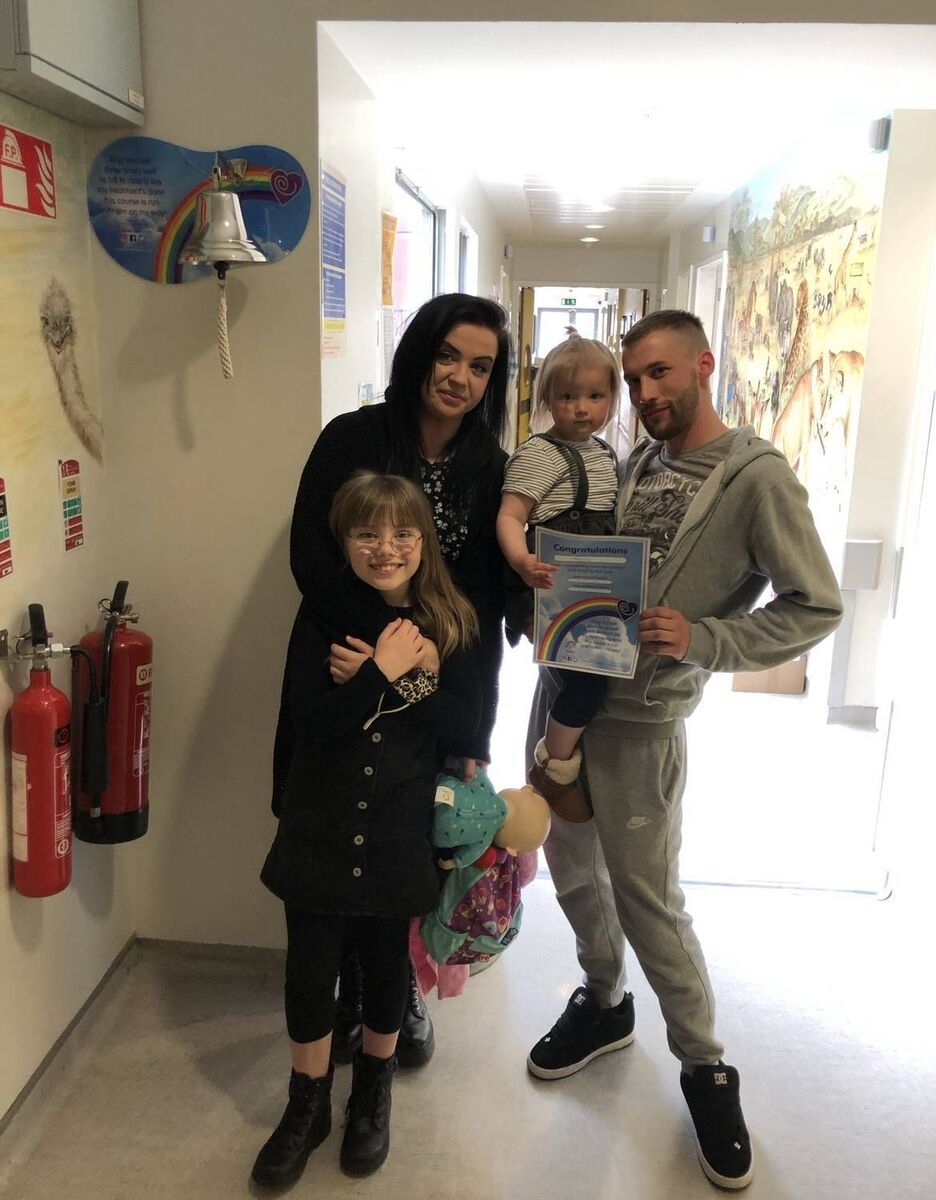
During those long stints in the hospital, devastated at leaving her older daughter, Evie (now 10) at home, Deborah says “the mom guilt would be killing me”. But then she’d hear the bell.
Very soon after her diagnosis — leukaemia that had settled into the lymph glands in her chest — Deborah and Kevin got a reassuring prognosis for Maggie.
“The doctor was 90 to 95% sure that once he’d get rid of the cancer, and it wouldn’t come back. He said the treatment wouldn’t affect her fertility. She was only one year old and he was talking about her one day having children of her own. I was amazed. It gave me a lot of comfort.”
Yet it could have been so different. Maggie’s abnormal breathing just weeks before her first birthday was what initially alerted Deborah to the child’s condition.
“She’d be sitting on the floor, panting. I brought her to the GP Christmas week, 2018. I was told it was viral bronchitis and given three days of steroids.”
On Maggie’s first birthday in January 2019, Deborah returned to the GP. The steroids had made no difference. The GP said viral bronchitis can take time to resolve but Deborah wasn’t reassured. Three days later, the worried mum brought her baby to Tallaght Hospital, where a doctor suspected asthma. “But I stood there and refused to leave.”
A chest X-ray ordered by a doctor that night — to “set my mind at ease” — showed the large mass in Maggie’s chest. “Later, her doctor said we’d have been two weeks away from a very different journey if I hadn’t stood my ground that night,” says Deborah.
When Maggie’s longed-for last day of chemo finally arrived, Deborah recalls how her daughter was too scared to ring the bell. “Evie lifted her up and Evie helped Maggie ring the bell. The nurses and staff were all there and they clapped and sang. I was standing there, crying tears of joy.”
Professor Aengus O’Marcaigh, consultant paediatric haematologist in CHI Crumlin, says the ritual of bell-ringing on the day of a child’s last chemo treatment has been a feature in the hospital for two years now. “Families have embraced it, it’s a rite of passage,” he says.
Confirming that about 100-150 children ring the bell each year, he says it gives great hope to children still undergoing treatment. “They hear someone else ringing the bell and they think ‘someday that’ll be me’ — and then their day comes.”
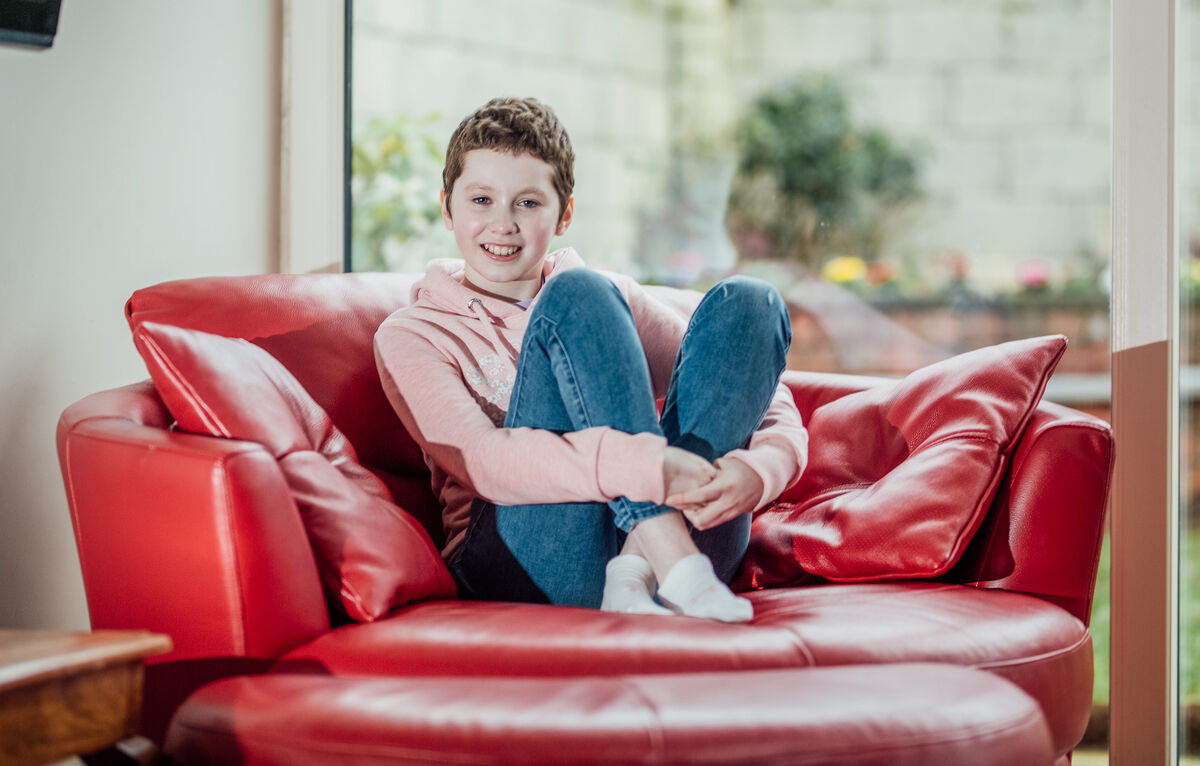
Tanya Beattie heard about the bell-ringing when her daughter, Gráinne, now aged 13, was part-way through chemo. Gráinne was diagnosed with a brain tumour in July 2020 after experiencing headaches and other worrying symptoms.
“She sometimes zoned out, almost like she was in a trance. I was out for a walk with her one day and I noticed she looked unsteady on her legs. You put a lot down to their age — and you hear what you want to hear,” says the Nenagh-based mum, who’d been told both by GP — after blood tests — and the hospital that Gráinne was fine.
But with ongoing symptoms and particularly when her daughter’s balance was affected, Tanya brought her back to the hospital where an MRI revealed a brain tumour.
“News like that just knocks you out,” says Tanya, who recalls doctors explaining to her and to her husband, Stuart, the language to use when breaking the news to Gráinne. “We were not to use the word ‘tumour’ straightaway. We used the term ‘a lump’ and said it was in her head and it had to be taken out and we were going to hospital in Dublin where they were really good at this. She was scared, but she was strong with it and we told her we’d be with her every step of the way.”
Tanya has high praise for the “world-class” treatment her daughter got at Temple Street, where her doctor would chat with Gráinne and “more often than not leave her laughing”.
Most importantly, he answered all the girl’s questions. “Like ‘how long will I be here?’ And ‘will I be the same as before?’ That was a big one,” recalls Tanya.
Following a minor procedure to relieve pressure on her brain, Gráinne had major surgery — “a long slow process” — which went very well. After 30 sessions of radiotherapy in St Luke’s Hospital, Gráinne started sixth class in mid-October 2020.
“That was a big day,” says Tanya. “She’d gone from playing on the camogie team and playing tennis to needing help walking.”
Six weeks of ‘moderate intensity’ chemo started at CHI Crumlin in late November. “Gráinne was never really sick. She just didn’t have an ounce of energy.” From the outset, Tanya and Stuart had been reassured there was an 80% recovery rate for children with the type of brain tumour Gráinne had. “We felt very hopeful and optimistic and we did expect to ring that bell, but I was almost afraid to say it out loud,” says Tanya.
On the Sunday Gráinne finally finished chemo and was to ring the bell, the hospital had an emergency and Tanya knew staff had a lot on their hands. “I said to Stuart ‘we’ll just find that bell ourselves and ring it’. I didn’t want us to leave without doing it. It felt important we did it that day.”
As it happened, eight or nine staff surrounded the family as Gráinne rang the bell. “It was a real marker of all the hard stuff she’d been through, that she had done it. It was the end of all the jabbing and prodding, the end of the road of sickness and we could start building again.”
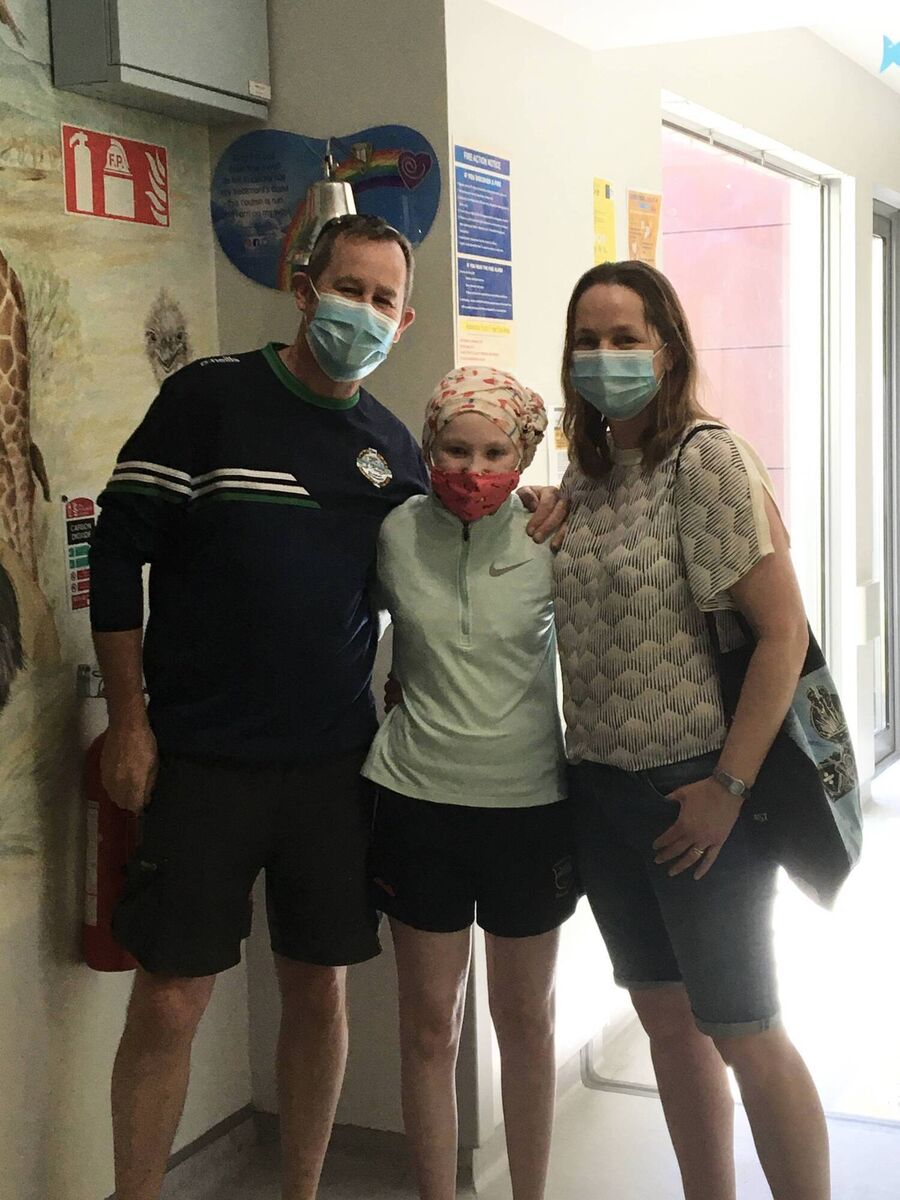
On the day Tanya and I talk, Gráinne had gone to a coffee shop after school with a friend. “That’s all I’d wanted for her – being able to hang with her friends. And it’s only in the last two weeks she’s strong enough and steady enough on her feet to be able to do it.”
The first-year secondary student has also created her own social media personality, as well as a rap to tell her story, and to promote a fundraiser — with some proceeds going to CHI Crumlin — that her mum’s participating in Dip in the Nip (exa.mn/Dip-in-the-nip). “Another reason for the rap is because she’s cheekily taking the opportunity to get a custom phone from ZHC [popular US YouTube artist]. That sums it all up for me, after everything she has been through, this is what she’s thinking about now, just like any typical teen,” says Tanya.
Gráinne is living the ordinary but precious life of a teenager. Ringing the bell at CHI Crumlin is all about welcoming this new phase, where children put cancer behind them and get on with their lives.
“When staff hear the bell ringing, they drop what they’re doing. They run to the bell because they know it’s a hugely important moment for the child,” says Professor O’Marcaigh.
“Very often, parents say a few words. Staff rarely do — it doesn’t need any commentary. Everybody knows its importance.
“The children give that bell a huge ring. It’s often a culmination of two to three years of chemo. They ring all the bad stuff out and they reclaim their lives.”
- World Cancer Day is today, February 4.
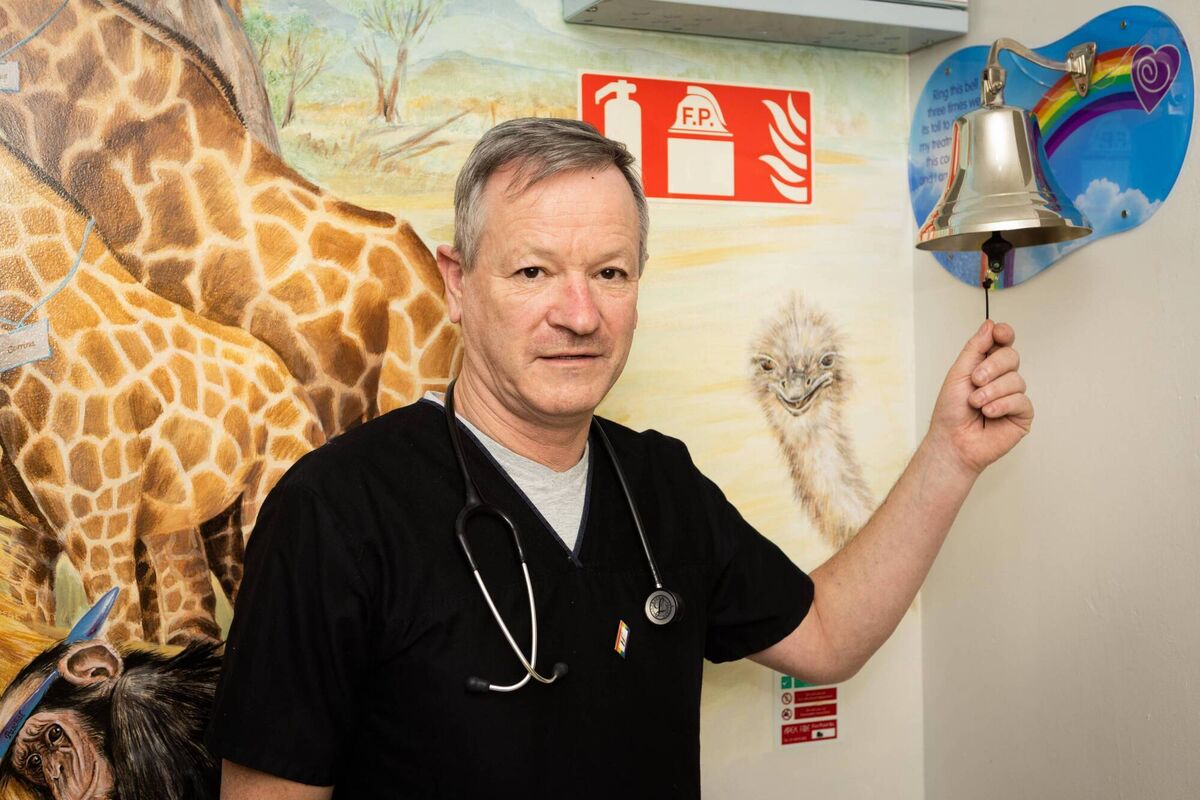
When Professor Aengus O’Marcaigh, consultant paediatric haematologist in CHI Crumlin, meets parents of a child diagnosed with leukaemia (this along with brain and central nervous system tumours make up over 50% of all childhood cancer), they’re usually terrified their child will die.
This presumption, he says, is in fact far from the truth. “We cure 95% of children with leukaemia. This is because of a huge breakthrough in the last five years — CAR T-cell therapy.”
This therapy is administered only to children whose leukaemia returns. It involves taking the child’s immune cells and genetically engineering them to attack the leukaemia cells. “The result has been unbelievable. Children who, five years ago, would have died from leukaemia, if it came back, are alive now.”
About 170 children aged from birth to 15 years are diagnosed with cancer in Ireland annually. Prof O’Marcaigh says parents at outset of a child’s diagnosis have three key concerns.
“They ask what caused it. Did they do anything to make it happen? I reassure them nothing outside the child’s body caused it and nothing could have been done to stop it happening.”
Parents also ask how long the cancer has been there. They worry it has been left too long. “I reassure them children’s cancers are generally picked up quickly.”
They also wonder if there’s any implication for the family’s other children. “I explain that it’s not passed on genetically or by contact and I reassure them there’s no need to get the other children checked out.”
CONNECT WITH US TODAY



Be the first to know the latest news and updates