Pat Divilly: How 2022 will be the year to slow down
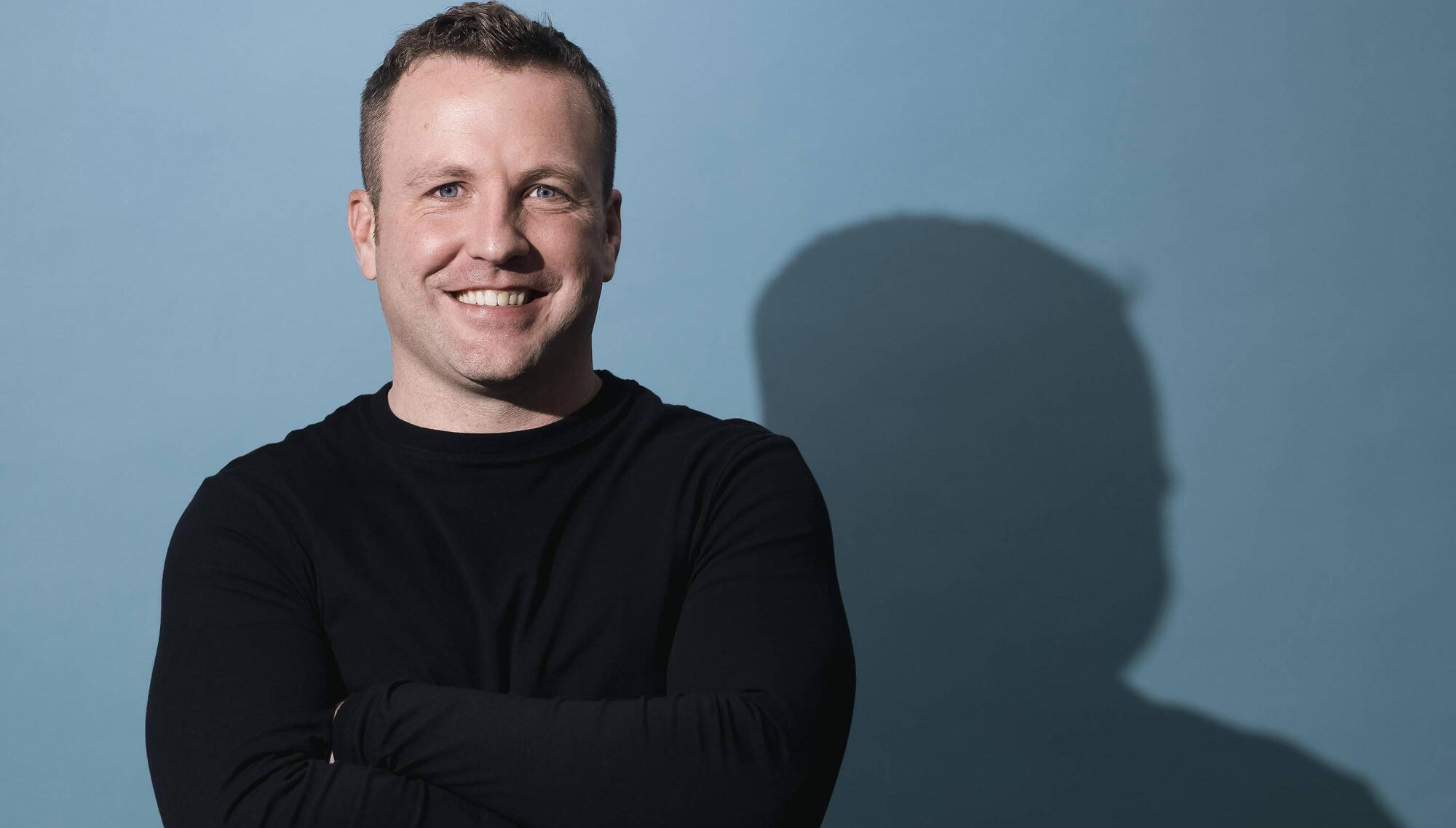
Pat Divilly: "Obviously eight weeks is not going to change everything, but it's encouraging a practice and talking about mental and emotional fitness in the same way we look after physical fitness." Pic: Marc O'Sullivan
They say that everything is a habit. What we eat, what we buy and how we do most of our daily tasks are entrenched in the habitual.
Many of us have seen that play out when we try to start a new fitness regime. If we are able to keep up the training past the initial ‘this is too hard, I hate this’ phase we manage to keep going. To make it part of our lives. A habit. More than this, those of us who manage to be kind to ourselves in the effort of starting something new and sometimes hard are even more likely to succeed.

Pat Divilly has seen this firsthand. He is the host of the hugely popular Pat Divilly Podcast, as well as an author, speaker and health and wellness coach who has fast become one of Ireland’s leading authorities in the area.
He worked as a personal trainer for many years and during that time he noticed a surprising trend with his clients. Those who succeeded in their weight loss or fitness plans were not the ones who went to the gym seven days a week and didn’t eat carbs, but those who spoke kindly to themselves and were less critical of their failures. This realisation led Pat to a completely new field of work as he started researching the psychology of our inner voices.
The culmination of that work is Fit Mind, his new book that explores the way in which we speak to ourselves. The book offers an 8-week program for tuning into, examining, and mastering this inner voice.
The course offers practical tools and examples where he demonstrates how we can free ourselves of our inner critic and better identify the way our own narratives drive our behaviours in all areas of our lives, from career to relationships but he knows that there’s no quick fix to mental health.
“Obviously eight weeks is not going to change everything, but it's encouraging a practice and talking about mental and emotional fitness in the same way we look after physical fitness. For a long time, a lot of us saw mental health and emotional health as something that just happened, and so it was a roll of the dice.” Pat’s book focuses on building the tools to manage the mind and act as a springboard to go forward and explore other areas. There are two big facets to Fit Mind: meditation and journaling. They both focus on the idea of being calm.
“For years this self-help stuff has been very much about the head and changing our thoughts, but when your body feels overwhelmed, stressed, under pressure and threatened it’s in that constricted stage where it's looking for threats everywhere. It's very hard to see the world through a positive lens when your body feels under threat.
“Meditation is about calming the nervous system, I think that's the next big trend. People talked about fitness for years and then it was the mind for years and I think now it's the mind and the body coming together. Meditation is the tool that allows us to create a sense of calm so that the lens through which we see the world is from a centered place instead of a chaotic place.
“My simple example of that is sleep. If I have a poor night's sleep, everything seems more challenging because my body's tired, but if I have a good night's sleep the same challenges seem that bit more manageable. Meditation creates calm and stillness so that you can take a step back from overwhelm into a place of perspective.
“When it comes to journaling, I feel that we've all taken on ideas about happiness and confidence and conflict, that serve as our lens to the world. A lot of us fall victim to saying I'll be happy when, so your happiness is always somewhere in the future. That week of the programme is re-exploring what happiness is and where is it found? There are journaling prompts each day to encourage people to think. We often think we're thinking, but we're really just remembering and playing out the same narratives over and over again.
"95% of our thoughts today tend to be very similar to yesterday. We tell ourselves stories like we’re not good at public speaking but that's probably coming from childhood at a time when someone laughed at you, and you remember that. But that’s not a thought, it’s a memory. When you write you have to consciously do so and you have to think. That comes from a new place. It doesn't come from your past; it comes from somewhere else.”

There are big subjects to tackle when it comes to understanding the way in which we speak to ourselves. There are things that happened in our childhood that without the ability of understanding context, shaped us. There are the meanings that we give to our external experiences because there are always two things: what happened and the story that we tell ourselves about what happened, which are not always the same thing. And there is black and white thinking where we are either good or bad, happy or sad instead of being able to admit that we are often two things at once.
Pat says that the best thing that we can do for ourselves in 2022 is to slow down and remove some of the external factors that are blocking our ability to hear ourselves.
“Slowing down is really about removing some of the stimulation, some of the noise. That can be huge. There can be a tendency to think only about addition in the new year. What am I going to add?
What am I going to do more of? It might be worth thinking about how can I remove some of the things that amp me up, that have me moving in a very fast pace, and then how I can slow it down?
“Imagine your life as a car where you have your foot either on the accelerator or the brake. The accelerator is the stress response. Stress is important. It gets us up and gets us moving, but if we're always stressed, the car gets faster and faster, and eventually the car crashes because you feel out of control and that's how our experience can be. The main thing I think people can do is to ask themselves how they can put their foot on the brake every day?
“Meditation can be that break but there can be a lot of misconceptions around it. I have tried to take the spiritual aspect out of it. You don't need to meet God. You don't need the levitate. If the only thing meditation does for you is to slow your breath that’s great. When you slow your breath, you slow your mind and when you do that you send a signal to your body that says I'm safe and I'm okay."
Having five minutes of that in the morning can have a profound impact on someone's day.
“If you set a timer for five minutes, breathe in through your nose for four seconds and breathe out for six and do that for five minutes you’ll notice that it's like pushups in the gym, with every repetition you get stronger. Each time your mind drifts and you acknowledge that and come back it’s like doing a pushup. You're just training your attention. You're learning to be in the present.
“A lot of us are in stress all the time, we’ve almost forgotten what it's like to be calm. It's hard to be calm because we’ve become addicted to constant stimulus. Meditation teaches you to recognise how your mind is. At the beginning you may not get more than a second of silence but you’re going to learn how crazy your mind is and how much it can jump around. If you can learn to slow down and be silent for five minutes, you’ll create calm.”
Pat knows that starting a daily practice can seem daunting, which is why his book is focused on just eight weeks, but he says that even for him, who lives this work every day, it’s something that he needs to think about.
“I should say that the reason I talk about all this stuff is because you teach what you need the most.
"I'm still at times addicted to distraction and addicted to achievement and the idea of trying to get somewhere else rather than enjoy where I am right now, so I'm still learning and reminding myself of all this 10 times a day.”
Read More
Celebrating 25 years of health and wellbeing