Eating disorders: the pandemic has created the 'perfect storm'
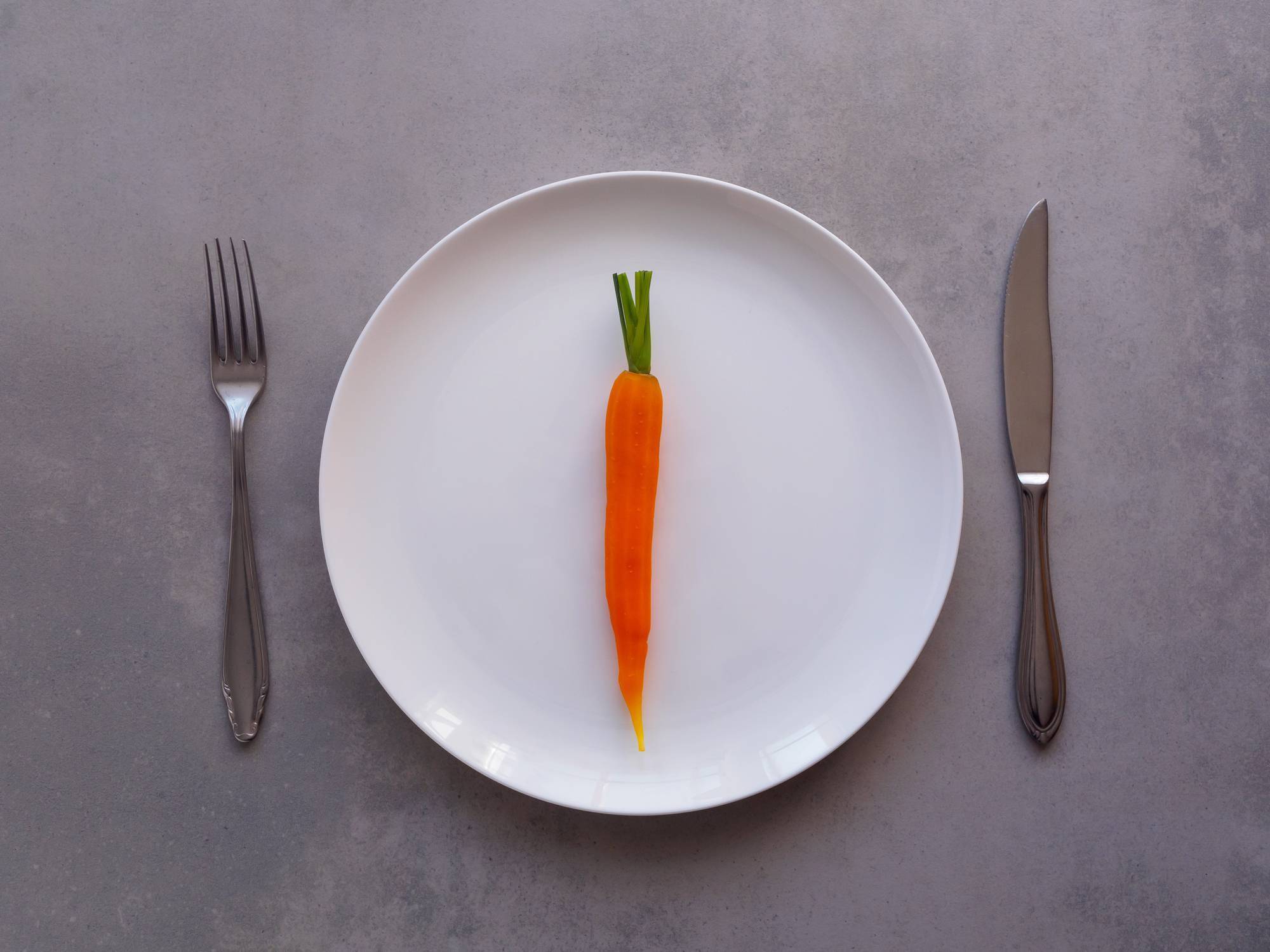
The chaos generated by the pandemic has fueled a rise in eating disorders among boys and young men who are looking to create order in a time of disorder  
Eating disorders: the pandemic has created the 'perfect storm'

Picture: iStock 
When the pandemic struck, Niamh*, a mum based in the Leinster area, instinctively knew to keep a close eye on her son.

Now in his mid-teens, he had developed an eating disorder aged just 11. He’d spent nine months in treatment with Linn Dara Child & Adolescent Mental Health Services (CAMHS). “It was family-based therapy, where the family unit is empowered to work together to help the person recover,” says Niamh.

One of the first key things she learned back then was to take control of anything to do with food, or eating, away from the person who has the eating disorder. “As parents, you decide what the family’s eating – the content, the quantity – and you sit with the child with the eating disorder while they eat it.”

Five years on, her son has put the eating disorder behind him, but once the first lockdown was imposed and he had no access to structured sports, Niamh “got very observant again” and doubled down on taking control of what meals the family ate. “At meals, I’d put everyone’s portion on their plate. And there was always a snack before bed.”

Her son has come through the past 18 months with no issues. “He’s doing well at school, he’s sociable, eating, doing his sports – things are in balance.” But Niamh can see how the pandemic might adversely affect anyone with vulnerability to an eating disorder. And she’s right.

In January this year, the HSE highlighted the impact of the pandemic on children, including increased presentations of anxiety and anorexia. Hospitalisations for eating disorders were up 66% compared to 2019. And between March and September 2020, 40% of admissions were males – notably higher than any previous year.

BodyWhys’ PiLaR support programme for family members/parents/carers had 683 attendees in 2020 – a 121% increase on 2019. And the organisation’s figures for boys/men seeking help in 2021 show a 77% rise in January-August for online support. From January to June there was a 144% increase in those seeking email support and a 94% upsurge in calls to the helpline compared to the same periods in 2020.

A perfect storm

Consultant psychiatrist and assistant medical director with special responsibility for children and adolescents Dr Aileen Murtagh works in Willow Grove Adolescent Unit of St Patrick’s Mental Health Services. She believes the pandemic has created “a perfect storm” for development of eating disorders – and that the lockdowns gave people with susceptibility to the condition too much time to focus on food, weight and over-exercise. “There was a lot of fear of weight gain, of losing body shape. These thoughts had too much airtime. They became obsessive – and translated into using measures to control body, weight and shape.

Fierna Kennedy, a Limerick-based adult and adolescent psychotherapist with a special interest in eating disorders, says the pandemic “absolutely propelled” the development of eating disorders in vulnerable individuals. “During the pandemic, people were robbed of their resources, things that fulfilled them and kept them distracted – connections with friends, hobbies.”

She has seen male anorexia escalate. “When young men were faced with their own insecurities – without external resources – they started to control their emotions, their anxiety, through food. Also by concentrating on fitness and exercise – these became a measure of achievement and created a feelgood factor.”

Another factor contributing to the perfect storm created by the pandemic was the flooding of society with self-improvement messages. This bombardment to better ourselves wasn’t good for everyone, says chartered clinical psychologist Mark Smyth. “Self-improvement can become obsessional if the person is also battling with underlying insecurity about not being good enough for themselves or others,” he says.

At Willow Grove, Murtagh notes that although referrals of adolescent girls for eating disorders increased during the pandemic, the unit has had no males in that period. This, she says, is nothing to be complacent about – rather it gives more reason for concern. “We know a lot of males tend to delay help-seeking.” Often, she says, it’s because eating disorders are more traditionally associated with girls.

Harriet Parsons, training and development officer and psychotherapist with BodyWhys, says the official figure for men and eating disorders is one in 10. “But generally it’s accepted that it’s more like 25% because it’s under-reported in males.”

With high-profile men like Elton John, Russell Brand and Billy Bob Thornton speaking candidly in recent years about their struggles with eating disorders, the hope is that the illness will soon be seen as no longer gender-specific.

Murtagh explains another aspect contributing to why male eating disorders can be overlooked: in boys they often don’t fit the stereotype of what an eating disorder looks like. A 2016 paper published in British Journal of Psychiatry stated that ‘clinical depictions of eating disorder typically refer to an emaciated female, relentlessly restricting food intake in pursuit of a thinner body’ but pointed out that presentation of disordered eating among males is often distinct from what is observed among females. “Males may present with stereotypical, thinness-oriented presentations of anorexia nervosa and bulimia nervosa. Nevertheless, a far greater proportion of males with body image disturbance report concerns with muscularity,” the researchers said.

“Girls with eating disorder are obsessed with being thin,” says Murtagh. “They’re concerned with calorie-counting. Boys become focused on getting a muscular, chiselled physique. They have the psychological factors associated with eating disorder but they’re focused on muscle gains, bulking up, excessively exercising, using supplements or steroids.”

Some boys, she says, want very lean muscle, others want the six-pack abs portrayed on social media. “And because the disorder can manifest differently in boys, it’s harder to detect by parents and health professionals.”

Parents may also interpret their son’s heightened interest in diet and working out as a health kick and positive. “Males over-exercising, it’s often applauded as a good thing. We need to be mindful it can go too far,” says Murtagh.

Body image has become a commodity

Teen boys and young men have told Smyth about feeling under pressure to conform to specific body shapes: narrow waists, ripped abs, big biceps in tight t-shirts. Previously, he’d have said their motivation was to get bodies like sports stars. “Now I think young men are more likely to be aspiring to fitness influencers they see on Insta and TikTok or MMA fighters or the men on Love Island. And you don’t see anyone on Love Island with love handles or a beer belly. Body image has become a commodity.”

The British Journal of Psychiatry paper points to the ‘ideal’ male body becoming increasingly muscular: “Current action figure toys possess greater dimensions of muscularity than the largest human bodybuilders.”

Young males, says Smyth, make negative comparisons between their own body shapes and those of peers/fitness influencers. “The feeling of not measuring up leads to more time in the gym, more restrictive eating patterns. They want to compete – they don’t want to be second best to their peers. They want to be the biggest, strongest, leanest.” This takes a lot of work, he says. So what are young males doing to themselves in pursuit of the ‘ideal’ body?

Dietician Aveen Bannon from the Dublin Nutrition Centre is seeing an increase in disordered eating/body image among boys. She finds it often starts with over-exercising. “We see young boys lifting heavy weights without proper guidance.”

She says children under 16/17 should be given an age-appropriate programme by a qualified fitness instructor/physiotherapist. “Boys are still growing at this age – their muscles and bones need opportunity to lengthen and strengthen naturally.”

Obsessive exercising is then followed by restrictive diets. “So often with boys we see a focus on high-protein diets in the belief that if they increase intake they’ll gain muscle faster/grow quicker – which unfortunately isn’t the case.” Most commonly, she says boys want to gain weight, but only muscle – they want very low body fat. “They’re often nervous of carbohydrates, so we see low fibre intake, and they refer to ‘clean eating’ where sugar’s completely avoided and the diet is low in fat.”

Bannon says these boys don’t realise fats have many roles in the body: lubricating joints, absorption of nutrients (vitamins A, D, E and K, calcium and magnesium), protecting organs, skin and digestive health. “Teens need at least 30-35% of their calories to come from dietary fats.” Other frequently-seen nutrient deficiencies include low calcium and iron. “This can be due to reduced dairy intake and picking lean low-fat meats that are lower in iron than red meats.”

Bannon says teen boys need to know they can gain 9-14kg of muscle naturally with growth. “They need reassurance this can happen with a healthy balanced diet and healthy relationship with sport.” She urges parents, concerned about their son’s eating/food intake, to consult a sports dietician.

Psychotherapist Fierna Kennedy: Eating disorders often seen as a girl’s illness.

Desire to control

Parsons says what lies underneath eating disorder – whether the sufferer is male or female – is a desire to control and manage feelings. “Boys have the same struggles as girls. What is it to be a man? How can I grow up? What am I supposed to do or look like? Some don’t have a great sense of self. There’s more pressure on men than 40 years ago to measure up, to look a certain way.”

And it’s within the gap between the ‘ideal’ and how the young man feels about himself that the disordered behaviours begin – all, says Parsons, in a bid to help him feel better about himself.

In coming forward to seek help, she sees males with eating disorders having a double hurdle to jump. “Not only is there the difficulty around talking about a mental health issue, they have a second hurdle – it’s a mental health issue usually associated with girls and women.”

Kennedy agrees there’s a stigma before young men even walk in the door of the therapy room. “I see 20-somethings diagnosed with eating disorder saying ‘I’ve a girl’s illness’. For parents, realising their son has eating disorder is so shocking. Sometimes they’re not even aware boys can suffer like this.”

Maria*, a Midlands-based mum of three, never thought a boy could get eating disorder. “You think it’s teenage girls,” she says, recalling how it felt “worse than cancer” when her then nine-year-old son ticked 10 of 12 indicators for eating disorder on the BodyWhys website. Now aged 14, his parents are happy he’s eating “three massive square meals a day”.

But Maria – who has been greatly helped by CARED Ireland (Caring about Recovery from Eating Disorders), a support group for parents/carers – believes there are still voices in her son’s head that make him feel guilty about having certain foods.

“He’ll only eat a cake if it’s homemade, and then just a quarter of a slice. He thinks about everything extra that he eats.”

She feels boys are “up there and beyond” girls when it comes to body consciousness. “He’s extremely image-conscious. He’s far more particular about how he looks than his 16-year-old sister.”

Before her son got to a stage where he dropped all sweets and was having fruit to excess, he’d seen a TV programme about the dangers of too much sugar. “He latched onto this. The whole anti-sugar campaign has a flip side. I think it’s not suited to vulnerable children.”

Instead, says Maria, there needs to be a big campaign done on body confidence – to help children and adolescents celebrate being happy in their own skin.

  •  Contact CARED Ireland at caredireland@gmail.com; Bodywhys at 01 210 7906 and alex@bodywhys.ie; see exa.mn/Male-Body-Image

* Names have been changed

What parents can do

What can a parent do? BodyWhys recommends:

  • If you believe you’re child may be developing an eating disorder, it is important to speak with them about it as early as possible.
  • Eating disorders aren’t really about food – your child’s emotional well-being must be the focus.
  • Create opportunities for your child to be around you with no specific focus, so they can open up to you if they feel able. Try to be as available and as visible to them as possible, so that they may approach you with ease.

When speaking to your child:

  • Do be honest. Speak from your own perspective, e.g. “I’m worried about how you’ve been feeling lately…”
  • Remember your child may feel extremely vulnerable. Be prepared for denial, resistance, false reassurance, silence, emotional outbursts.
  • Reassure them you care about them and value them for who they are, not what they look like.
  • Speak in specifics: mention behaviours you’ve noticed, and explain why you’re concerned about these. Avoid listing all your fears and concerns at once – this may be overwhelming for everyone.
  • Don't ask for immediate changes in behaviour. Don’t demand that they ‘just eat’ or ‘just stop’ – this is too much to ask of them in the early stages. And don't make accusations.
  • Do show you understand the eating disorder is their coping mechanism.
  • Listen as well as speak – balancing your concerns with their responses is important at this stage.
  • Encourage them to speak as openly as possible.
  • Communicate a belief that recovery is possible.
  • Make a distinction between eating disorder and your child: avoid labelling your child, e.g. describe him/her as ‘having’ or ‘being affected by’ eating disorder, as opposed to ‘being anorexic’; be clear you are not assigning blame to your child; encourage your child to make these same distinctions.
  • Do ask your child to come to the family doctor with you.
  • It is important to accept where child is, not where you want them to be. Your initial conversation with your child is the first step towards a broader process of support and recovery. The eating disorder is now out in the open. At this stage it is important that your child feels you can take some control of the situation for them, and guide them towards the next step.

Read More

x

Celebrating 25 years of health and wellbeing

More in this section

Lifestyle

Newsletter

The best food, health, entertainment and lifestyle content from the Irish Examiner, direct to your inbox.

Cookie Policy Privacy Policy Brand Safety FAQ Help Contact Us Terms and Conditions

© Examiner Echo Group Limited