Born smoke-free: Meghann kicked the habit for good for little Shea
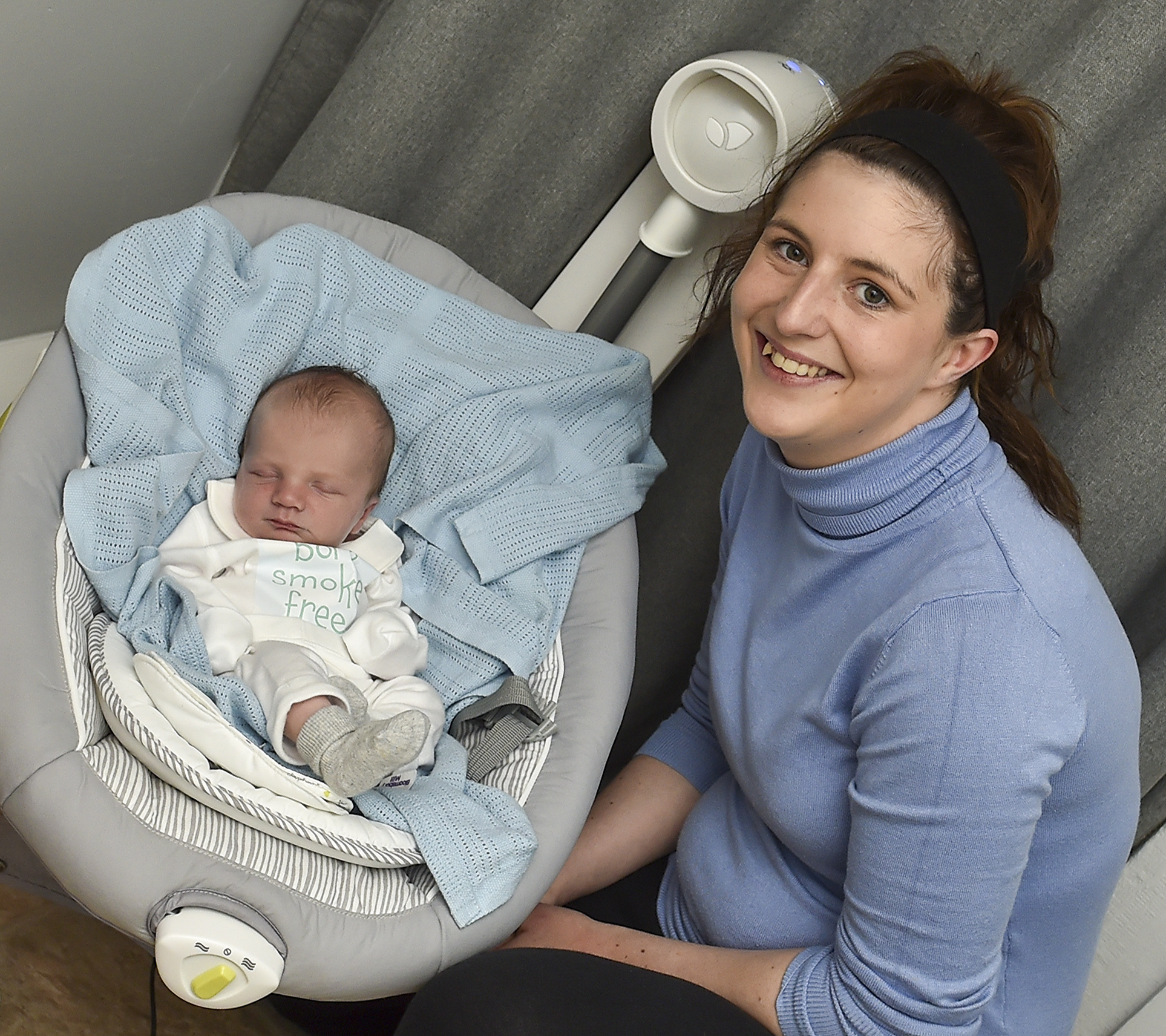
A pilot programme in CUMH is helping pregnant women to quit smoking for good  
Born smoke-free: Meghann kicked the habit for good for little Shea

Meghann Drake and her week-old baby Shea at home in Millstreet, Co Cork. Picture: Dan Linehan

It was pregnancy that really got Meghann Drake off the cigarettes.

The 25-year-old from Millstreet, Co Cork, had her first baby, Shea, just over two weeks ago. “He’s absolutely flying, a happy little baby,” she says, adding that she and partner John are blessed Shea’s so quiet.

Meghann, who works in Lidl, loves being a new mum and is really proud she’s managed what she always hoped – quit smoking during pregnancy. Supported by the Smoking Cessation Specialist Service at CUMH – a pilot programme – Meghann hasn’t smoked since the 11th week of pregnancy.

The first she heard of the programme was when smoking cessation midwife Majella Phelan contacted her after her first hospital appointment. “She said there’s help to quit. She’d help me. She eased me out of smoking instead of making me feel bad about it.” 

Meghan, who began smoking at age 14, used to smoke a box a day, but as she got older managed to limit her habit to three daily cigarettes. “I’d smoke more if I was on a night out. I reduced a lot myself but I wasn’t able to fully give it up – it was always hanging around. I needed that extra bit of help to do it.” 

When Phelan explained the risks to her baby of continuing smoking – for example,  premature birth, growth problems – Meghann realised it was now or never. “To see all the risks in black and white – how bad it is for the baby – you don’t want to be doing that to them.” 

Pregnancy is a game changer

Phelan has had 350 pregnant women referred to her since she was appointed to her role last August. Most are smokers wanting to quit, some recently quit and want to stay that way. “Pregnancy’s a game changer,” says Phelan. “A baby’s the biggest incentive for quitting – research shows more women quit during pregnancy than at any other time in their lives.” 

Smoking’s the one modifiable issue that directly affects pregnancy outcome, says  Phelan. “Smoking is associated with lots of complications and risks to pregnancy, affecting both mother and baby. It hugely affects growth. Some people associate low birth weight with an easy birth – it’s a mal-nourished baby with a good chance of ending up in the neonatal unit or being born pre-term.” 

What drives Phelan’s passion is seeing expectant mums who really want to quit smoking, but struggle to do so. “Smoking’s highly addictive,” she says.

The Smoke Free Start programme’s a joint project between National Women & Infants Health Programme and Tobacco Free Ireland. Funded by Sláintecare Integration Fund, it’s running in the National Maternity Hospital, Holles Street, as well as CUMH.

“It’s a standard six-week treatment programme, that I tailor to each individual woman,” says Phelan. 

 Meghann Drake and her week-old baby Shea at home in Millstreet, Co Cork. Picture: Dan Linehan
Meghann Drake and her week-old baby Shea at home in Millstreet, Co Cork. Picture: Dan Linehan

Ongoing support 

The first contact is to tell the woman about the programme, how it can help. The second meeting sets a quit date – the day a woman says she’s going to wake up that morning and she’s not going to smoke any more. She’ll have prepared her environment to support quitting – no buying a last box of cigarettes, no ashtrays around or anything smoking-related. Relatives – who can be a great support – are informed.

Once weekly for four weeks following the quit date, Phelan offers the women a face-to-face appointment, phone appointment or video call. This is to check in, to see how she’s doing, acknowledge her achievement and encourage her on.

But because quitting can be hard to do, many women’s efforts don’t fit into a six-week timetable, so Phelan gives these women more time. “It doesn’t always go according to plan. Women may need a few more sessions to set the quit date. They may need more support afterwards than four weeks.” 

While some women decline the service, Phelan assures them they can contact her at any stage. Most women who sign up know it’s unhealthy to smoke during pregnancy. “They feel guilty they’ve been smoking at all during pregnancy. I explain quitting’s always of benefit, no matter at what stage of pregnancy – but quitting before 16 weeks reduces risk of late complications to level of a non-smoker. Women find that very motivating.” 

Phelan says many women doubt themselves. “They’ve maybe tried to quit before and it hasn’t worked. They set their quit date, stay off for a week, there’s a traumatic event at home and they’re back smoking. What’s important is finding strength to start again.”

Going cold turkey

Meghann, who smoked one or two cigarettes the week after she first met Phelan, says she then went completely cold turkey. “I decided I wasn’t doing it anymore. I missed them but not as much as I’d thought. Once I got through the first few weeks, which were hard, I was fine. Majella checked in every week, telling me well done, that I was doing great – it just made me want to do more.” 

Phelan confirms that 83% of the first cohort of women who participated in the programme were still not smoking four weeks after the quit date. And 77% of the second cohort were off cigarettes at that point. “Once you reach 28 days off cigarettes, you’re five times more likely to stay quit,” says Phelan.

What’s hard for women wanting to quit, she says, is if there’s a culture of smoking around them. “The hardest is if they’re living with other smokers. Most people who smoke seem to do so outside – some women go out to smell the smoke, but second-hand smoke’s just as bad.” 

Meanwhile, Meghann doesn’t believe she’ll “crack and have one” – even if having a somewhat stressful day. “I thought I would once he was out, but I don’t want to. I’m disgusted by them now. When you’re pregnant you have a proper reason to quit. If you don’t do it then, you never will.”

  • World No Tobacco Day is on Monday, May 31

More in this section

Lifestyle

Newsletter

The best food, health, entertainment and lifestyle content from the Irish Examiner, direct to your inbox.

Cookie Policy Privacy Policy Brand Safety FAQ Help Contact Us Terms and Conditions

© Examiner Echo Group Limited