How to develop emotional resilience in times of change

Young tree emerging from old cut down tree stump
Writing a book about how to embrace change – while at the same time finding himself in the midst of a global pandemic – was like the ultimate experiment.
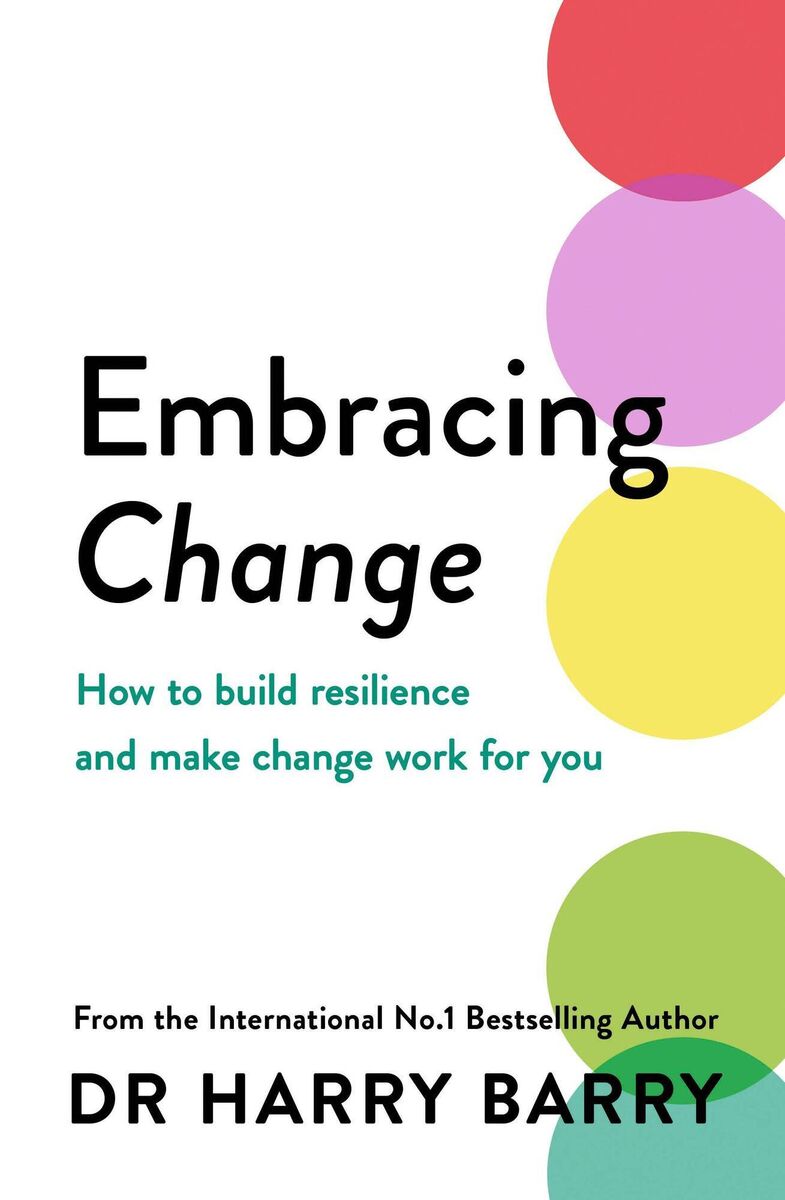
“It was an extraordinary experience,” says Dr Harry Barry, a GP with a keen interest in mental health who’s just written a new book .
“Covid was like being hit suddenly by wartime where all the norms of life suddenly disappeared. I found I was having to apply the principles I was writing about to myself,” says Barry who like so many found it hard to witness virtually the big changes in his grandchildren, yet be unable to hug them.
“The biggest for me was the suppression of our normal freedoms, the right to move around and travel where we want. It was necessary, but for a free spirit like me and my wife Brenda, who love to travel away and around Ireland, we found it terribly difficult – not being able to go out for a meal, go to a movie, all those little things.”
The author of several bestsellers that address various aspects of mental health, Barry had decided to write this book before ever Covid struck. During decades of practice he’s seen how episodes of major change in people’s lives often underlie mental health difficulties.
While 2020 demonstrated how quickly our lives can up-end without warning, Barry says Covid has thrown a smokescreen over all the ordinary, yet significant changes that cause us distress. He means not just small changes like an unscheduled meeting or plans gone awry – but the big changes attached to transitional phases in our lives. Life’s about being in flux, so there are myriad examples of these: joining the workforce, losing a job, getting married, break-up of a relationship, arrival of children, kids off to college, moving house, bereavement.

With , he has created what he calls “a five-question pragmatic blueprint” for developing emotional resilience – so we can cope better with change and adapt to the challenges it brings. He says we all have go-to emotions – an emotion or emotions we typically feel when we encounter a negative change or a point of transition.
“The big two emotions are probably anxiety and frustration,” says Barry.
He believes – once we’ve identified our emotional response to the change – we’ve found the signpost to resolving what’s troubling us. “Because behind the unhealthy negative emotion – the anxiety, hurt, frustration – is a way of thinking and a way of behaving that’s blocking us from dealing with the situation.”
What Barry’s advocating – and teaching in his book – is becoming the ultimate pragmatist: accepting there’s no such thing as the perfect solution, just the best solution one can find at that moment in time. “Pragmatism is a life skill where we become very adept at solving problematic situations. It’s like carving a shortcut through the thinking and behavioural blocks that are preventing us from dealing with the situation.”
His five-question blueprint for pragmatism runs as follows:
- What’s the main emotion I’m feeling (for example, anxious, frustrated)?
- What is it about the situation that makes me feel this emotion?
- What in my thinking is preventing me from dealing with the situation?
- What in my behaviour is preventing me from dealing with the situation?
- How can I short-circuit these thinking and behavioural blocks?
Barry gives an example of how this might work in practice – someone in your life seems to not want to spend as much time with you as previously. Your main emotion might be hurt, which could be triggered by feeling ‘I did nothing to deserve this – I did so much for this person’. Your thoughts about it might be ‘why are they treating me like this – it’s so unfair’.
To short-circuit the unhelpful thinking and behaviour, Barry recommends changing the thought to ‘I would prefer if this person/life treated me fairly…but hello life’, and to separate the person from their action. “I can then forgive them, not because it helps them but because it helps me. But I am entitled to challenge the person’s action, to make them aware of the consequences of their action, how it has hurt me. This must be done in a calm quiet way, in a spirit of ‘I’m not holding it against you – it’s just your behaviour I’m challenging’. And if the person doesn’t accept they’ve done anything wrong, you have a choice to leave it at that or to cut them out of your life.”

Losing his brother to terminal lung cancer over 12 years ago was one of the toughest transitions Barry has encountered in his own life. “I came back from holiday in November, relaxed, in great form, to hear my brother would be dead in eight weeks, a relatively young man, married with young children suddenly facing death in a short time. I felt huge sadness and loss. The reality was I had to accept it – it was unavoidable and going to happen.
“I dealt with it by trying to be there for him as much as possible and for his family too. It didn’t make it easier – it doesn’t mean that to this day I don’t grieve his passing – but it helped me to find a path through it.”
Life, he says, is composed of transitional moments that have the capacity to throw us into varying levels of turmoil. With Barry offers a shortcut through this emotional fallout.
- Embracing Change, How to build resilience and make change work for you, Dr Harry Barry, €16.99
Dr Harry Barry believes six emotions are at the heart of any change. In Embracing Change, he explains why change can trigger common emotional responses: anxiety, frustration, depression, hurt, shame, sadness or regret.
- Many people tend to become extremely anxious, even panicked, when faced with absolute uncertainty – they can no longer control the outcome of a situation. All their previously assumed certainties seem blown out of the water.
- Some people struggle to accept discomfort as a fact of life. They waste a lot of time and energy trying to avoid it. This can lead to frustration as we say: ‘This shouldn’t be happening – why are we being asked to accept and deal with this discomfort? Why are others not experiencing it too?
- If we irrationally believe it’s up to situations or life itself to change – rather than ourselves – this can lead to the irrational demand that ‘the situation must change, not me’.
- Underlying depression is a belief that I can be rated/measured/judged as a person, and that this personal rating could be pretty damning.
- Some behavioural responses to depression can add to difficulties, for example, withdrawing from others, spending increasing time on your own, eating poorly or drinking more than usual and seeking out only the negative, especially in relation to social media and news.
- Beneath feelings of hurt can be a belief that ‘I’m being treated unfairly’ – either by others or by life.
- Negative behavioural responses to hurt can deeply affect those around us. Being constantly suspicious of others, prickly, hypersensitive or sullen/broody about any comments/actions that we believe are unfair may trigger others to view us in a negative way too.
- When a distressing change occurs – mental health difficulties, job loss, cancer – we might believe others will look at or treat us differently. When we allow others to judge us – where the judgement’s negative – we’re ‘loaning out’ our internal critic to others to beat us up emotionally.
- Negative behavioural responses to change makes things worse, for example, hiding from people or situations or using addictive substances to blot out worries.
- We analyse decisions or actions we carried out at some stage in our life, the consequences of which turned out to be more negative than we expected. Regret is about realising what might have been if we’d charted a different course at some point.
- Negative behavioural responses to regret include blocking out the loss, suppressing grief, isolating from others, ruminating constantly on your decision.

CONNECT WITH US TODAY



Be the first to know the latest news and updates