'Our heads are now melting': Expert advice on tackling pandemic fatigue
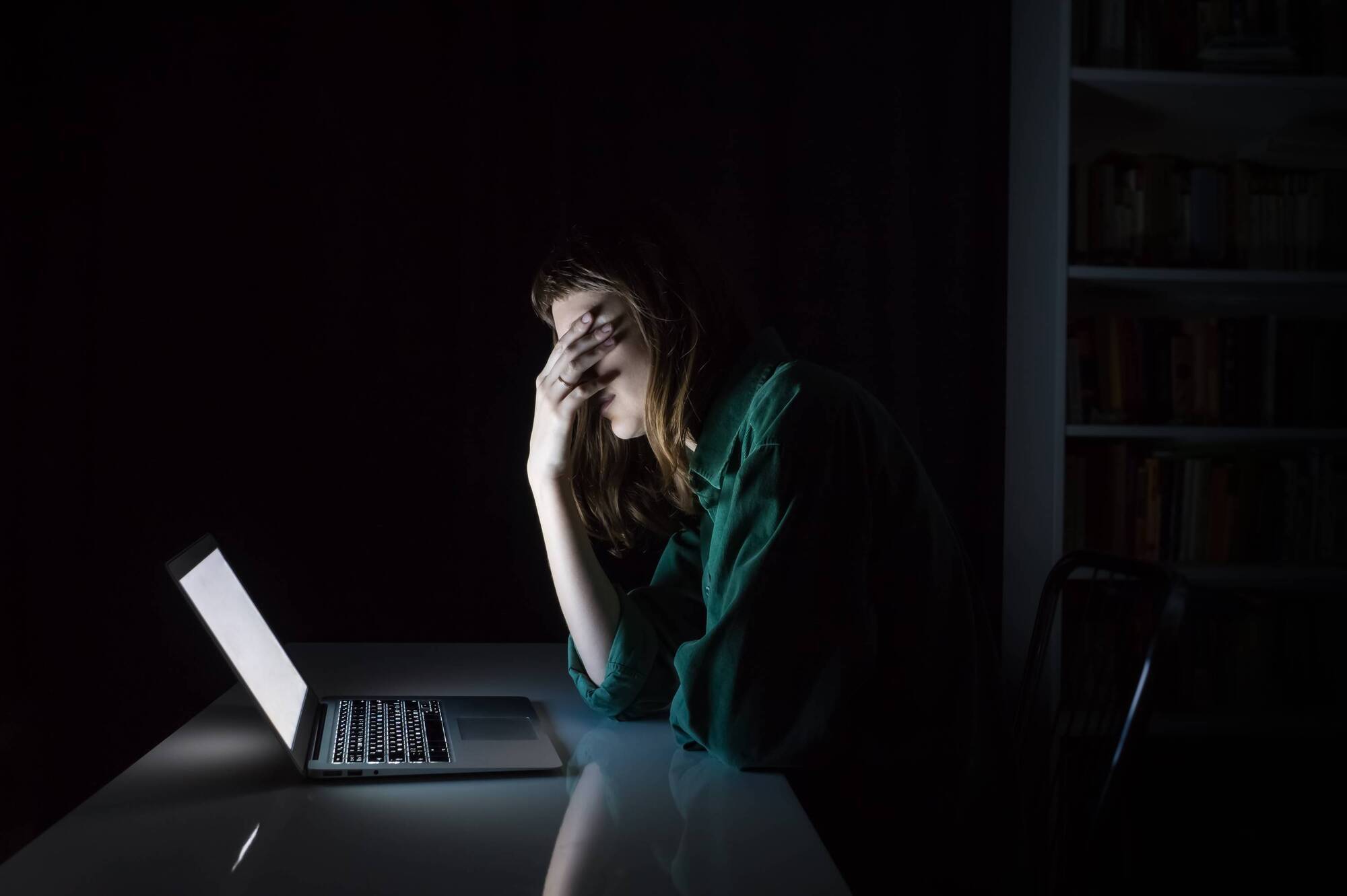
for Feelgood Portrait of depressed female student or worker sitting in front of computer screen at night, concept of stress and anxiety
Extrovert personalities who get their energy from being with other people might also feel more drained than introverts who tend to enjoy spending time alone.
“But there are no rules here,” McGrath says. “A lot of people are surprised that they are feeling really badly affected and there seems to be no glaring reason why.”
It doesn’t help that many of the coping strategies we used when the pandemic started are no longer having the same effect. “We were all cleaning, de-cluttering and baking at the start of the first lockdown, but our heads are now melting with everything that has happened this past year,” says McGrath.
“Even though there are brighter days ahead there is still a sense of hopelessness and fatigue in the air.”
So, what can do to restore our mojo? Here are the top tips from experts:
It is crucial to fully disconnect from work at the end of the day. “If you usually go out to work, then even the commute provides a break from that environment and your home life,” McGrath says. “We have lost these natural breaks in the day which means there is no let-up.”
In an analysis of 54 studies involving more than 26,000 participants published in the researchers showed that those who were able to disengage mentally from work were less fatigued and that those who didn’t experienced higher levels of exhaustion and negative emotions.
A solution is to do something that allows you to switch off from work-related issues. “It can be anything that helps you,” McGrath says. “Going for a walk is one option, but so is lying on the bed or having a bath.”
In her new book the US medical doctor and wellness expert Dr Amy Shah says our diet plays an essential role in maintaining our health and energy levels.
In particular, she says, “gut health is crucial” as it is implicated in energy production, brain function and digestion. She recommends aiming for six to eight servings of vegetables every day, focusing on prebiotics that will feed our microbiome and leave it flourishing. Artichokes, asparagus, bananas, berries, tomatoes, garlic, onions, legumes, green vegetables and wholegrain cereals are among the foods we should be aiming to include, Shah says.
Catching up on sleep with a long lie-in at the weekend might sound like a good idea, but researchers advise against more than 30-60 minutes of additional sleep in the morning.
Dr Neil Stanley former director of the sleep laboratory at the University of Surrey and author of , says our bodies and minds crave the routine that regular sleep patterns provide.
One of the most powerful things you can do to re-boot your energy levels is to fix your wake up time and stick to it event at weekends. “If we mess with our homeostatic drive for sleep with long lie-ins, it can ultimately leave us feeling more exhausted,” Stanley says. “Consistency with your sleep patterns is key.”
Dr Steven Gundry, a former US cardiac surgeon and the author of says spending too much time under artificial - or junk - light indoors has played havoc with our energy levels. Gundry describes natural daylight as “the fundamental driver of your circadian rhythm” and says it acts as a cue “for all kinds of energy-making or energy-conserving activities”.
It follows that we should spend as much time absorbing natural daylight as possible, getting outside first thing to re-set our inner body clock, but also cut down on exposure to light from screens, particularly in the evening when it can interfere with the body’s production of the sleep hormone melatonin and interrupt our instinct to rest.
We could learn a lot from exhausted entrepreneurs who, in a study at Oregon State University, were able to replenish their energy levels with as little as 10 minutes of mindfulness exercises or meditation a day. Simply closing your eyes and emptying your mind of thoughts can help to reduce stressors before they lead to exhaustion although the researchers pointed out that meditation didn’t offset chronic lack of sleep among participants.
Yoga might also help. A paper from Ohio State University looked at markers of inflammation in 200 breast cancer survivors and compared fatigue levels in those who did two 90-minute yoga classes a week with those who did no yoga. On average, the yoga group reported a 57% reduction in fatigue. “A few minutes of meditation will relax your muscles, improve digestion and help your body repair itself,” says Shah.
As much as you might feel like it, research has shown that ‘low effort’ activities such as watching TV or even reading a book are not the best way to unwind after another stressful day at home.
Psychologists reporting in the found that the best way to unwind and to ‘psychologically detach from work’ or other stressors was to spend time in natural environments. Getting out for an hour in a park, forest or even your garden will expose you to the greenery that can have a profound effect on your mental health, they said.
Spending time in green space locations has also been associated with improved levels of restoration comparable to visiting the sea. “For some people, it can be very uplifting just to get outside in nature,” McGrath says.
Creating eating boundaries can help you to regain control. Gundry says it's important not to be too restrictive about what you eat – “the goal here is to improve, not diminish, your energy” – and recommends starting with an eating window of 12 hours and then delaying breakfast by an hour to reduce the eating window.
“Gradually narrow that window to six to eight hours a day, while leaving a good three hours of not eating before bedtime,” he says. “This gives your body, your mitochondria, your gut, and your poor addled brain much needed time to rest, repair, and regenerate.”
For over a year our social lives and entertainment have been fed to us largely through screens – and it’s causing us to flag in more ways than one. We became accustomed to Zoom fatigue (and fatigue from Google Hangouts, Skype, and FaceTime) during the first lockdown but research has suggested it's partly the millisecond delays in verbal responses on virtual platforms that makes video meetings so draining as well as the pressure to perform and to perfect body language, voice pitch and presentation all take their toll.
In August, researchers at Arizona State University revealed that heavy screen users (at their screens for an average of 17.5 hours a day) reported the least healthy diet, physical activity and sleep patterns compared with moderate (11.3 hours) and light (seven hours) screen users. Brief mental breaks away from your screen could help you get more done in the long term by rebooting your focus and, when you can, take calls on your phone or turn your camera off on screen.


CONNECT WITH US TODAY



Be the first to know the latest news and updates