Ecosystem in your gut can tell a lot about how well you will age
Picture: iStock
What’s your gut feeling? Scientists have recently begun to understand that what happens in our gut affects our overall health. A new study even goes so far as to suggest that what happens there can predict how well we will age.
Our intestines are ecosystems of their own, consisting of trillions of bacteria, viruses and other microbes. Together, these are known as a microbiome and it’s our microbiome that helps us break food down into its component nutrients. It also controls how our body absorbs and uses those nutrients in body functions ranging from energy production to hormone balance, and potentially influencing mood and behaviour.
The new study (exa.mn/Gut-Healthy-Ageing), published by surveyed 9,000 American adults ranging in age from 18 to 101. All participants had their microbes analysed and the study found that those whose microbiomes transformed most as they aged tended to be healthier and live longer.
Paul O’Toole, a professor at the School of Microbiology in University College Cork and the principal investigator at APC Microbiome Ireland, sees this new study as building on what is already known about the relationship between the gut and healthy ageing.
He says: “It reports on everything going on in the body. Our work on the Eldermet project and a 2012 study of how gut microbiota composition correlates with diet and health in the elderly established that our microbiomes change as we age, that this change is closely linked to diet and is associated with increased frailty and reduced cognitive performance.”
Typically, a healthy person’s microbiome undergoes rapid changes in the first three years of life, remains relatively static for decades and then begins to change again in midlife.
No two people have identical microbiomes and, as we get older, our microbiomes tend to become more and more unique. In healthy people, the microbes that dominate the gut in early adulthood make up a smaller and smaller proportion of the microbiome as they age, allowing other microbes to proliferate instead.
This is neither a good nor a bad thing, says Prof O’Toole. “It’s the gut responding to our ageing physiology. Everything in our body slows down and so does the intestinal tract. Think about it: children poo two or three times a day, while older people only poo once or even less frequently. As our gut slows, the bugs stay in our system for longer and our microbiome inevitably changes as a result. It’s what nature intended."
What worries him and his fellow researchers is when older people lose beneficial microbes (which help break down food) and gain pathobionts (which cause disease).
“What replaces what is lost is just as important as what is lost,” says Prof O’Toole. “Pathobionts increase with age, but this increase can be accelerated if you eat a narrow diet of the wrong type. It’s what we eat that largely determines whether our microbiome changes in the wrong direction.”
A diet that is high in dairy, red meat, sugary foods and processed foods encourages the growth of pathobionts. If they grow to levels where they dominate, this can lead to inflammation and higher levels of infectious diseases.
“Inflammation is where the immune system is on all the time, chasing shadows,” says Prof O’Toole. “Then, when something actually happens, it’s too busy to respond.
He believes that what we eat becomes even more important for health as we age.
“Older people need to eat more protein to maintain their muscle mass,” he says. “The potential problem with this is that a diet significantly enriched in animal proteins alone may promote the growth of pathobionts in the gut. If we’re adding extra protein, it’s good to balance that intake with fibrous carbohydrates so that the overall microbiome stays in normal proportions. This also controls the level of intestinal mucus-degrading microbes, which may sound weird but it’s all part of balancing the internal ecosystem that has evolved with us.”
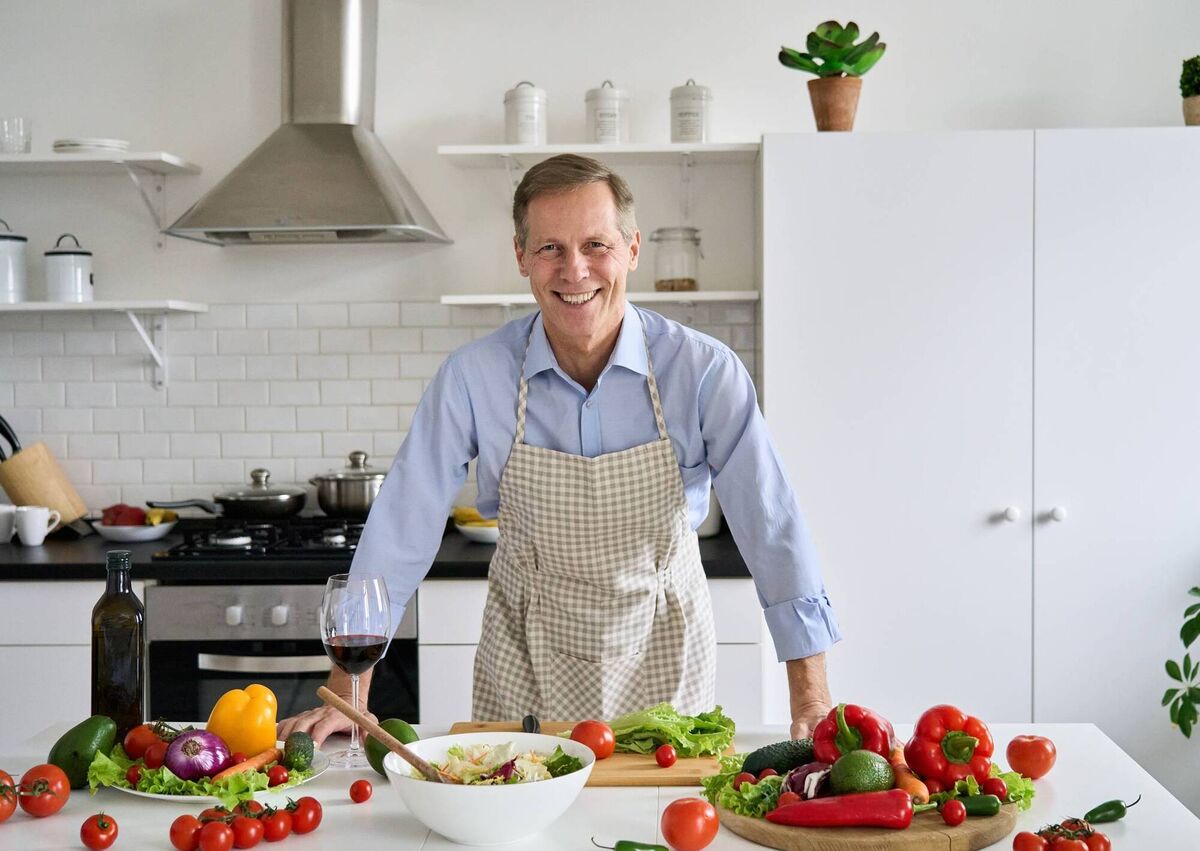
One diet that seems to do this well is the Mediterranean diet, which combines a wide variety of fruits, vegetables and wholegrains with moderate amounts of dairy and fish, very little meat, some eggs, nuts, seeds, olive oil and red wine in moderation.
“More than 500 frail people over the age of 65 from five European cities took part in our Nu-age study in 2016,” says Prof O’Toole. “We put half on the Mediterranean diet and the other half continued to eat as they always had. Adherence to the Mediterranean diet led to increased abundance of specific microbes that were positively associated with lower frailty and improved cognition, and negatively associated with inflammatory markers.”
Prof O’Toole is currently working with Science Foundation of Ireland on the Solarbiome project to investigate what ingredients from the Mediterranean diet could be exploited to create a food product for older people.
“This can be challenging when you live on your own and we could make it easier by designing foods with microbiome health in mind,” says Prof O’Toole.
In the meantime, he urges everyone to eat a varied diet. “Diversity and moderation in all things, along with minimally processed foods,” he says.
“Combine that with regular sensible exercise, as staying active will keep your gut active too. And remember to talk to your GP before changing your diet or lifestyle.”
CONNECT WITH US TODAY



Be the first to know the latest news and updates