Struggling to make sense of chaos: how the pandemic has affected life with autism

Children on the autism spectrum thrive on consistency, structure and routine. Helen O'Callaghan looks at how the unpredictable pandemic has affected their development  
Struggling to make sense of chaos: how the pandemic has affected life with autism

Tommy and Margaret Lowndes with their sons Noah, 7, and Elliot, 3 who both have autism. Photograph Moya Nolan

Five of Sharon McCarthy’s six children have autism. Ranging in age from five to 24, the oldest has just qualified as a speech and language therapist.

“He’s phenomenal – it’s because of his own experience with different autism supports across the years,” says Carrigaline-based McCarthy, who lectures on autism-specific courses in Cork College of Commerce and trains companies in autism-centric workplace practices.


McCarthy believes the future best practice will see responsibility for autism-support handed over to practitioners who themselves have autism. This belief chimes with a virtual event planned by two UN departments for April 8 – to mark World Autism Awareness Day, which takes place today – that looks at inclusion in the workplace through the lens of ‘challenges and opportunities in a post-pandemic world’.

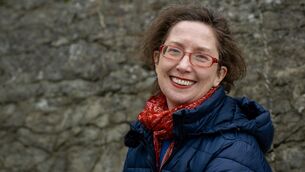
Sharon McCarthy: a lecturer in autism-specific courses

But for many young people with autism, the goal of workplace-readiness has suffered a serious setback due to Covid-19 and its myriad restrictions. McCarthy, who hosts Autism Journeys radio show, believes the pandemic will have a huge effect on children with autism reaching their potential. “These children thrive in predictability, structure, certainty and routine. The pandemic has removed that layer of predictability and certainty.”

She describes many children – who thrived in the school setting – struggling to navigate home-based education. 

“For many of these children school is school and home is home. They can be very literal – schoolwork’s only associated with the school building and the teacher, and not with home.” 

Social etiquette around online learning is different to the social rules of face-to-face, in-person education that the child’s used to. “At school, they can wriggle around at their desk. They can engage with sensory tools. The teacher isn’t sitting right in front of them looking right at them. Online, the child’s expected to sit in front of their screen and to engage one-to-one – look at, acknowledge the teacher on-screen through the whole session. For any child with social anxiety or learning difficulties or who struggles to concentrate, it’s tough.”

 But there’s a flip side. McCarthy says pandemic-style learning has split children with autism into two groups. Some, who struggled with school, have thrived with online learning because learning feels so much safer at home. “There isn’t the same social demand to engage with teachers and peers.” 

Worries of the world

Research shows up to 84% of children with autism present with functionally-impacting levels of anxiety. McCarthy says the pandemic has exacerbated this – and anxiety goes hand-in-hand with sensory processing dis-regulation and feelings of overwhelm. Many children with autism tend to worry anyway about big global events. McCarthy’s had to ban the news in her house.

 “It’s a common theme in families. These kids take on the worries of the world. With Covid, my daughter worries about the wellbeing of everybody. There’s this constant pervasive anxiety.” 

Autism assessments halted through each successive lockdown, so there’s been little movement since early 2020 in existing long waitlists.

“Assessments had to stop because it’s essential the clinician meets the child in person. It doesn’t work on Zoom,” says McCarthy. And while crisis intervention’s available (prioritised based on crisis level), it’s now done online, which can present huge barriers depending on someone’s ability to engage in online meetings. “Some find it hugely difficult to talk about sensitive stuff on Zoom.” 

Parents are increasingly fearful, watching their children “take steps back” since the pandemic-onset. “They’re noticing that children – who worked exceptionally hard to manage their sensory regulation, engaging with different sensory tools at school – are now not as able to self-regulate.” 

Transition back to school 

 Tommy and Margaret Lowndes with their sons Noah, 7, and Elliot, 3 who both have autism. Photograph Moya Nolan
Tommy and Margaret Lowndes with their sons Noah, 7, and Elliot, 3 who both have autism. Photograph Moya Nolan

Autism can make it difficult to form and maintain friendships. McCarthy says many neuro-typical children will have maintained a degree of relationship with peers during school closures, albeit often online. “Whereas many children with autism have withdrawn back into the safety of family and home for the pandemic duration.” 

All of which can make transitioning back to school more fraught – transitions are hard anyway for children on the spectrum. “The longer they’ve been out, the more difficult it’s been. There’s an expectation these children will be able to fall back in and manage their anxiety and sensory regulation. Whereas another level of work is needed to get them back to the level of regulation they had.” 

 While some children act out anxieties physically and emotionally, others internalise distress.

 “Internalisation of feelings will impact mental wellbeing,” predicts McCarthy, adding that girls can tend to mask even autism traits more often than boys – a recent study showed girls, on average, are typically diagnosed with autism about 18 months later than boys. 

A child psychiatrist at Cleveland Clinic Children's said this is likely because of autism traits often being more subtle in girls.

But when it comes to the pandemic impact, McCarthy says children with autism will need a long time to trust that “things are going to be predictable, that education is education, that school can be a safe place”.

'He stopped reading'

For 10 days before the Easter holidays, Margaret Lowndes’s seven-year-old son didn’t want to go to school. It’s exactly what the Dublin-based mum and her husband, Tommy, feared would happen during the weeks Margaret struggled to home-school Noah, while at the same time looking after Elliot, three, who also has autism.

“He just refused to do the work. He stopped reading. He doesn’t like writing. We just wanted to keep him with the basics of reading and writing, but when I took out a book he walked away. We tried to make it fun.” 

When Noah returned to his school routine last September after the first round of school closures, he thrived. This time around it’s taking longer. In a mainstream school, where he has an SNA, he returned on March 1 but his initial excitement was short-lived. Margaret has seen her “good-natured” son reluctant to get up in the mornings, to eat breakfast, to put on his uniform, to get going with the day.

“He’s so small to be doing this. When you see your smiley little boy weighed down, you worry for their mental wellbeing,” says Margaret.

  • Sharon McCarthy’s Supporting Autonomy, Visual strategies to set the autistic child up for success – programme that aims to equip children with autism with strategies/skills needed to access any environment. Available at thinkingtoys.ie, through Amazon, local book-stores (Cork); cost €47.50 (paperback), €34.50 (Kindle).
  • Psychological Society of Ireland’s new podcast series explores ‘Autism Awareness and Autism Acceptance’ today, April 2. See psychologicalsociety.ie

Study aims to challenge unique challenges faced by children with autism

The pandemic’s unpredictable and has created massive uncertainty. And people with autism have lower tolerance for uncertainty than neuro-typical people. So says Dr Sinéad Smyth, associate professor at DCU’s School of Psychology and lead investigator with the T-Res (Transition Resources) project, which aims to highlight and understand the unique challenges faced by children/young people with autism spectrum disorder and their families, due to Covid-19 restrictions.

Smyth says uncertainty links with anxiety and there are high levels of anxiety in people with autism regardless of Covid. “Adding to these stress levels impacts on families, as well as children. Living in that ongoing stressful situation is difficult physiologically and psychologically.” 

The project has surveyed parents of children with autism in a bid to measure lockdown impacts and resulting challenges, so as to enable the development of helpful resources. Parents have seen children struggle to manage and regulate emotion effectively. They’ve also noticed a decline in social skills.

But there have been positives – 28% saw improvements in daily-living skills among their children and 20% saw communication skills improve. “Other research I’ve done has shown – for some students – the school environment can be quite stressful. Remote learning removes some of the strain, whether social or sensory,” says Smyth. This, she adds, gives children space and safety for skills-enhancement.

  • T-Res, funded by Health Research Board Ireland and Irish Research Council, has developed an online free resource toolkit for children/parents/educators/therapists: See: autism-toolkit.ie.

Celebrating 25 years of health and wellbeing

More in this section

Lifestyle

Newsletter

The best food, health, entertainment and lifestyle content from the Irish Examiner, direct to your inbox.

Cookie Policy Privacy Policy Brand Safety FAQ Help Contact Us Terms and Conditions

© Examiner Echo Group Limited