Night hikes during chemo
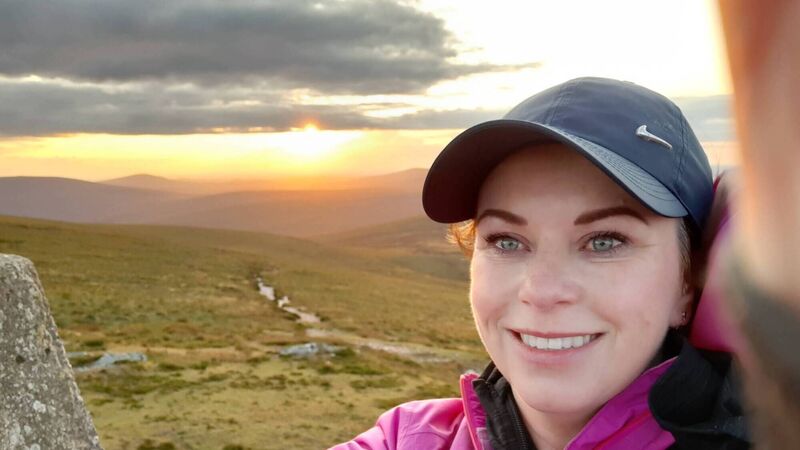
Linda Lehane went for night hikes in Glendalough every Monday after her chemotherapy sessions.
WHEN mum-of-three Linda Lehane was diagnosed with stage two, grade three breast cancer two years ago the oncologist opted for the strongest possible chemo.
“Because I was so young and fit, she said she’d throw the kitchen sink at me," says Co Wicklow-based Linda, 44, an avid gym goer.
The intense chemotherapy regimen spanned five months and Linda also had a lumpectomy, five lymph nodes removed and four weeks of daily radiotherapy.
Admitting she didn’t regularly check her breasts, Linda found the cancerous lump one evening when her children – now aged seven, 10 and 14 – were lying on her. “I felt quite sore in the chest area, so I felt around and found a little lump.”
Her GP felt it “was nothing to be scared about” but at the same time asked if she’d like to go for triple assessment: mammogram, ultrasound and biopsy. Linda agreed, “to be on the safe side”.
A cancellation quickly came up and she went to her appointment, sure she was “wasting everyone’s time”, but following two biopsies she began to think something wasn’t right. Asked to come back two weeks later for the results, she was also offered the option of waiting to speak to the consultant. “He said what they’d found was very small and they didn’t know for sure, but I should bring someone with me when I came back in two weeks. It was a long two weeks.”
A member of a running club, Linda amazingly went for night hikes in Glendalough every Monday after chemo sessions. “I just wanted a bit of normality, to feel like myself. It was nice to get out in the hills with friends. It always made me feel better,” says Linda.
At the time she told few people of her diagnosis and treatment (“they were shocked when they found out”) and she told her children only what she felt they needed to know. “My husband, Ivor, worked from home. Nothing changed – I did everything I used to. "The only change was losing my hair – the kids helped me shave it off.”
Now a circuit coach in a fitness club and cancer-free for 18 months, Linda says she has learned to appreciate the people in her life and to never take anything for granted.
- Breast cancer affects more than 3,000 women and around 25 men annually in Ireland.
- The Irish Cancer Society supports breast cancer patients/families through Support Line (1 800 200700), hospital-based Daffodil Centres and Volunteer Driver Service, which provides free transport to/from chemo appointments
- Irish Cancer Society’s annual October breast cancer campaign, ‘Cups against Breast Cancer’, has experienced 68% reduction in sign-ups due to Covid restrictions.
- Donate at www.cancer.ie and help fund vital breast cancer research and ensure breast cancer patients/families have access to support services.