And breathe... Techniques to help bring peace and calm through conscious breathing
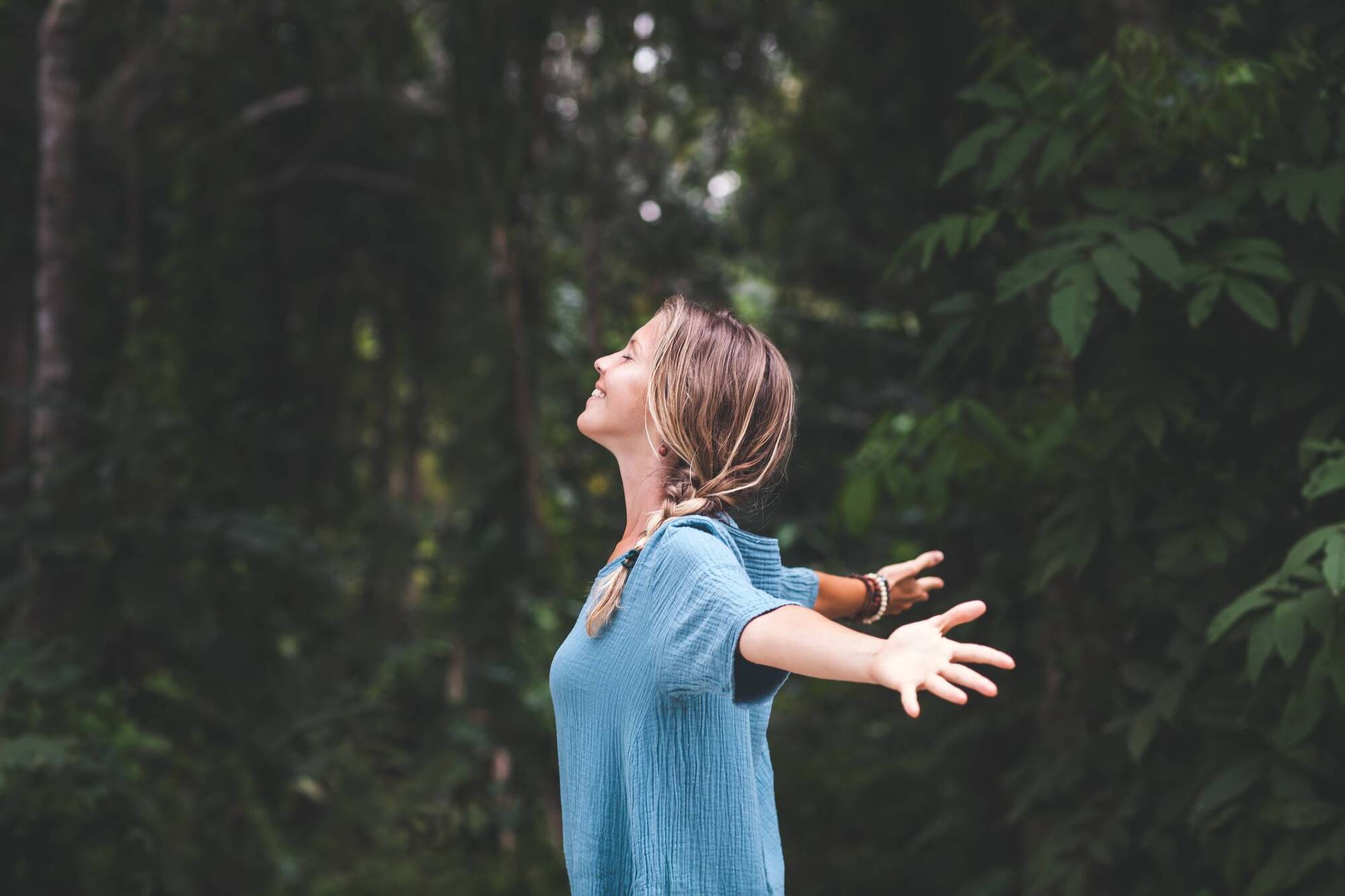
Breathwork is nothing new. Mindfulness (pratyhara) and focused breathing (pranayama) have been with us since the first yogic texts were written in the 5th and 6th centuries BC. It's just that we seem to have forgotten how to do it — we tend to unconsciously shallow breathe our 23,000 daily breaths, using only about a third or less of our lung capacity. Yet conscious deep breathing can impact positively on insomnia, stress, anxiety, depression, concentration, relaxation, and immunity.
It can even work on asthma, which affects 18% of us, and is usually treated with steroids. A 2018 study reported in The Lancet showed how breathing exercises improved asthma patients’ quality of life to the same degree as increased medication. University of Georgia research from 2019 links self-regulation of breathing with the improved treatment of insomnia.
In a nutshell, what breathwork aims to do is activate the parasympathetic nervous system — the body’s automatic relaxation response — and dampen down the sympathetic nervous system— our fight-or-flight response.
We all know that shallow breathing equals panicky feelings, while deep controlled breathing equals sensations of peace and calm. Breathwork by practitioners such as Wim Hof can take things further, but for many of us, we may just wish to learn simple ways of self-regulating our minds and bodies, especially in these weird uncertain times.
Wim Hof — aka the Ice Man — is famous for breaking world endurance records and confounding science by consciously altering his autonomic nervous system by controlling his breath. The 61-year-old has climbed Mount Everest and Kilimanjaro in shorts, run a half marathon in the Namib desert without water, completed the world’s longest under-ice swim, ran the fastest barefoot half marathon on snow and ice, and holds the record for longest immersion in ice. He says it’s all down to the breath: control the breath, control the mind.
Hof’s ability to artificially induce a stress response in his body activates his brain’s painkiller function through breathing exercises, so he can then introduce his body to extreme cold. He says that anyone can do this. Have a look on youtube: Wim Hof breathing tutorial
Níall Ó Murchú trained directly with Wim Hof, and now runs workshops here in Ireland — breathewithniall.com — which focus on the three Hof principles: breathing, cold immersion, and mental focus, with the breath as foundation. Ó Murchu’s six-hour workshops cost €290. The next one in Dublin on Aug 22, is sold out, but there are more scheduled over the coming months.
He points out: “If we were to stop eating, we’d die in a few weeks. If we were to stop drinking, we’d die in a few days. But if we were to stop breathing, we’d die in a few minutes. It’s our most fundamental human need. Focusing on our breathing unlocks huge benefits — it boosts our immune system, our energy levels, our response to stress."
“Most people don’t practice conscious or focused breathing. The Wim Hof method is very simple, highly effective, and scientifically proven to improve health, strength and happiness. First, you practice the breathing, before gradually exposing yourself to the cold, using your mind’s focus.”
There has been extensive research on how Hof’s breathing method works on the brain. You can also see him in action on Gwyneth Paltrow’s Goop Lab on Netflix.
I try the Wim Hof method at home using his 11-minute circular breathing exercise with breath holds (3 rounds, with 3 breath holds) which makes me feel dizzy, tingly and sweaty, but gets easier the more you practice: wimhofmethod.com/breathing-exercises
Then I 'road test' it in the sea, which, on my first immersion, is a chilly 10 degrees. This level of cold should make me gasp and hyperventilate, but wading in very slowly, I control my breath. It works. I am so focused on the breath that I forget to gasp. It works equally well in a cold shower, and you feel fantastic afterwards. Really fantastic. And it’s free.
Not that icy water is a requirement for your breathing practice — you may prefer lying on your sofa. Alan Dolan has been teaching breathwork for 16 years. Formerly a public relations manager in the aerospace industry, he now lives in Lanzarote where he runs retreats from his villa. [From £1,140 (approx €1,270) for four days to £3,650 (approx €4,060) for 10 days, as well as one-to-one workshops and Skype sessions, and an app — Breathguru — for £3.99 (€5.49)] He teaches what he terms Conscious Connected Breathing, and is surprised that there has been no government advice around boosting immunity during the pandemic.
“We need vitamin C, vitamin D, zinc, to practice breathing and meditation, and we need exercise and clean air. In terms of anxiety, Covid has accentuated what is already happening. With breathwork, the benefits are immediate — physical, mental and emotional, and spiritual," he says.
Dolan likens normal breathing to leaving a TV permanently on standby; we access only 20-30% of our lung capacity. With conscious breathing, this can be increased to 100%, he says, which benefits the body by oxygenating cells for optimum physical health: “Conscious breathing is the most effective tool I have ever come across. It is self-empowerment — you are the guru and the breath is the key.”
As well as its physical benefits, he says that mentally and emotionally, it can help with anxiety, depression and PTSD, and spiritually “it is the best tool for exploring who and what we are". A daily practice has a “tangible, rapid” outcome. Dolan says his style of breathwork differs from yogic breathing as it is about breath release, rather than breath control.
I download the app and give it a go. It involves lying still, hand on abdomen, mouth open (wide enough that a finger can fit between your teeth), and inhaling. The exhale is a short puff, like you are trying to fog a mirror. The inhale-exhale is quite rapid, and the breathing sounds like when you are asleep. I feel a bit tingly and slightly dizzy, which Dolan says is normal. My concentration feels better afterwards.
But can you take it even further, and use breathwork within a psychotherapeutic environment? Philippa Vafadari, a psychotherapist who has been teaching yoga for 30 years, incorporates yogic breathing in her therapeutic work with clients. ([url=
http://psychotherapybrighton.org/]psychotherapybrighton.org[/url])
“Breathing exercises — pranayama in yoga — help us to relax when we are stressed because they affect the parasympathetic and sympathetic nervous systems in the body,” she says.
“The parasympathetic nervous system — activated by the exhalation — decreases heart activity, while the sympathetic nervous system — activated by the inhalation — increases it. The higher our heart rate variability — the inconsistent gaps between our heartbeats — the better. When our HRV is high, we are better able to emotionally regulate, make decisions, and focus. Low HRV reflects the opposite — those with PTSD have low HRV and more sympathetic nervous system activity."
“So if you are stressed, you need to regulate your breathing. With psychotherapy clients, I use a yogic ratio breathing of 1:4:2 (Inhalation; exhalation; retention of the breath at the end of the exhalation before inhaling again). The ratio can increase as you become more confident — 2:8:4, 3:12:6, and so on. Emphasising the exhalation in this way increases HRV and lowers the stress response. However, never hold your breath if you have high blood pressure or heart trouble."
"Another great breathing exercise is Anuloma Viloma breathing. I teach this to my Yoga students.”
I have been practising Anuloma Viloma for 14 years, and swear by it – nature’s Valium. You can do it anywhere. In traffic, on a plane, at work, anywhere. It’s really easy and totally calming.
Read More


CONNECT WITH US TODAY



Be the first to know the latest news and updates