Eat like an animal: Follow your gut instinct to reach your ideal weight
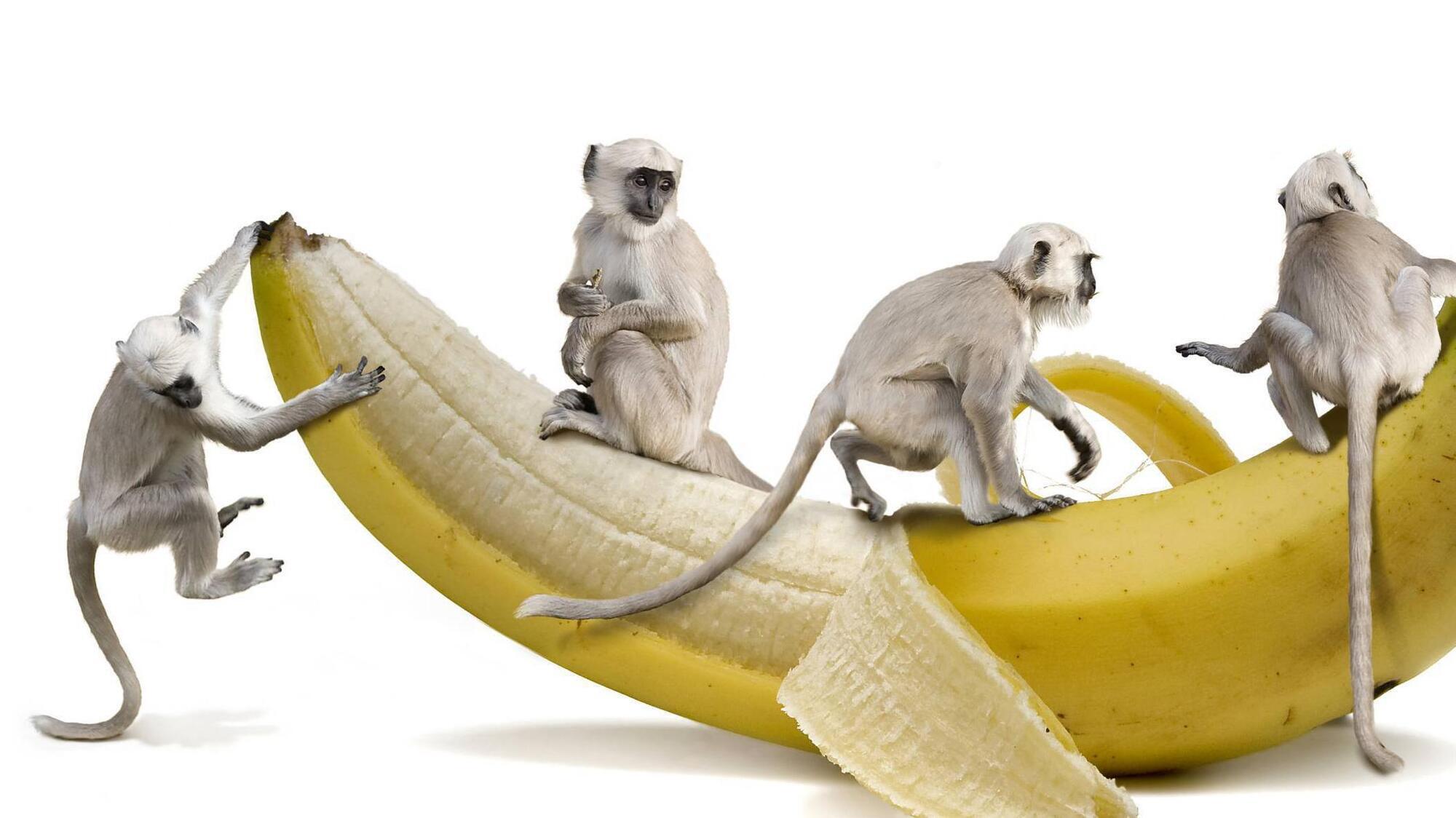
IT is serendipitous that I am speaking to Professor Stephen Simpson just before he is about to sit down to dinner. The Sydney-based scientist is winding down his day on the other side of the world just as I am starting mine and is not at all perturbed when I ask him the contents of his repast. In fact, he brings the phone out to the kitchen and gives me a rundown of the whole menu as his wife Lesley prepares it (he is keen to point out that usually he would be helping out).
“We are not vegetarians, but it happens to be veggie night,” says Simpson. “We’ve got roast pumpkin, steamed brussels sprouts, kale from the garden, caramelised onion, fried aubergine, tahini dressing and an orange dressing in a big warm vegetable salad.”
There’s no denying it’s a smorgasbord of healthy and nutritious food, but it is also important in another regard, as it is a combination that goes some way to achieve the ideal balance of nutrition and health while also satiating our appetite for certain food groups and flavours. This is an area in which Simpson is well-versed.
He is a biologist at the University of Sydney, and for more than 30 years has been researching diet and nutrition in animals. Now he and his colleague, Professor David Raubenheimer, have laid out their findings in a book, It looks at how most living organisms — from locusts to baboons — know instinctively how to balance their diet, and how our modern food environment led humans to lose this ability, leading to obesity and other diseases.
“Animals have this inherent nutritional wisdom that leads them to choose appropriate diets in their natural environment, diets that support health and ultimately reproduction, and which have been fashioned through the relationship between their biology and their environment by evolution over millions of years. How come everybody else can do it but we can’t? That was the big question we wanted to address in this book,” says Simpson.
The book argues that humans are naturally programmed to have five appetites — for protein, carbohydrates, fats, sodium and calcium — and that achieving the right balance of these is key to good health.
It is eye-opening to discover how much humans have lost touch with their appetite, down to a basic inability to even know when we are full. However, Simpson and Raubenheimer argue that it doesn’t take a lot of work to rebalance our appetite systems.
“That is the really powerful message in the book — those appetite systems are there, they still work, it’s just that we have put them in the wrong environment and when you do that, they actually don’t work for us any more, in many regards they are working against us for the commercial interest of the food industries that produce the modern industrial foods that we are surrounded by,” says Simpson.
Of course, one of the biggest differences between us and animals is that they don’t shop in supermarkets and therefore are not tempted by the panoply of foods on offer — way more than we even had two decades ago. Industrialisation proved a game-changer in terms of our health, introducing ultra-processed food into our diets and interfering with our natural appetites to detrimental effect.
“Humans are kind of the cockroaches of the primate world, we are able to exist on the most remarkably broad-ranging and unpromising of diets, and we have adapted over millennia to our changing diets.… But what we haven’t been able to do is keep track with the pace at which we have changed our food environment in the last half-a-century or thereabouts,” says Simpson.
“Part of the problem with ultra-processed foods is because they are smashed up and reconstituted in unnatural combinations, some of the reliable correlations that our biology evolved to expect in our natural foods have now gone. For example, the expectation that when you eat a meal, a certain proportion of it will be in the form of fibre. That fibre is essential to making you feel full when you get through the meal, slowing your rate of gut emptying, and ultimately feeding the gut microbiome, the bugs that live in your gut that are intrinsically part of your health and appetite and immune system. If you take fibre out, as we have done in ultra-processed foods, then you very easily over-eat because you have taken the brake off the key part of the appetite system.”
So how do we go about apeing the healthy eating habits of our primate relatives? The good news is that we can reset our eating patterns by tuning into what our bodies are craving.
“It is actually kind of simple. Take heart in knowing that the appetite systems are there, and that there is more than one. You don’t get hungry in a generic sense. When you start learning that you’ve got appetite systems, you can start listening to them and say, ‘hang on, I can tell that I’m hungry for protein or for carbohydrates’.”
With many people struggling with their weight due to lockdown comfort-eating (hello ‘quarantine 15’), Simpson says this has offered the perfect opportunity for a nutritional reset.
“The lockdown provides us with a nice opportunity in terms of our food environment. You can make it worse by surrounding yourself with rubbish or you can say, ‘okay, I have no choice now, I know that if I bring certain foods into the house, I will eat them because they are designed to be irresistible’ and try starting again, bring wholefoods back into the house, keep the ultra-processed foods out, then start listening to your appetites, and enjoy that interaction between them and your food environment.”
According to Simpson, our protein appetite is the most powerful but we need to eat the right amount and type in balance with the other appetites to maintain good health, and a normal weight. He recommends staying away from what he calls ‘decoy protein products’ such as crisps and biscuits. His own weakness, he tells me, is barbecue-flavoured crisps.
“I know how susceptible I am and why, if I have junk food in the house, I will eat it, like anybody else. I know when I’m feeling hungry for protein, and I can then avoid eating protein decoys like barbecue chips. They are designed to taste like protein, but they are fat and carbs. So when you are hungry for protein, you crave those flavours and if the nearest thing is a bag of crisps, you will eat them. Your protein hunger won’t be satisfied, you will still need to find more and you will have eaten all those calories. You are far better off eating nuts, even salted nuts — anything that is savoury and a wholefood, whether that be chickpeas, eggs or lean meat, chicken or fish. What your body is telling you is that you need high-quality protein, and there are many sources of it that don’t come with masses of fat and carbs.”
And with that, I leave him to have his dinner, which, I’m glad to hear, will be accompanied by a glass of his own home-brewed beer, and followed by a sweet treat. Because, after all, he is only human.
- Animals have evolved separate appetites for protein, carbs, fat, sodium, and calcium. Together, the 'Big Five' can signal a nutritionally balanced diet.
- Mixing a nutritionally balanced diet seems daunting, but animals in the wild do it instinctively.
- The Oxford locust experiment showed how, regardless of which foods they were offered, they chose the healthiest combination of protein and carbs, the one that best supported survival and growth.
- Humans, like locusts, prioritise eating a target amount of protein — however, in a protein-poor but energy-rich world, we overeat carbs and fats to try to reach our protein target, risking obesity.
- In an experiment on fruit flies, those who lived longest fed on diets containing low protein and high carbs. High-protein, low-carb diets caused an early death.
- What about mammals? Unless there are specific medical reasons, you don’t need to cut out any food group (grains, dairy, or whatever) or eat things that you don’t like or that are not appropriate to your food culture. The various nutritional philosophies slugging it out today— from vegan to keto—can provide healthy eating in specific circumstances, but they are not sustainable for most of us.
- Eat Like The Animals: What Nature Teaches Us about Healthy Eating, by David Raubenheimer and Stephen J Simpson, is published by Houghton Mifflin
CONNECT WITH US TODAY



Be the first to know the latest news and updates