Why mums really do know best about healthy, nutritious baby food
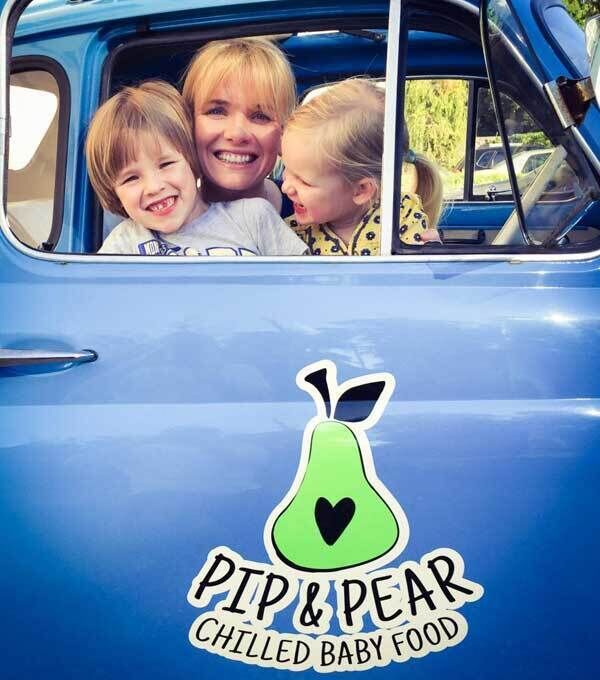
Take mother-of-two Irene Queally, for example.
She got the idea for her chilled baby food business when she failed to find healthy, nutritious baby food on the supermarket shelf.
“The long-life processed pouches and jars didn’t look or taste anything like the baby food I was cooking at home,” she says.
When her son, Luca, was born seven years ago, she enjoyed doing all the cooking from scratch.
“I was a total purist,” she says, but when her daughter Tilda arrived three years ago, she found it impossible to juggle work and childcare and a purist kitchen.
In 2014, the Pip & Pear experiment began: She started making small batches of high-quality baby food at No 9 Barronstrand Street in Waterford, the restaurant she runs with husband Bill Fitzgerald.
The baby menu was a huge hit with customers and, much to her surprise, won gold, silver, and bronze at the 2014 Blas na hÉireann food awards.
That encouraged her to take the bold step of scaling up: She found manufacturing partners, employed two full-time people, and started to build a brand.
The Pip & Pear range — which caters for three different age groups from five months-plus to 10 months-plus — contains no added salt, sugar, flavours, colours, or preservatives.
“It’s just like homemade, with all of the goodness and none of the guilt of buying a long shelf-life alternative,” says Irene.
After just eight months in business, Pip & Pear is available in SuperValu nationwide and in 70 Carrefour supermarkets in Spain. In the coming months, it will go on sale in the UK and in other supermarket multiples here.
Being a mumtrepreneur takes guts, says Irene.
“Sometimes, the guilt would kill you, but going out there and trying something is so rewarding.
"Sometimes, you are awake at night, but it’s really worth it; we get so many lovely emails from people.”
Shauna McCarney-Blair, mother-of-three and founder of Heavenly Tasty Organics, knows all about those challenges, too, and if she has advice for other mothers setting up their own business, it is this: “Go easy on yourself.
"I’m as guilty as any mum of being very hard on myself and I do need to listen to my own advice more often.
"Yes, you have to work hard — really hard at times — and deal with a lot, from both work and personal life, but you will always get through it.”
Like Irene Queally, the dearth of suitable baby food options prompted her to set up Heavenly Tasty Organics. Her two oldest children, Joe and Cara, had severe allergies, including to nuts, eggs, dairy, and even apples, while her youngest child Elsa had a dairy intolerance, but, even as a full-time mum, she struggled to cater for their needs at home.
“I needed a product that catered for all their allergy needs, but I also wanted something that looked and tasted like homemade food, not like the jars of baby food that were sitting on the shelves,” she says, explaining the rationale for her range of allergen-tested chilled baby meals that would go on to win several awards.
Thankfully, her children have grown out of most of their allergies and the Tyrone-based company has changed direction: It now makes a range of healthy snacks for babies, toddlers, and older children.
“We’ve stayed true to our core and offer a range of products that are packed with superfood ingredients. All of our products are naturally low in sugar and salt and never contain any added refined sugars,” says Shauna.
It has launched Crispy Veggie Waffles — made with over 50% vegetables — to add to its Wafer Wisps, Halo Bites, and the award-winning Coconut Squishies, a blend of organic fruit and coconut milk in pouches.
“It will take time for parents to realise that not all of the products in the baby aisle are necessarily that healthy.
“I do think that the market has changed dramatically, but I do feel that there is still room for improvement,” she says.
As a mother-of-two, feeding and weaning expert Siobhan Berry knows exactly how hard it can be to make sure children’s lunch boxes are filled with healthy food.
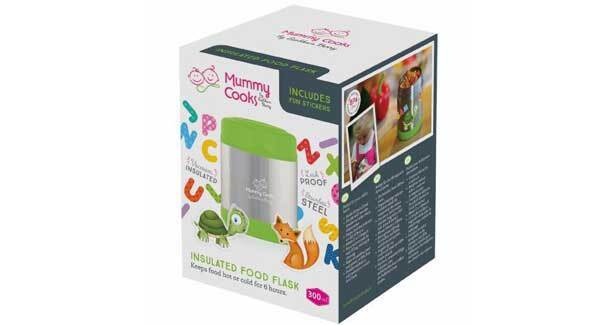
That’s why the MummyCooks.ie website founder developed an insulated food flask. It’s made of stainless steel and BPA-free plastic and keeps food hot, or cold, for up to six hours.
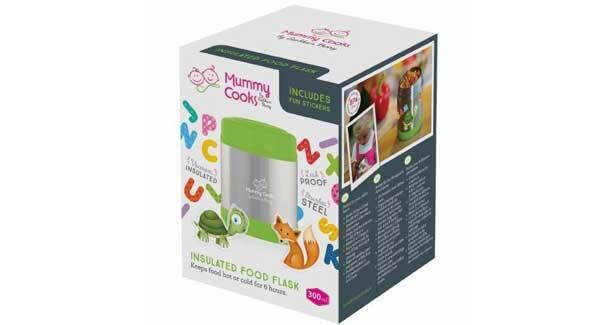
“Having schoolgoing children myself I was hugely aware of the difficulties parents have in filling the daily lunch box.
"What better way to include vegetables and variety than by including, say, a pasta with a veg sauce or hearty soup?” Berry asked.
Flask €15.99 from www.mummycooks.ie
Fairtrade Fortnight, which runs until March 13, this year celebrates the 20th birthday of Fairtrade in Ireland.
Speaking of birthdays, it’s been 10 years since Irish coffee chain Insomnia converted to 100% Fairtrade-certified coffee.
It sold 18m cups of Fairtrade coffee last year and raised enough money to fund a new infirmary and dispensary at a girls’ school in Tanzania.
To find out what’s happening for Fairtrade Fortnight in your area, check out www.fairtrade.ie
Potatoes are hot again – for the first time in seven years, sales of potatoes in Ireland are on the increase.
The news comes just as ‘Potatoes: more than a bit on the side’, the campaign to highlight the nutritional value of the humble spud, gets underway.
Potatoes are naturally fat free, salt free, low in sugar and are a source of potassium.
They are also a great source of fibre — a baked potato in its skin has more fibre than two slices of wholemeal bread.
For more, see www.potato.ie
Where you live could put you at risk of becoming obese, according to new research.
How people view their neighbourhoods has a big effect on how they eat and whether or not they exercise.
If a locality has good food outlets, outdoor recreation facilities and green space, residents are more inclined to exercise, eat more healthily and have a better perception of their neighbourhood, a European study has found.
The study’s authors said urban planners should examine the findings to ensure neighbourhoods are designed to encourage healthy behaviour.

CONNECT WITH US TODAY



Be the first to know the latest news and updates






