The kings of kids’ YouTube - A parents guide to You Tube vloggers

AS your child grows, so does their online profile, the number of apps on their phone, games on their iPad and YouTubers in their search history (which they probably know how to delete.)
Kids, from aged six upwards, are now very at home on YouTube, often reaching for the app’ rather than a remote control — and it’s highly likely they are are watching one of these four YouTube stars. So who are these vloggers (video bloggers) and why are they so successful? And are they as harmless as your kids will tell you?
Clinical psychologist, Dr Eddie Murphy says no matter what, monitor what your child does online to ensure they are not putting themselves in danger. “The YouTuber your child watches is essentially a guest in your house. Are they invited or uninvited?” asks clinical psychologist, Dr Eddie Murphy.
“You have to sit down, take a look at what they’re saying, and decide where they fit in. Is this the type of person you want your child hanging around with?”
DISCOVER MORE CONTENT LIKE THIS
“ Children should also only be allowed to use the internet within a communal space in the house and never in their bedroom. There should be openness about what they’re doing, and absolutely no secrecy,” said Dr Murphy.
“A key area for parents to keep an eye on is balance. How much time are they spending online? How much time are they spending on YouTube? Is it having a negative impact on the child’s life? It’s all about balance. If spending too much time online is impacting the child’s ability to socialise, that’s when concerns arise.”
But vloggers aren’t necessarily bad — some provide innocuous content. Granted, these probably don’t have the street cred’ of the more daring YouTubers, but parents could potentially use them in a reward system with their child.
“There’s a shared language there, between the child and the YouTuber. There’s a shared common interest, as well, and so they can make a connection with them. They speak the same, modern language — children are digital natives, while our generation are digital emigrants.”

One of the YouTubers your child is probably watching is PewDiePie, pronounced like Cutie Pie, who makes €18m a year from his videos, thanks to 35m subscribers.
Created in 2010 by Swedish oddball, Felix Arvid Ulf Kjellberg, the channel is loved by children, teens and adults the world over — collectively, his videos have been viewed more than eight billion times.
Felix’s strange sense of humour and impressive editing techniques are what make this channel so popular, though it’s hard to define PewDiePie’s genre. The material uploaded is off-the-wall — sometimes, the 25-year-old Swede will test a game, other times he’ll review the weird workings of a Japanese toilet, or have his dog Edgar ‘take over’ as narrator.
When playing games, he’ll laugh and joke and express frustration when his avatar dies. His outbursts are profanity-laden, but genuine.
While he’s not quite as loud and aggressive as fellow YouTuber, KSI, PewDiePie’s videos feature swear words and explicit content. If you don’t want your child talking about bewbs (boobs), or picking up ‘the F word’, you wouldn’t want them watching — but that doesn’t mean they won’t try. In a survey commissioned by Variety, PewDiePie was among the top five people who most influenced 13- to 18-year-olds — more influential than mainstream celebrities, like Jennifer Lawrence and Cristiano Ronaldo.
DISCOVER MORE CONTENT LIKE THIS

KSI, or KSIOlajideBT to give him his full Youtube username, was also in the top five.
With nine million subscribers to his Youtube channel, and two million followers on Twitter, KSI is a force to be reckoned with.
But what makes him so appealing to children and young teens? After all, his expletive-filled, rage-fuelled rants aren’t child friendly — but perhaps that’s part of the draw.
KSI first began in 2009 and started uploading videos about the popular FIFA video game franchise. At first, he just wanted to show people his soccer goals and skills; then, he started a running commentary while playing the games.
As the years went by, KSI’s videos became more and more confident, and attracted more and more viewers. He started commenting on other games, like ‘Call of Duty’ and ‘Grand Theft Auto’.
It wasn’t long before vlogging became a family affair, with his older brother and parents all appearing in videos here and there. The brother, Deji Olatunji, created his own Youtube channel under the name ComedyShortsGamer, in 2011, and has four million subscribers.
DISCOVER MORE CONTENT LIKE THIS
Unlike the wide subject ranges of ComedyShortsGamer, KSI and PewDiePie, the focus of Sky Does Minecraft, another popular YouTuber, is extremely specific.
The brainchild of Greek-American Adam Dahlberg, the gaming videos show only on-screen action, with Adam providing commentary off-screen. Sky Does Minecraft differs from other gaming channels, like KSI and PewDiePie, that focus on the player and their reaction, more than the games.
Sky Does Minecraft has 10m subscribers, so if your child plays ‘Minecraft’ they’ve watched this channel.
While parents could be fooled into thinking the videos are free from expletives, because, to be fair, they are few and far between, there are moments of profanity in most, if not all, of the videos.
Having said that, the content and the talk are always about gameplay here, so curse words are the only potential issue.
DISCOVER MORE CONTENT LIKE THIS
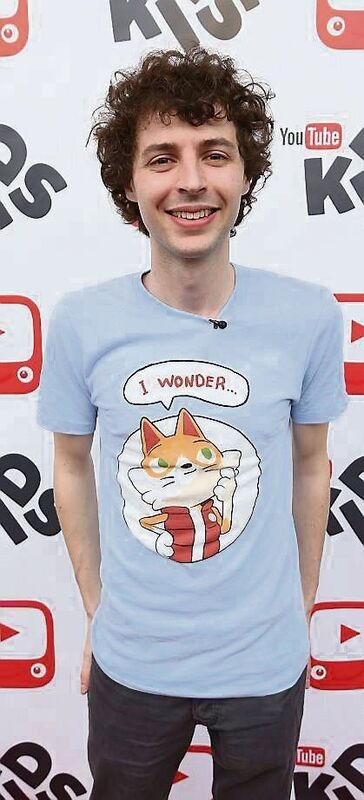
Stampylonghead, also known as Stampylongnose, Mr Stampy Cat, or just Stampy, is another gaming channel that shows only in-game footage.
Created in 2011 by the British-born Joseph Garrett, the feed has more than five million subscriptions — he earns up to €10m a year.
Out of all the gaming vloggers, Stampy is one of the most appropriate for a younger audience because, no matter how many of his videos you watch, you won’t hear a hint of a bad word.
This censorship, combined with Stamypy’s odd, cackling laugh, his constant politeness and high-pitched tone, can be irritating and patronising, of course, but it’s a small price to pay for a kid-friendly channel you can trust won’t suddenly become explicit or profane.
While watching other people talk about gaming isn’t the worst thing your child could be doing online, it must be monitored, says Dr Murphy.
“To a large extent, gaming YouTubers give children the next step — if they’re stuck at a particular point in a game, they can just look up online how to get past it,” he said.
“From a psychological point of view, that means the child essentially gets rewarded for looking at gamers on YouTube — they learn how to do certain things in the game and so keep going back for more.”
Dr Eddie Murphy will be giving a talk in Portarlington, Co Laois, on May 23. His new book, Becoming your Real Self, is available online and in book stores now.
DISCOVER MORE CONTENT LIKE THIS
Keep an eye on what they are watching, especially if they use earphones in a communal room. Ask them about who they watch and why and then take a peak yourself. Also don’t be afraid to check their history.
Note how much time they spend online and make sure they are balancing it with regular play, sport and socialising with kids of their own age.
Watch out for language that mightn’t be appropriate to their age.
Turn on safety mode. Be aware that YouTube is technically for those aged 13 and up, and what the site considers age-appropriate may not suit you and your family. But YouTube offers a filter called safety mode that censors questionable content. Simply scroll down to the bottom of any YouTube page. See where it says ‘safety’ and click it on.
CONNECT WITH US TODAY



Be the first to know the latest news and updates