Big Read: Hello ... I’m Daniel Day-Lewis. Have you got time to talk?
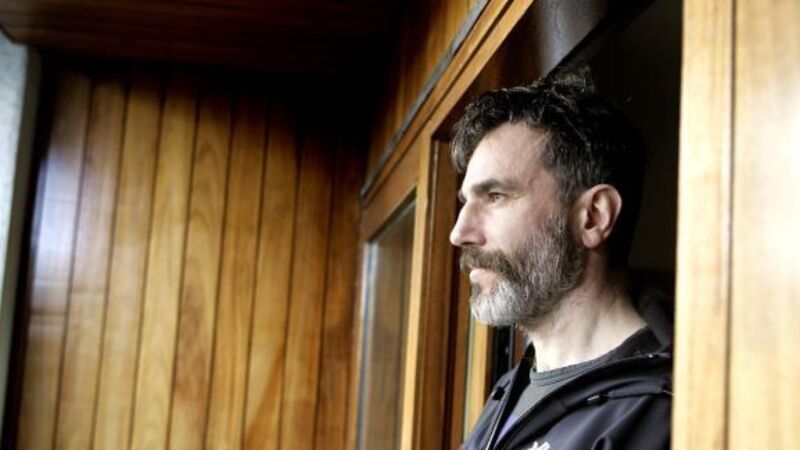
PERSUADING Daniel Day-Lewis to take on a project can be like coaxing a bear out of hibernation mid-winter. You could try pestering him periodically over the best part of a decade as Stephen Spielberg had to do to get him to play Abraham Lincoln.
It might be worth assuring him he’ll enjoy extreme physical discomfort as seemed part of the attraction of his roles in My Left Foot, Last of the Mohicans, Gangs of New York, In the Name of the Father and The Boxer to name just a few.
If you’re really keen, you could marry him, although even his writer-director spouse Rebecca Miller had to wait 10 anniversaries before he eventually worked on one of her productions.
Alternatively, you could just send him a birthday card.
That worked for Wicklow woman Evanne Cahill who three years ago sat mulling over ways to boost the profile of the local voluntary campaign to build a hospice for the county where Day-Lewis famously lives in splendid isolation when he’s not filming.
“I was reading somewhere that his birthday was coming up and I thought I’ll send him a card and tell him what we’re trying to do and ask would you give us your name and become a patron,” Evanne recalls. “I heard nothing for three months and then one day I was sitting at home and I got a phone call. This man says: ‘Hello, I’m Daniel Day-Lewis. Have you got time to talk?, I nearly fell off the chair. He apologised for taking so long to call. He’d been away and said he’d only just got back and opened his mail. He said ‘tell me what you’re planning to do’ and he just listened.
“The only thing he said about himself was that his privacy was very important to him and he really valued the privacy he was able to have in Wicklow.
“So I said, just give us your name to use on headed paper and that will give us publicity and we don’t want anything more. And he said yes.”
But if all the campaign committee wanted was his famous face, what they got was his heart and soul.
Will Daniel Day-Lewis Be First to Win 3 Oscars For Best Actor? http://t.co/w914PajM #Oscars
— George Roussos (@baphometx) January 18, 2013
Tomorrow, the European premiere of the epic historical drama Lincoln that has received 12 Oscar nominations takes place in the Savoy Cinema in Dublin to be followed by a ball in the Burlington Hotel with an auction of props and memorabilia from the movie, with all proceeds going to the Wicklow Hospice Foundation.
Day-Lewis will be there, along with his co-star Sally Field, Spielberg and many home-grown celebrities. For the hospice committee, more used to cake sales and charity cycles, the offer was astounding.
“It was about a year ago Daniel said, ‘When I make my next movie, if it’s a success, I’ll give you the proceeds,’” says Evanne. “If it’s a success? As if it wouldn’t be. He’s so modest.”
Day-Lewis told Pat Kenny last month why the campaign captured his attention, recalling how his mother had died not long before in a cottage hospital in England dedicated to palliative care.
“I will never forget the great dignity with which she was allowed to see herself through to the end of her life. It was something I was very grateful for. I felt I would like to help establish something of that kind in the county [Wicklow].”
It was a relatively rare insight into the man who is routinely described in the foreign press as reclusive, mysterious, eccentric — bonkers is a favourite of the tabloids — and depicted as though he lives in such remoteness that provisions have to be dropped by plane twice a year and his only means of transport is a team of huskies or mountain goats depending on the weather. That raises a giggle from anyone who knows his adopted county and can pinpoint his home in Castlekevin, Annamoe, a short distance off the main, albeit narrow, road between Roundwood and Glendalough, one of the busiest tourist routes in the region.
Admittedly he does have sufficient acreage, 50 at last count, to make it highly unlikely he’ll encounter a lost backpacker asking to use his loo if he steps outside to inspect his window boxes, but it’s not Alaska.
Until the family moved to the US for the filming of Lincoln, his two younger sons by his wife, Ronan and Cashel, were brought to Montessori school in Wicklow town each day while his eldest son, Gabriel, from a relationship with French actress Isabelle Adjani, attended secondary school in Bray.
While working out for films such The Boxer, he used the hilly roads around his home to build muscle, and when he’s between projects he can be spotted taking a spin on his bike, enjoying a quiet pint in the Roundwood Inn or holding meetings in the quaint Hunters Hotel in Rathnew.
And it is not some corporate entertainment outfit but four long-time Irish friends with business interests well removed from the movie industry who are organising tomorrow’s premiere. In other words, he does get out of the house and he does mix with the human race.
So how did the mystique around him develop? It probably helped that his family had fame and form in the field of the arts so there was always going to be curiosity around any offspring.
Day-Lewis was born in London in 1957, the son of respected theatre and radio actress Jill Balcon and writer and poet laureate Cecil Day-Lewis. Balcon was the daughter of Sir Michael Balcon, who was head of Ealing Studios at the height of their influence and helped found the BAFTAs, of which his grandson has been a recipient on three occasions and is currently nominated for a fourth.
Cecil Day-Lewis was born in 1904, the son of a rector, in Ballintubbert between Stradbally, Co Laois and Athy, Co Kildare, in the house which still stands as the centrepiece of the privately owned visitor attraction, Ballintubbert Gardens.
Although he was only a toddler when his mother died and his father moved to Britain, Cecil spent his summer holidays with family in Ireland as a boy and never lost the Irish part of his Anglo-Irish heritage.
He held a variety of jobs but was chiefly an academic and writer and held the honorary position of crown-appointed poet laureate of the UK for the four years up to his death from cancer in 1972.
By then, 15-year-old Daniel had already had his first taste of acting, thanks to his school’s efforts to keep the rather unruly youngster’s attentions on something other than mischief-making.
He went on to study drama full-time and had small parts in theatre, television and film until 1985 when he appeared both as the thuggish, gay Johnny in the contemporary My Beautiful Laundrette and the wealthy, uptight Cecil in the period drama, A Room With A View.
They were two very different, critically acclaimed roles that presented the cinema-going public with a handsome, versatile and compelling actor who, it was clear, would be gracing film credits for many years to come.
He worked consistently until 1997 in My Left Foot, The Last Of The Mohicans, The Age of Innocence, In The Name Of The Father and The Boxer.
It was during filming of My Left Foot that the enigma that has surrounded him took root. In preparation for playing the role of disabled writer Christy Brown he spent months learning to paint with his toes and he stayed in character throughout the shoot, painfully contorted in a wheelchair, restricting his movements to the limited range Brown could manage and speaking with the same impediment Brown had to struggle with.
Noel Pearson, who produced the film, remembers watching the Oscar-winning performance on set with a mix of bafflement and bemusement.
“He is different, I can tell you that,” he says of the actor whose career he has followed closely since. “His original agent, Julian Belfrage, was a very old-fashioned agent and he thought it was a joke when he came over to see him doing My Left Foot. He said: ‘This is ridiculous, dear boy. But carry on’.
“Julian said, ‘When I went to see John Hurt doing The Elephant Man, John Hurt didn’t go around being the elephant man — we had a proper drink.’”
Co-star Brenda Fricker, who played Christy’s inspirational mother in the film, good-humouredly told a similar tale when she was interviewed on stage at University College Dublin as part of Bloomsday events last year.
“I would regard [Daniel] as a method actor and I had never worked with that before and I found it quite intimidating, as did all of us. He stayed in character and in the first week he used to make me go into the canteen with him and I would have to feed him his food while the rest were up at the bar drinking pints of Guinness and playing pool.
“I, like a right fool, did it for him for a week and then said: ‘What the fuck am I doing this for? Listen, feed yourself, baby — I’m going to play pool.’”
Undeterred by the fact that not everyone embraced his enthusiasm for entering fully into the characters he played, Day-Lewis continued to do things his way.
By the time he’d survived by foraging and hunting like an 18th century native American, spent nights freezing in a prison cell, and learned to box so well he could have turned professional, his preparations for parts were getting as much publicity as his performances in front of the camera.
He would later apprentice as a butcher to prepare for the role of Bill ‘The Butcher’ Cutting in Gangs of New York, unnerving onlookers by sharpening his knives between takes, while for Lincoln he spent a year devouring books on the Civil War president who ended slavery and insisted on being called Mr President on and off set until the final scene was shot.
It’s all great fodder for those who like to use words like obsessive, eccentric and the much-loved bonkers, but Noel Pearson is as bemused now about the hype surrounding the actor’s method as he was 24 years ago about the method itself.
“There is a simple explanation: it’s the only way he can do it. He will tell you out straight, ‘I know it’s boring and it’s driving people mad but it’s the only way I can do it’.
“He’s quite pragmatic about it. It sounds extraordinary to all of us but if that’s what it takes for him to play a character, let him off.”
Pearson sounds a warning though. “The only danger is, he might wake up one morning and think he is Abraham Lincoln.” Really? “Not at all,” he laughs. “He is very chilled out and he was even 20 years ago. When he finishes a film, he goes back to being himself.”
Ah, but therein lies more intrigue. For who is himself? He has played many roles in his personal life, including that of the prolific dater of Hollywood beauties who dumped his pregnant girlfriend, Adjani, by fax and then married Rebecca Miller without telling another girlfriend about his impending nuptials and the fact that they didn’t include her.
He has several turns as a tormented soul, fleeing the stage during a 1989 production of Hamlet, never to return to theatre, after seeing the ghost of his late father; buying the reputedly haunted house in Castlekevin in 1994 and disappearing for five years after The Boxer in 1997 to exorcise his demons by apprenticing as a cobbler in Florence.
But 16 years of stable marriage to Miller seem to have put the more rakish Day-Lewis out to pasture while fatherhood, domesticity and the privileged financial position of being able to pick and choose the work he takes on would appear to have settled the demons.
He happily appeared three years ago to accept the Freeman of Wicklow and looked as pleased as on the two occasions when he won Oscars (his second was for There Will Be Blood).
“People forget he’s 55 now and you get a bit of sense when you get older,” says Noel Pearson. “He doesn’t have to prove anything and that calms you down.”
Calm is a description Evanne Cahill also uses. “He is so natural and down to earth that it’s hard to believe he is so successful. And yet it’s that normality that makes him very special.
“The sincerity oozes out of him and there is a presence about him even though he is so unassuming. He is probably the most impressive person I have met in my life.”
So what is the next role he is likely to take on? It’s notable that one of his friends and contemporaries, Liam Neeson, who also played big, meaty historical roles, has successfully reinvented himself as an action hero.
Day-Lewis has dabbled in other genres over the years. Prior to Lincoln, he did his wife’s small independent production, The Ballad of Jack and Rose, and then, rather bafflingly for fans, broke into song and dance for the lavish, good-natured but largely forgettable musical, Nine, but neither seemed his natural home.
One of the wits behind the numerous parody Twitter sites claiming to be Day-Lewis, offered an imagined insight into the actor’s thinking the other day: “Man, if I wasn’t ddl, I’d be jumping up and down for a chance to be in a new Star Wars.”
The thought may have crossed his mind for while he is repeatedly described as the greatest actor of his generation, and he wins more awards than his reputed cabinet-making skills can accommodate, he is never in the highest paid stars list and his films, while usually box-office successes are never the biggest earners.
He beat Tom Cruise to win his first Oscar over the American who was considered a shoo-in for Born on the Fourth of July but you can be sure it is Cruise and Jack Reacher who will beat Day-Lewis and Lincoln in the revenue stakes.
Whether that’s what Day-Lewis is thinking, and whether his reputation would hold him back from seeking out a simple fun role where special effects and computer generated images do all the work, is something he has yet to reveal.
But he does dispute the notion that he is hard to convince to take on a project. He told Pat Kenny last month when talking about Lincoln: “Stephen knew what he had in his hands and he did approach me about it some years ago, but I felt unable to do it service. I thought it was an outlandish idea. I felt it was a wonderful opportunity for somebody else.
“The hardest thing was persuading myself. Anyone that has an opportunity as wonderful as this doesn’t need to sell it.”
Directors, writers and producers, take heed. A visit to your local Hallmark store could be in order.
CONNECT WITH US TODAY



Be the first to know the latest news and updates