‘Don’t waste a thing. Not even the pain’
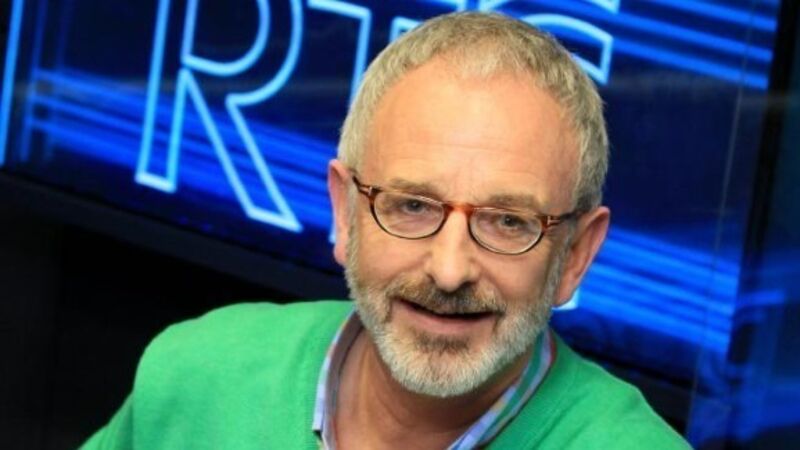
A middle-aged man wearing a purple shirt, multi-coloured tie and a tweed blazer is speaking before an audience on behalf of the Kinsale Peace Project.
“I’m here by default,” says Michael Murphy, RTÉ newsreader, psychoanalyst and author.
“I was asked to come and talk and was daunted when I saw the type of people who had spoken before me [which included Barnardo’s chief executive, Fergus Finlay, broadcaster Fergal Keane, and Paul Rusesabagina, the hero of Hotel Rwanda]. I was unsure that what I had to say would be of interest. The aims of the Kinsale Peace Project are to promote peace and justice at home and overseas. I am here under false pretences because I am not consciously a human rights activist. If I hadn’t been affected by cancer, I would have continued to lead a quiet, anonymous life. All I did was write a book, and I gave a TV interview,” says Murphy.
But Murphy is being characteristically humble. He has survived prostate cancer, sexual and physical abuse, impotence and incontinence — he wrote all about it in his 2009 memoir At Five in the Afternoon and spoke candidly about his experiences on the Late Late Show and the Derek Mooney radio show last year.
Murphy’s legacy of speaking openly about baby cream, dribbling, buying nappies in Lidl and no longer being able to have a sexual life, is huge. Irish men walk into cancer surgeons’ offices clutching copies of his book. They contact him via his website with their own cancer stories. They are able to speak with less embarrassment about incontinence and impotence, because Murphy has already very publicly let the cat out of the bag on that topic.
“The book, and ultimately the cancer, pitched me into telling the truth. I seem to have started a conversation, and it has enabled men to talk and given them a voice to talk about something they wouldn’t normally talk about,” says Murphy, who suffered the not un-common double-whammy of incontinence and impotence after the prostatectomy he decided to have after being diagnosed with cancer in 2007.
“Incontinence is humiliating,” says the author, describing how a friends’ labrador sniffed at his crotch repeatedly, and how a relative told him disgustedly to ‘cover up’ when his hospital gown slipped open. Incontinence created a quality of life issue for Murphy, but having researched solutions on the internet, he underwent an operation and is now 95% continent.
Nothing, however, can be done to reverse the impotence rendered by his prostatectomy, and Murphy is pragmatic about this. “I’m extremely lucky to be above ground but it’s very different. There is a sadness, everything to do with the penis is extremely important for a man and cancer has changed matters utterly for me.”
Yet Murphy presents as a very contented individual. His youngest brother Kieran, who died from cancer at 42, left him with the sacred words ‘Enjoy your life, Mike’ and since then Murphy has felt an obligation to do just that “so that nothing is wasted, not the pain or the suffering or the hopelessness”. He married his long-term partner, Terry O’Sullivan, a psychotherapist, in a civil partnership ceremony on a midsummer’s day in Dublin earlier this year.
It is O’Sullivan who carries the couple’s only mobile phone, who manages Murphy’s engagements, and who cooks dinner, leaving time for Murphy to write. And it was O’Sullivan who supported Murphy during his cancer ordeal, carefully ironing Murphy’s silk pyjamas to bring to the cancer ward, only for him to leave them in the wardrobe in favour of a plain hospital gown. Murphy describes him as “a fearless fighter, joyfully at home in foreign lands, an encourager of dreams, an explorer of the soul” in ‘A Poem for Terry’ which he composed and read on their wedding day.
“You need a partner in life, to navigate the hard times,” says Murphy of Terry, who accompanies him on fortnightly trips to his birthplace of Castlebar, Co Mayo, to visit Murphy’s mother, who suffers from Alzheimer’s disease, in a nursing home.
“My mother dwells in a house of pure being where there’s no future, no past, only the present,” says Murphy.
“It’s not something I relish, going to the West and coming back. My mother has forgotten everything. I think she’s aware when I’m there that there’s a friend there. It’s a very sad situation, the idyllic world that was our lives together is coming to an end. It points up how important memory is in our lives.”
He misses the woman who was the hub through which news of all five Murphy brothers passed through.
“One Sunday night, I thought I would like to ring Mum. But I forgot she wasn’t there anymore. She wasn’t at the centre of the family anymore. She was once the hub of the family but that’s not there anymore, and there’s silence now.”
Growing up in Castlebar, Co Mayo, Murphy had a fractious relationship with his late father, who beat him so hard on one occasion that at the age of 3, Murphy grabbed his bag and set off in his pyjamas to live in the next door house with his grandmother.
“My father fought in the War of Independence. He was a fine man, but troubled — Ireland hurt him, and we were hurt. He would be standing proud beside me today, proud of this era in our history,” says Murphy.
Murphy also suffered sexual abuse by strangers, once in caravan parked close to his home.
“[Moving on] is an ongoing process. I didn’t know anything else, this was my normal day as a child, I never spoke about sexual abuse — it was only later, with hindsight, that I realised that it wasn’t normal at all,” says Murphy.
Words are Murphy’s forte. He came to writing late in life, in his sixties and is now publishing his second book, The House of Pure Being.
“Writing is a real love and job. It’s the third bit of my career. I always had those three ambitions, broadcasting, psychoanalysis and writing. Cancer pitched me into writing and I would like to concentrate on that in the final 10 or 20 years,” says Murphy.
He still practises as a psychoanalyst for four days a week, seeing clients in his Dublin home, and at the weekends, he reads the news in RTÉ. “I enjoy doing it, it’s fun, and I’m glad to see that they still have an understanding in the station that older people can still contribute,” says Murphy, who protests that he was waylaid into broadcasting and producing for 10 years, before establishing his psychoanalysis practice.
“Reading the news is essentially a performance on air, while psychoanalysis is very silent, I’m in the role of the listener there. In RTÉ they like me to be there to show the younger people how to do it. It’s pure joy to go in and do something I enjoy without any worries at all.”
Christmas will be a quiet affair, with O’Sullivan cooking for friends and family. “I’ll most probably be on early morning duties in RTÉ. It’s lovely at Christmas time, people are on holidays and it’s relaxed. I look forward to it.”
Someone in the audience asks Murphy what he does for fun. “He eats toffees,” quips O’Sullivan, and everyone laughs.
“I might eat a dessert at the end of a meal, and I can be a bit reckless with money,” laughs Murphy.
“I would be a fairly intense person and I like essentially solitary pursuits like music and reading. I have a great sense of humour though,” continues the man who once slid off his chair with laughter while Anne Doyle broadcast the news beside him.
“There is a before and after cancer. You’ve been struck essentially by death. You face it and come out the other side,” he says.
“Enjoy your life, participate in life fully and don’t stand in the shadows,” finishes the man whose favourite song is Violeta Para’s Gracias a la Vida, or Life Has Given Me So Much and who often uses the word of encouragement used by pilgrims who walk the Camino de Santiago — Ultreia, meaning Move Onwards With Courage — something Murphy has done — and then some.
* Michael Murphy reads the news on Radio 1 at the weekends
CONNECT WITH US TODAY



Be the first to know the latest news and updates