Appliance of Science: Can animals communicate with each other?
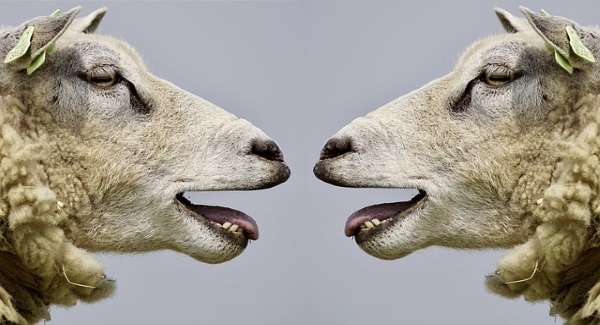
Animals communicate with each other in many different ways; they use body language, sound, smell, touch and even chemical and electrical communication. In fact, animals are far superior to humans in many of their communication methods.
We consider language an advanced form of communication that sets us humans apart from other animals; but is that really so? Can animals talk to each other and if so, what are they saying?
Animals can communicate in a very complex way without using any sound at all. Bees, for example, use an elaborate dance to describe to other hive members the exact location of a food source they have found. Not only that, they can also tell other bees what type of food it is.
Verbal communication, or the recognition of words and phrases, is not actually unique to humans. Many animals have shown an impressive ability in learning these skills. Apart from learning human words, animals also have their own set of words that they use to talk to each other.
Praire dogs appear to have one of the most extensive vocabularies in the animal world. Not only can they use words to tell each other about an approaching threat, they can also add in descriptive language to communicate the type of threat, including size, shape and even advancing speed.
Of course language is not just about words, it is also about how we put those words together; sentence structure allows us to combine simple words in a multitude of ways. Grammar allows us to pack even more information into each sentence. Studies with Dolphins report that they can learn and interpret sentences. They understand verbs, so they can get what a specific sentence is asking them to do and they understand the sequence the words come in.
Gelada monkeys, found in Ethiopia are known for their chattiness. Unlike other primates, they use very complex sounds, similar to human words, to communicate with each other. They appear to speak in sentences with similar cadence to
humans. We have yet to discover what it is they are saying or how complex their language may be, but these little monkeys may well give us insights into how human language developed and evolved.
Human language appears to be unique because we can take a finite number of words and combine them in an infinite number of ways. We use syntax and grammar, we follow rules that allow us convey specific meanings with each sentence. By changing the sequence of the words, or the grammar, we can change the meaning. Studies on Japanese Great Tits have shown perhaps the most convincing evidence of language in animals. They use sounds in a sequence to convey messages; they can change the message by altering the way they combine the sounds. It appears they use compositional syntax, just as we do.
CONNECT WITH US TODAY



Be the first to know the latest news and updates

















