Inside Ireland Fashion Week and the quest to turn Irish creativity into a sustainable industry
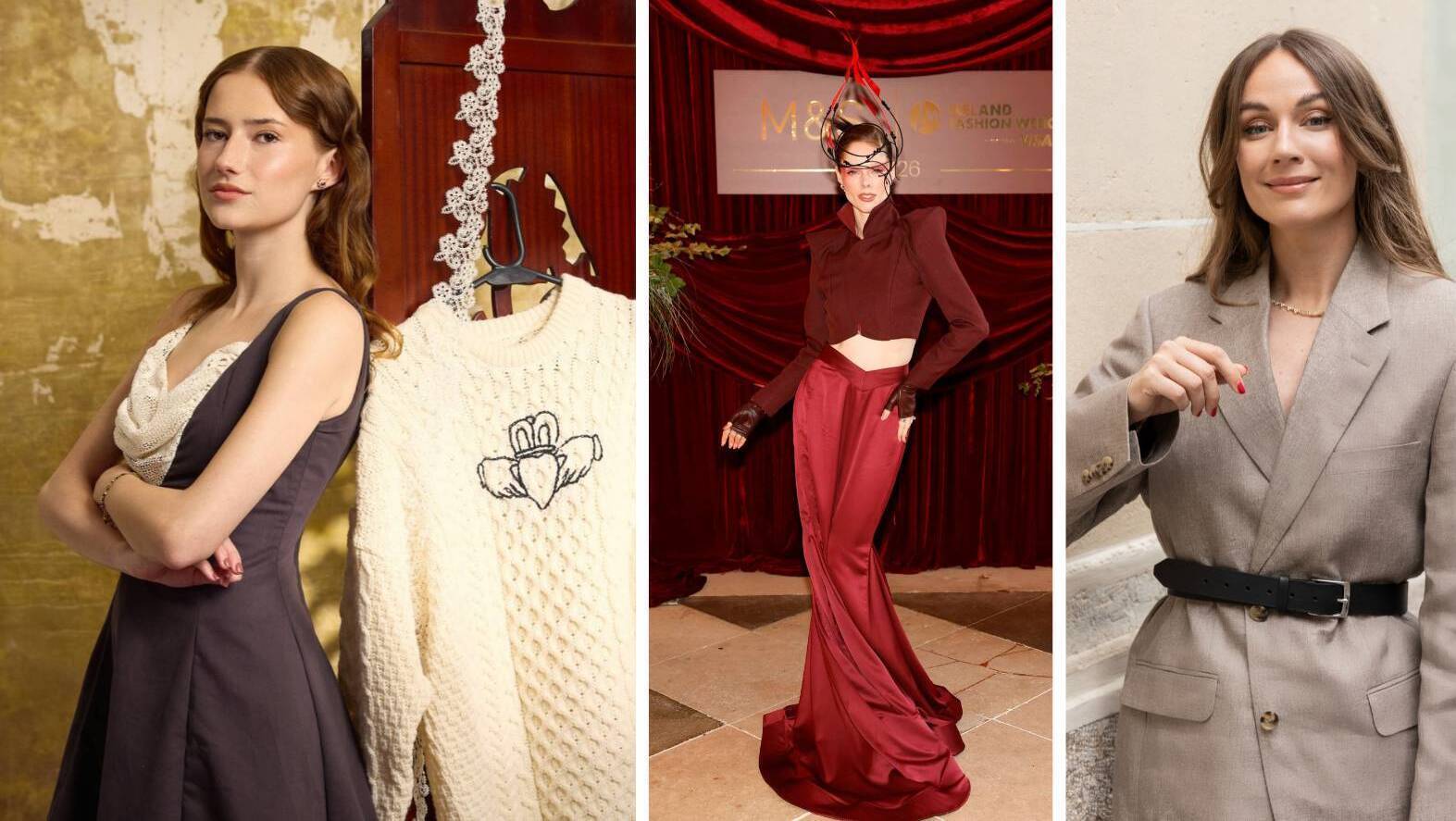
This year's format came partly from conversations with designers who felt there were too few opportunities to sell their work physically in Ireland
“I only design for, like, a week,” says Sasha Donnellan.
It is quite the unexpected admission from a designer who will send a 20-look collection down the runway at Ireland Fashion Week. But Donnellan quickly qualifies it. Research happens constantly: Photographs accumulate on her phone, notes are taken whenever something catches her attention, and custom pieces require their own lengthy design process. But the period spent sitting down and physically designing a collection can be remarkably short. There is simply too much else to do.
“I would say half my day is making and designing. Half my day is working with technology,” she says.
For Donnellan, whose label is only a year old, the creative and digital sides of fashion are increasingly difficult to separate. She sketches custom designs digitally, manages orders online and works with clients remotely.
Her experience reflects one of the challenges Ireland Fashion Week founder Ashley McDonnell is attempting to address.

Ireland may have little difficulty producing talented designers; enabling them to build sustainable careers around that talent is another matter.
“One thing we definitely don’t lack in the Irish ecosystem is an incredible abundance of creativity,” McDonnell says. The challenge is turning it into something “commercially viable”.
Now in its second edition, Ireland Fashion Week, which launched on Wednesday with an exclusive showcase with Marks & Spencer at Slane Castle, has grown substantially from its inaugural year, bringing established labels, independent designers, and recent graduates together across a programme that extends well beyond the traditional catwalk.
There are solo runway shows, mixed showcases, and the Irish Edit, an interactive showroom featuring 29 designers, alongside a young designers’ programme and events bringing fashion together with Irish music, dance, and poetry.
For McDonnell, the scale of this year’s programme reflects a broader ambition: To create some of the infrastructure around Irish fashion that designers have historically had to seek elsewhere.
She established Ireland Fashion Week after watching Irish designers attempt to expand internationally without necessarily having the connections, networks or financial means to enter new markets.
Her answer was not simply to give those designers a runway in Ireland, but to begin building an ecosystem around them.
Last year offered something of a test case. Following the inaugural Fashion Week, McDonnell says its team produced a report of almost 100 pages, examining what had worked and where the gaps remained. Questions ranged from which international media should be brought to Ireland to something more fundamental: Once a designer had attracted attention, were they actually prepared to do anything with it?
Could they meet a buyer? Could they take an order? Was their website ready? Did they have the systems required to sell internationally?
“The brands that were ready and had their websites ready to go, even if the products were just there for presale, were able to capitalise on all of the visibility at Fashion Week,” McDonnell says.
Those without that infrastructure found it considerably harder.
It has helped shape the second edition of the event. Rather than concentrating all its activity into one week, Ireland Fashion Week has run educational and community events throughout the year, including Brand Bootcamps supported by title sponsor Visa. Designers have heard from figures across retail, wholesale, payments, social media, and brand-building, with the emphasis on the practical knowledge required to turn a label into a business.
This week, those ideas have moved into the programme itself.
The Irish Edit brings 29 designers together in an interactive showroom that doubles as a retail space. McDonnell says the format came partly from conversations with designers who felt there were too few opportunities to sell their work physically in Ireland.
Most independent labels do not have their own boutiques, while opportunities in larger retailers can be limited. Through Visa and payment provider Worldpay, participating designers who did not already have payment systems have been equipped to sell directly from the showroom.
A runway can create attention; an industry needs somewhere for that attention to go.
Donnellan offers a perfect example. With no physical stockists, she describes social media as “the gateway to my sales”.
Shortly after dressing Laura Whitmore for the British Fashion Awards, an Instagram message arrived from Roz Purcell, who had been looking for an Irish designer to make her wedding dress.
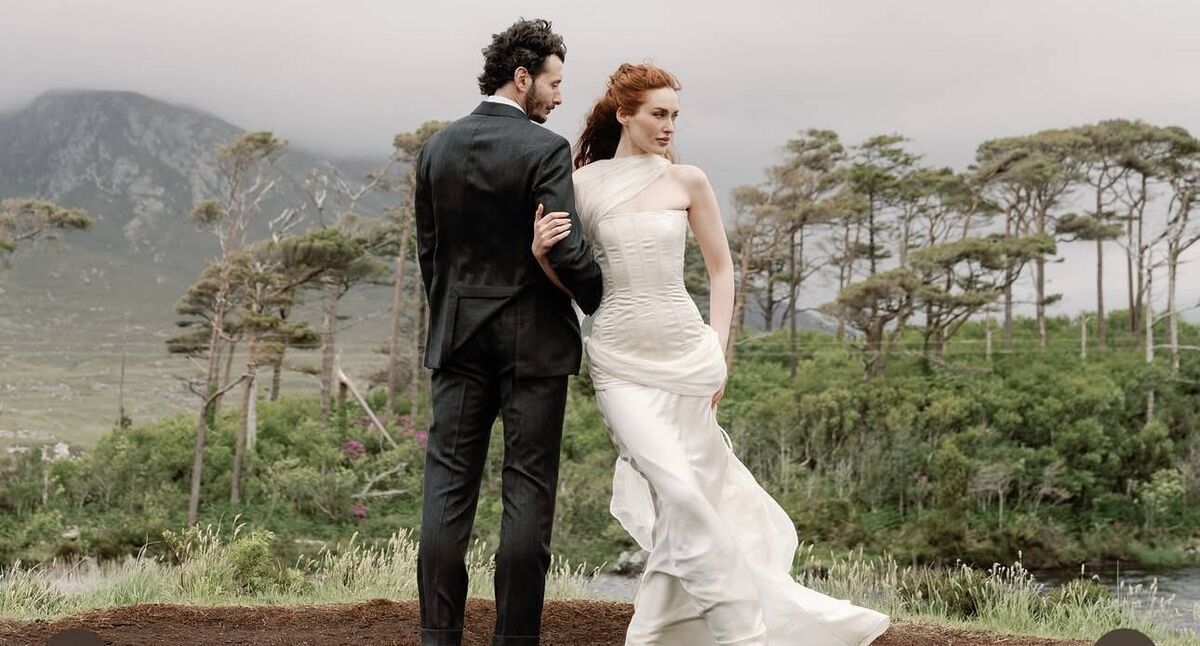
The process began remotely. Donnellan, who studied at ESMOD in Paris, specialises in silk and has access to French suppliers. She and Purcell did not meet in person until a prototype fitting in March.
It was Donnellan’s first wedding commission. When Purcell later shared the dress, the attention brought press coverage, new followers and, more significantly, enquiries from prospective bridal clients.
“I love that I could enter the bridal space through that,” Donnellan says.
The same thing happened internationally. Earlier this week, she previewed eight looks from her new collection at a Flying Solo showcase in Paris after its organisers discovered her work online.
Donnellan has also taken part in Visa’s Brand Bootcamps. Hearing buyers discuss what their jobs actually involve, for example, helped expose what she calls “the gaps in my knowledge”. It is a phrase that recurs, in different forms, throughout McDonnell’s explanation of why Ireland Fashion Week exists.
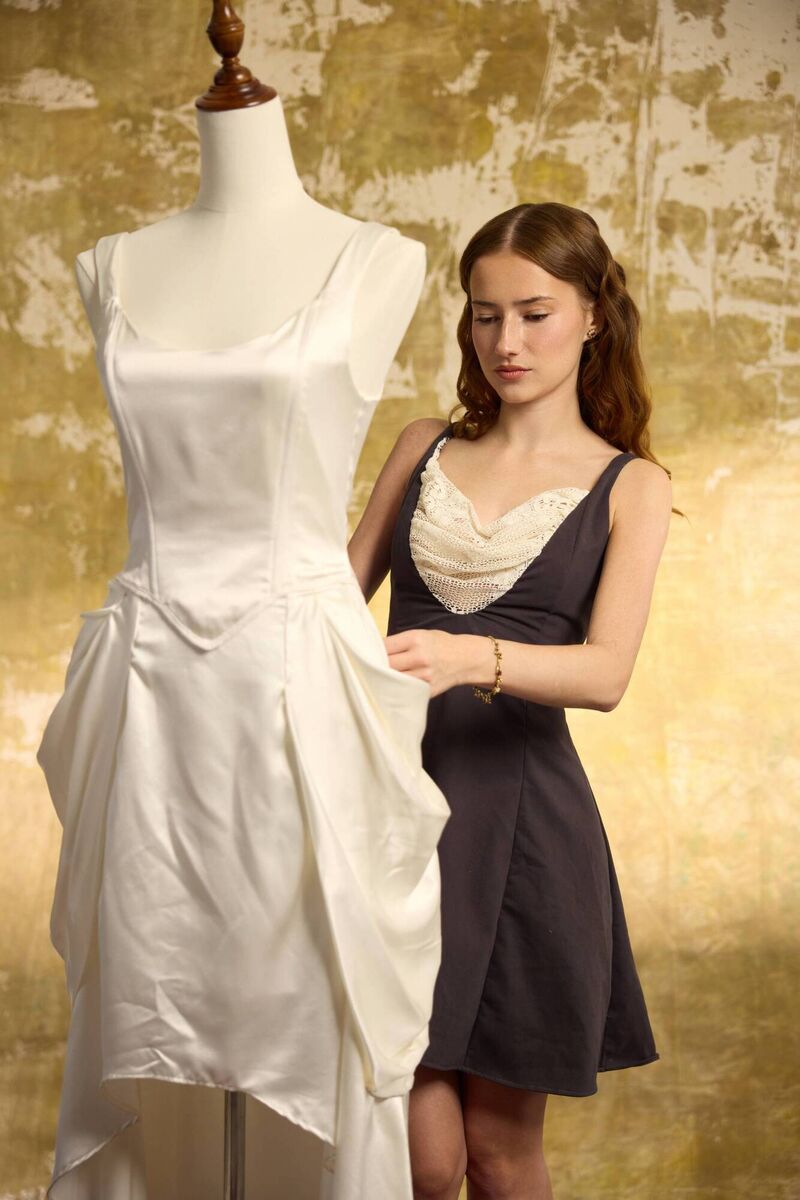
Young designers can emerge from education knowing how to construct garments, work with textiles and develop a visual identity, only to find themselves “figuring out how to pay your bills at the end of the month”.
The young designers’ programme is intended to make that transition less abrupt. McDonnell says some participants from last year have since moved into full-time employment in Irish fashion, while others are developing their own labels.
The support is offered without charging the young designers to participate, with the runway show itself among the largest productions of the week.
Today, that next generation takes centre stage. The young designers’ show combines fashion with Irish dance, music and specially commissioned poetry, part of McDonnell’s insistence that an Irish Fashion Week should not simply attempt to replicate London, Paris, or New York.
“What we don’t have yet in terms of economic power when it comes to our fashion industry at home, we can overcome with what we have in terms of our creative and cultural power,” she says.
Ireland may not have the fashion conglomerates or retail infrastructure of its European neighbours, but McDonnell argues that it does have a cultural reputation capable of giving its designers a distinctive identity. The task is to ensure the commercial infrastructure catches up.

That is also why Ireland Fashion Week is expanding the ways in which designers can participate.
A graduate does not necessarily jump immediately from college to a solo runway show.
The young designers’ programme can provide a first platform; the Irish Edit allows labels to show and sell alongside more established names; mixed showcases provide another step before designers reach the point of mounting their own shows.
Donnellan’s trajectory demonstrates how quickly that progression can happen. Ireland Fashion Week provided an early platform for her label last year; on Sunday, she returns with a substantially larger collection.
There is plenty still to come after today’s young designers’ show, too. Donnellan takes to the runway on Sunday, while Aoife McNamara is among the designers bringing the week towards its conclusion on Monday.
But McDonnell measures the success of the week by more than what happens on its runways.
The immediate ambition is to persuade Irish consumers to look towards designers at home. Visibility helps, but ultimately, she says, the most effective way to support an Irish designer is to buy their work.
The longer-term ambition is more audacious. Ireland has built an international cultural reputation through its writers, musicians, actors, and dancers. McDonnell wants its fashion designers to belong naturally on that list: “Now I hope they start thinking of our designers as well.”
If Ireland Fashion Week succeeds on its own terms, the important question will not be which collection generated the most attention this week.
It will be how many of the designers showing here are still able to make a living from their work next year, and whether an annual Fashion Week can help turn a wealth of Irish creativity into a sustainable industry.
Read More


CONNECT WITH US TODAY



Be the first to know the latest news and updates