I'm not going to the Shein pop-up in Cork, and here's why you shouldn't either
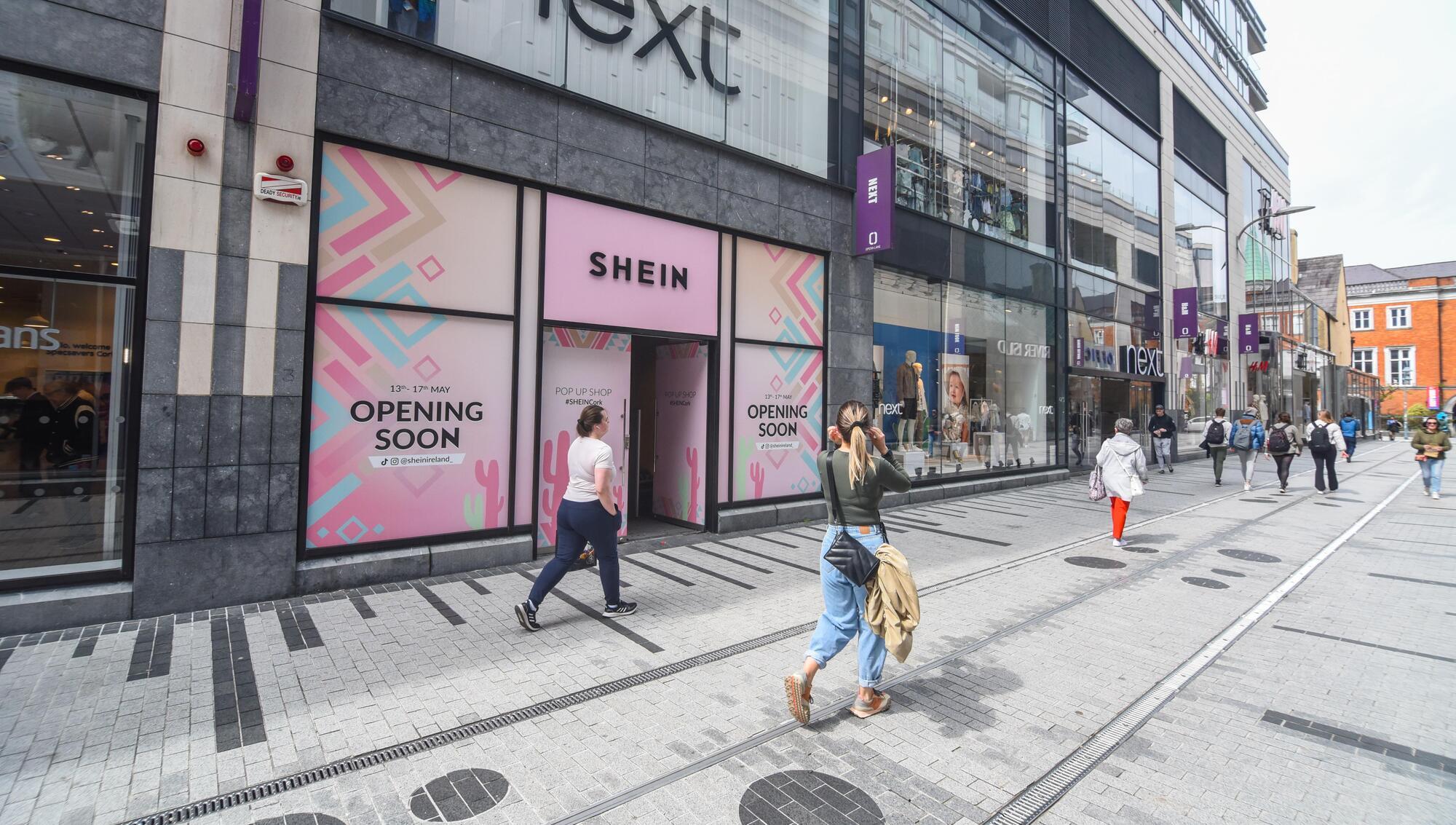
The Shein popup store on Opera Lane, Cork City, prior to its opening on May 13. Picture: Cian O'Regan.
Shein, the giant Guangzhou-based online shopping brand, has a pop-up in Cork this month. I won’t be going anywhere near it. Will you? Their tag - “making fashion accessible to all” - sounds great until you actually think about what that means - for the people who make the clothes, and for the planet. In terms of ethical practices and sustainability, they score a fat zero.
‘Accessible to all’ translates as clothes so cheap they are literally disposable; it costs less to send them to a landfill than to process returns. So when you buy an ultra-cheap item, and it barely lasts the weekend because it’s so shoddy, it will end up in the landfill. Multiply that by millions. Mountains and mountains – entire mountain ranges - of discarded garments, leaching into the earth, made of synthetic fossil fuel fibres, toxic dyes, plastics, microplastics, and animal products from unregulated – that is, horrific – sources. How on earth is this happening now, in 2023?
For Generation Greta – the Gen Z demographic to whom Shein primarily markets, using platforms like YouTube, TikTok, and Instagram, plus networks of influencers, and celebrities like Katy Perry, Rita Ora, Khloe Kardashians, and other wealthy women who really ought to know better – you’d think this would be the stuff of nightmares. Gen Z are the ones for whom climate crisis matters the most, and fast fashion causes more emissions than global aviation and shipping combined; what might seem like the democratisation of fashion, the copying of designs and regurgitating them through your letterbox in a matter of days, is nothing more than a cynical business model. For Gen Z, young and broke and living on Instagram, cheap fashion is deeply alluring. Shein knows this, and exploits it mercilessly. Governments do lots of tutting, but take little action.

It’s not just Gen Z who are skint. We are all feeling this current, ongoing pinch, plus we all love a bargain, the dopamine centres in our brains having long been hijacked and remoulded by online shopping. Browse, click, doorbell, repeat. Even when our dopamine high crashes as we’re filling out the returns form, because what we saw online and what arrives through our letterbox are often radically different (how can they not be, with items that cost less than a latte) we are already gearing up to do it again. Meanwhile, Shein – launched in 2008 - has overtaken Amazon as the US’s most downloaded shopping app. The brand has 28 million followers on Instagram alone. That’s a lot of landfill.
Shein has taken the fast-fashion model, and made it ultra-fast – there’s roughly a ten-day turnaround from copying a design to the design being available online. Cheaper than Primark, cheaper than H&M – and now bigger than Zara and H&M combined. Except of course, it’s not possible to manufacture millions of items that cost almost nothing, without there being a significant hidden cost. Hence its supply chains remain opaque and unaccountable, no matter how many words like ‘empowering; or ‘sustainable’ they chuck on its website.
Who makes the garments? How much are these makers paid per hour? What kind of conditions do they work in? Shein reassures us that they don’t use actual children or enslaved people to make their stuff. Wow, terrific. But who do they use? Third-party suppliers in China, who make their stuff in small batches, which sounds an awful lot like an anagram of ‘sweatshop’.

But don’t take my word for it – have a deeper look at how Shein operates here, where the fashion ethics site Good On You (“creating a world where it’s easy for anyone, anywhere to buy better”) examines how the brand works and why we should run a mile. Their take on Shein? Avoid. Instead, check out their online directory where they have evaluated thousands of brands and garments that are more ethical and more sustainable.
Although Shein may possibly be the worst offender currently – it’s hard to stop imagining those of mountains of discarded garments, literal mountains of waste, and pollution in a world where we desperately need to think and act sustainably – they are not alone within the fast fashion market. Boohoo, for instance, aren’t great either. Nor are the high street giants, no matter how much greenwashing they slosh at us. The cheaper the item, the murkier the supply chain. You don’t have to be an economist to work that out.
So what to do? You could take Vivienne Westwood’s long-standing advice to buy quality over quantity, (“Buy less, choose well, make it last”) but that involves a lot of saving up and a lot of self-restraint. Or you could buy top quality, totally sustainable clothing at knockdown prices by buying second-hand, preloved, vintage, whatever you want to call it. My wardrobe is full of Nicole Farhi, Jaegar, and Cos – all picked up second-hand from shops, markets, and online. Affordable in every sense. When it comes to clothes shopping, send your money, however limited, in the right direction, and remember the Three Fs – Fuck Fast Fashion.


CONNECT WITH US TODAY



Be the first to know the latest news and updates