In it for the long-haul: What to wear for a marathon
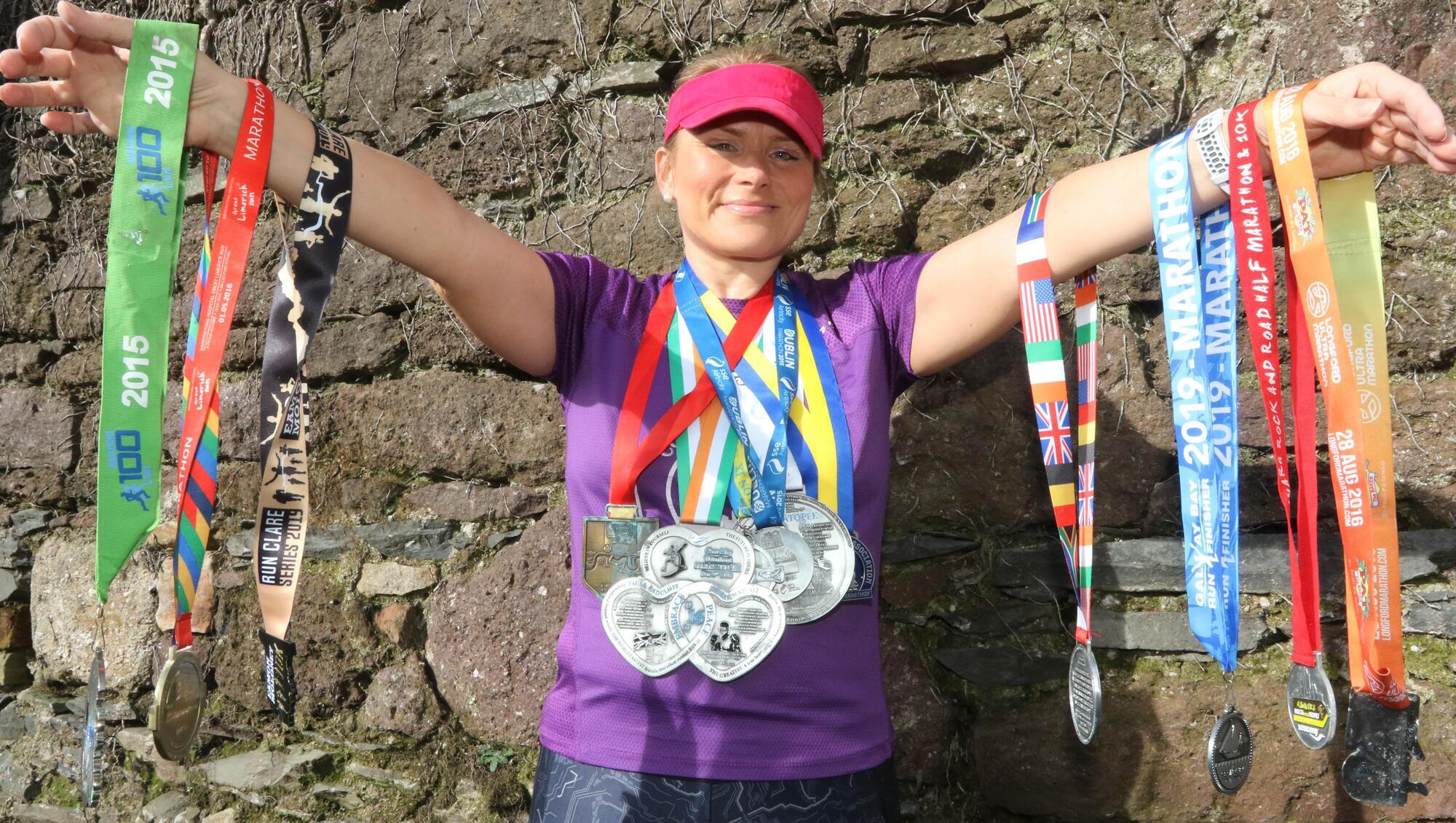
Paula Wright, Lackamore, County Tipperary, showing off Marathon Medals she has earned around the world. Picture: Brendan Gleeson
Running a marathon is no mean feat. It’s a test of endurance, patience and fitness. Competitors spend months training, building their stamina to last the distance. While a marathon runner may have the endurance, a dodgy pair of runners could be their Achilles heel. As they say, a tradesman is only as good as their tools, so having the right running gear is crucial for any marathon runner making it to the finish line.
Taking on her first marathon 10 years ago, it would be an understatement to say that Paula Wright was hooked. A decade on, she has completed 130 marathons and is just about to head off to Japan for number 131. With extensive experience as a runner and a pacer for the Cork City Marathon, Wright has got it right when it comes to what to wear for the big race.
“It’s all about the material. Fabric is the most important. It should be breathable, soft, sports-wear-specific material,” explains Wright.

“Obviously do not wear cotton. It doesn’t absorb moisture and it can have torturous results if you wear it for high-impact training.” In unison with having the correct moisture-wicking active wear, finding the perfect running shoe, that is light and comfortable is a must. As a veteran marathon runner, Wright has seen broken toes and blood splattering blisters caused by people not wearing the correct running shoe. To sidestep the risk of a broken foot, Wright urges any first-time runner to get advice from the experts before buying.
“I recommend getting your feet checked before buying a pair of running shoes,” says Wright.
“A specialist will take a gait analysis of your feet to see how you run. We all run differently. Some people over pronate or under pronate or don’t pronate at all. Having the correct running shoe will reduce the risk of injury.” Now that we have the gear, there are a few extra tricks that Wright has learnt to make the marathon as painless as possible.
“Having the right breathable gear, is just as important as lubricating your skin to avoid chaffing,” says Wright.
“For women sports bras can cause chaffing, so it’s important to lubricate the area under the breasts and the back to stop it rubbing. I don’t recommend wearing a singlet because they can cut under the arms and it can be very painful.”
We’ve all heard the horror stories of men missing nipples at the end of a marathon. They may sound like an urban myth, but member of Cork’s Frontrunners, Richard Mullins, assures us they are not. Since taking on his first marathon over a decade ago at the age of 19, Mullins has seen the agony that can be caused when not wearing the right gear.
“At mile three of my first marathon in Dublin, a fella passed me in full GAA gear, from the jersey to the socks. At mile 11, I saw him crying on the kerb surrounded by medics. He was broken,” recalls Mullins.

It’s scenes like this that reiterates the importance of having the right active wear for long distance running.
“Avoid cotton at all costs. The friction on the nipple, it feels like it’s ripping your nipple off,” explains Mullins.
“Your nipples bleed and then you feel it when you go into the shower when the hot water hits them. It’s excruciating pain.”
Keeping this in mind, Mullins recommends buying breathable, moisture-reducing sportswear that doesn’t break the bank.
“You can get really decent quality gear for relatively cheap. Hightstreet shops are great to get breathable kit to run in,” says Mullins.
While he recommends buying high street for clothes, like Wright, he also insists on investing in quality footwear.
“The right running shoe will set you up for success. Go to the guys who know, who are experts in fitting running shoes,” explains Mullins.
“A good running shoe will last you about 500km and when you measure that against a gym membership for the year, running is cheaper.”
To put your best foot forward on the day, Mullins and Wright agree that fine-tuning the minor details will have maximum impact on the success of your race.
“Make sure you don’t tie your shoe too tight or too loose,” adds Mullins. “Too loose can be conducive to causing more friction and getting blisters, so use Vaseline again on the arches of the foot. Consistency in how you train and what you wear will set you up for a great race.”
When it comes to underwear, Mullins opts to go commando to avoid any unnecessary friction. If that’s not your thing a breathable blend of nylon and spandex is recommended for both men and women. When it comes to a sports bra, Wright recommends getting measured by an expert for comfort and to protect against back injury.

On the design-side of things, founder of Cloo Active, Louise Cooney has learnt that fit is everything next to fabric.
“I have found that the major problem area when it comes to fit is the waistband. The first thing that people look for in leggings is that they stay up. I think that is really important for marathon runners,” she explains.
“You also want tops that hold you in and let you go in all the right places. Especially as women we bloat at certain times of the month.” In terms of designing for high-impact wear, Cooney looks to functionality, that the seams are put in certain places and that the fabrics are chosen to keep the wearer cool for long periods of time.
She recommends her high-waisted ribbed leggings with extra compression for marathon runners because as she says, “they literally don’t budge”. For those looking for shorts in the warmer weather, Cooney will be adding a training-short to the range that will have a tight insert inside, so you are covered and comfortable, allowing you to move freely.
Last but not least, the most important thing both Wright and Mullins recommend for a successful marathon is to have fun.
- Cork City Marathon takes place on June 4. Registration is open now for the full and half marathon, as well as the 10k option. Find out more www.corkcitymarathon.ie
- Check out clooactive.com for a range of activewear.
When it comes to sports bras, one size doesn’t fit all. Here’s our guide to giving the girls the support they deserve:
- When it comes to high-impact training getting your sports bra measurements right is vital. Most sports shops will provide this service.
- A sports bra should be tighter than a regular bra but remember you have to able to breathe. If you can fit two fingers between the straps and your shoulders you’re good to go.
- The fabric of the cup should be smooth – if it has wrinkles it means the cup is too big. If the ladies are spilling over it’s too small.
- The underwire should be flat against the rib cage and shouldn’t pinch or dig in – remember comfort is key.
- Put your hands in the air and if the band rides up it means it’s too big. Adjust the straps and closure before opting for another size.
- Behind the changing room doors, jump around; do a bit of running on the spot to see how it feels.