What will you be wearing next season? Here are the top four trends from Fashion Week
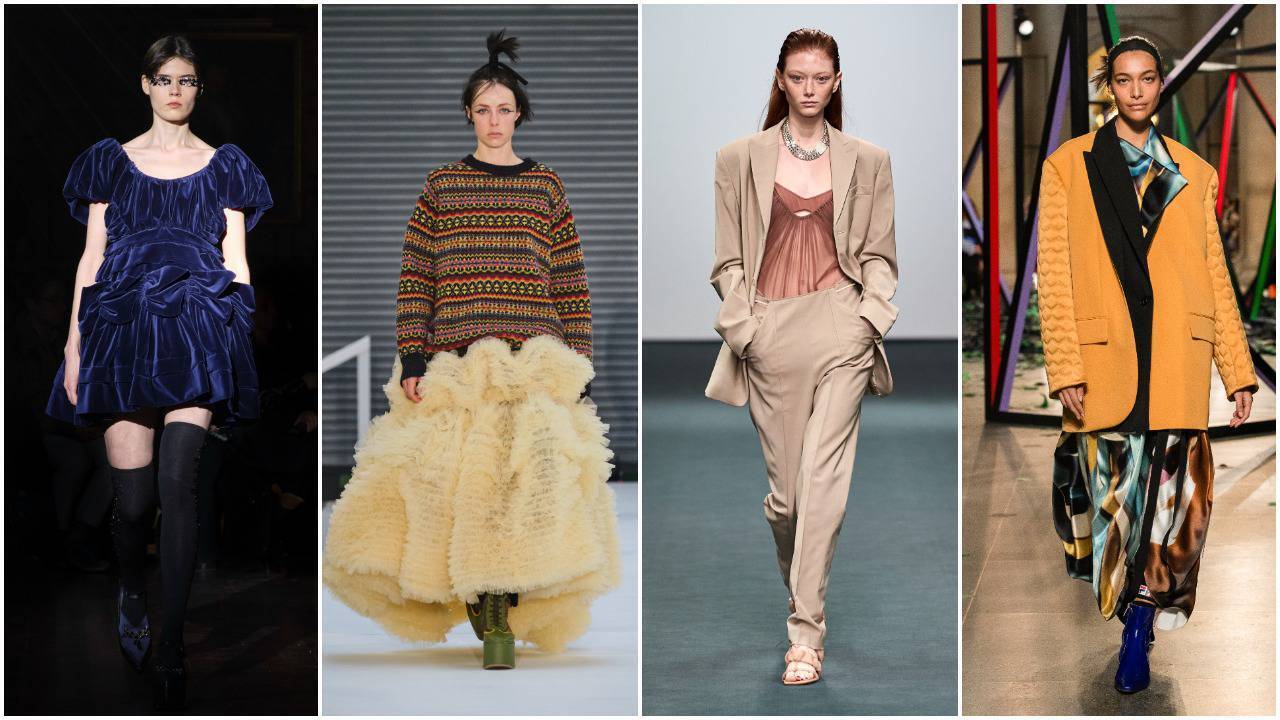
Four trends for the new season emerged at London Fashion Week
Following two years of digital shows, London Fashion Week was back and better than ever. By day four of the event, the biggest trends of the season became abundantly clear. From the return of glamour and the resurgence of sexy party dressing to new spins on tailoring and recalling the 1980s, we have compiled the most important trends that will influence your wardrobe.
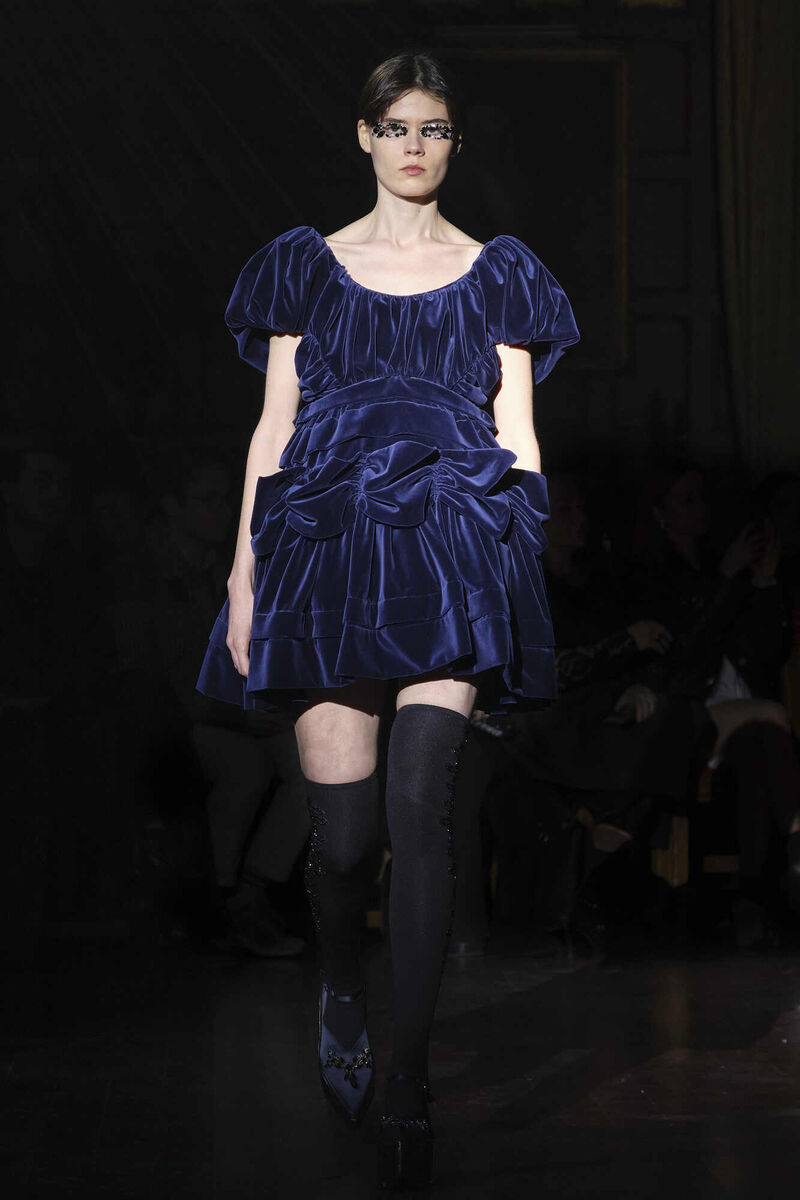
With restrictions easing across Europe, what we wear when we step out again has become a fascination for designers. The overarching mood is glamour! Yes, the finer things are back and dressing up takes on new meaning. Few key looks defined the trend like the widespread use of velvet across the shows at London Fashion Week.
Simone Rocha’s models channelled soigné regality with blue velvet dresses, one mini, with her eponymous folded details, and one accented with crystal embroidery and a sheer yolk. It was a masterclass in post-pandemic extravagance.
Soaring champagne towers and sparkling chandeliers at Goldsmith’s Hall housed RIXO’s graphic patterns, sequins, feathers. Velvet mini-dresses and jumpsuits in black were star pieces, now available in sizes 6-24. Similar notions of sartorial abundance were afoot at Banshee of Savile Row where a black velvet opera coat was one of many responses to the claustrophobic two years that called for the end of loungewear.
Temperley London delivered some other fine examples of tailoring with pink and bottle green velvet tuxedos perfect for stepping out in a world not beholden by restrictions. (Designer Alice Temperley shared that tailoring has become one of the brand’s best-selling points, which comes as no surprise.)
Michael Halpern asked himself what Anjelica Huston would look like as a 1970s party goer in 2022 as a 1930s Cecil B De Mille starlet. His answer? Ivory and gold tiger-motif velvet burnout crinkled chiffon bow kaftans and chiffon open-back asymmetric midi dress with velvet detailing. It’s about “infusing real life with a kind of glamour that lifts the spirits,” he said.
Nensi Dojaka, the coolest designer working in London now, used heavy velvets in her party dresses and 16Arlington, in a poignant tribute to the late design partner Federica ‘Kikka’ Cavenati, issued a statement of unapologetic glamour that consisted of their signature marabou feathers but also bleached velvet separates which felt like the most modern take on the trend.
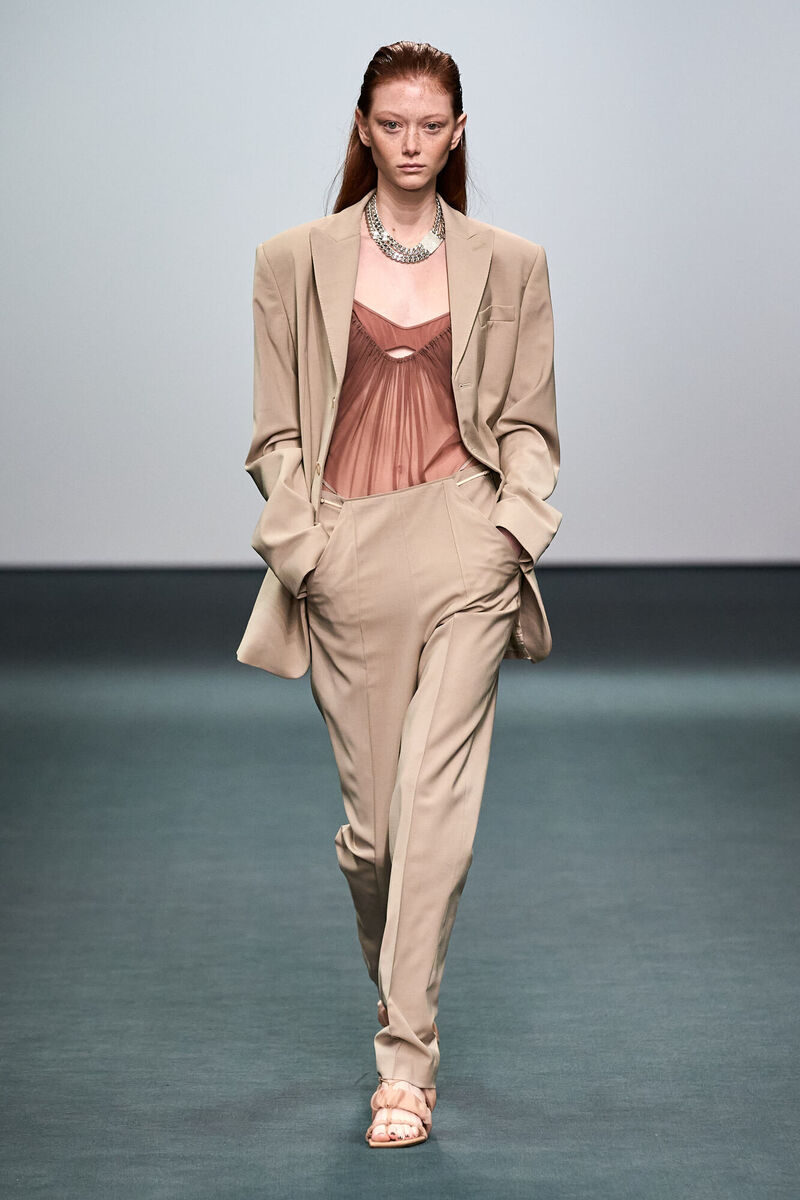
Barely-there minis and abbreviated hemlines constituted most of David Koma’s collection, along with shimmering Swarovski embellishments and daring cutouts. If anything, the designer’s seductive collection became a bellwether for one of the biggest trends out of London: sexiness, the trend that emerged last season as a balm to tracksuit times, is here to stay.
It was a potent statement echoed by Maximilian, a favourite of Rihanna and Naomi Campbell, who delivered beautifully tailored dresses and flouncy A-line pleated skirts. It reverberated around London at Nensi Dojaka, where the award-winning Albanian designer posited on lingerie-as-outerwear with sheer dresses, effortlessly draped across the body, and Supriya Lele’s version of tough, confident femininity, partly defined by halterneck dresses, keyhole bralettes, and crop tops, alongside some mini skirts which tie around the waist with apron pockets. Both designers used models with fuller, curvier bodies, a welcome sight following seasons of frail models.
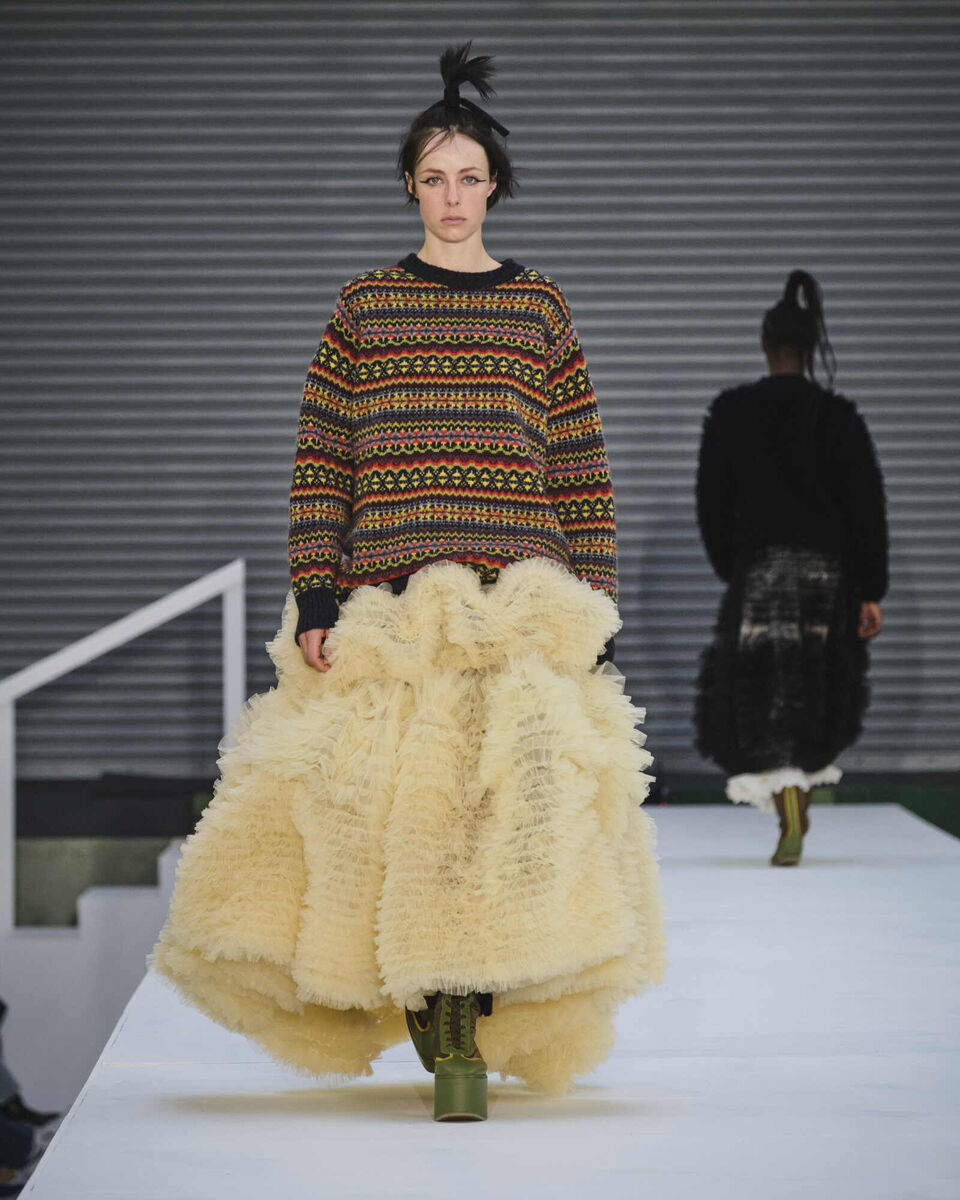
Following fashion’s flirtation with the noughties and Y2K, the fixation with the divisive 1980s has risen to prominence once more with London designers. From Molly Goddard’s fascination with Portobello and Camden market in the late 80s and 90s to Alice Temperley’s flair for disco nights and weather-beaten days to Preen’s re
flections on the New Romantic, the profusion of 80s styles impacted London like never before.
Molly Goddard defined her muse as “a cross between Marilyn Monroe and Mick Jones — big bleached blonde hair with a flower in it, red lipstick, a 50s dress with an army jacket and trainers” which translated into taffeta dresses shown with baggy men’s knits, masculine tailoring, and mini-skirts worn over jeans.
There was Matty Bovan’s wonderful, weird takes on silhouette with recycled vintage Calvin Klein, Vivienne Westwood (the brand donated leftover fabrics from their archive), and Converse All Stars transformed into utterly new shapes There was the beloved Preen by Thornton Bregazzi, who sharpened their lens on the New Romantic and London club culture, with chintzy floral dresses, power shoulders, and eclectic styling which could have easily stepped out of a seedy Soho club. Temperley London harked back to an era of tuxedos and party dresses, the former defined by pinstripe tuxedos developed in the brand’s Somerset Studio, and the latter was richly decorated in sequin prints of desert motifs.
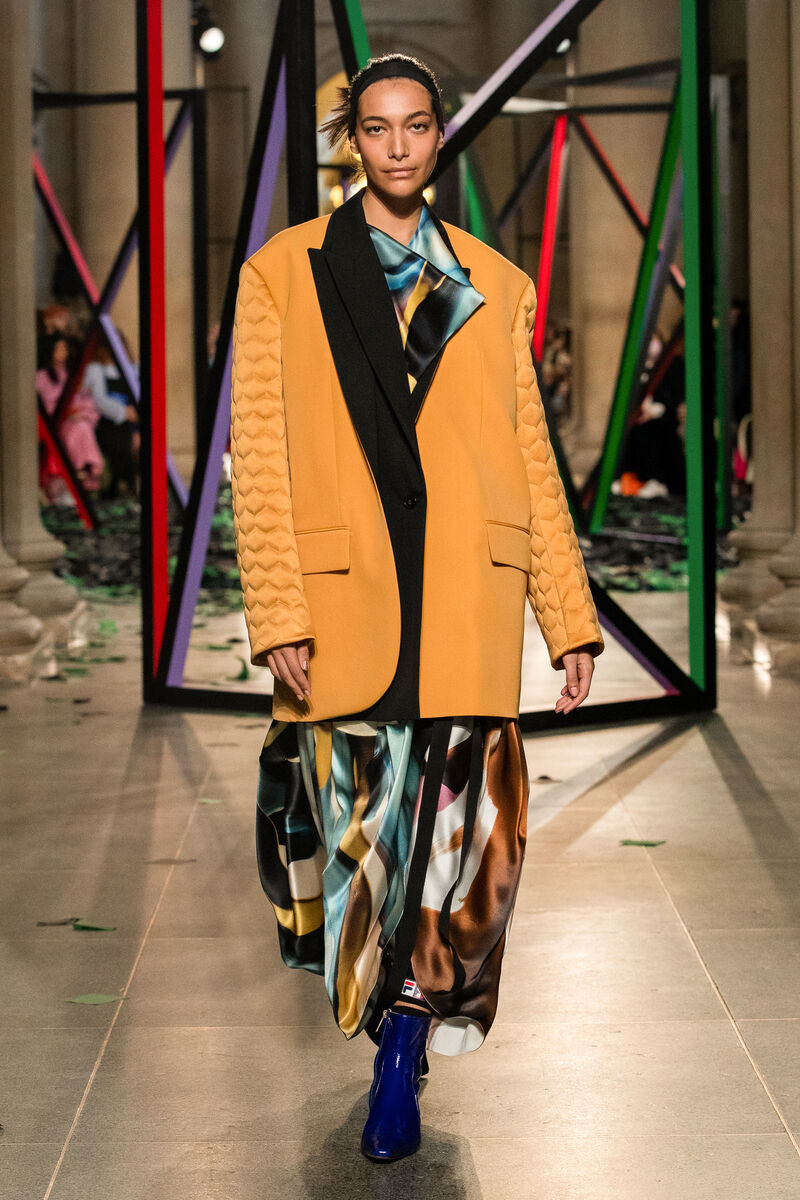
Few understand the demands of office-dressing like Roksanda who, alongside a newly introduced collaboration with Fila which saw luxurious takes on the iconic puffer jackets, revealed the possibilities of an office wardrobe that revolved around “joy and excitement, to escape in.” From her expert use of colour and bold structure, the catwalk witnessed draped dresses in flowing silk in sublime hues like burnt orange, camelia, and chestnut, and slightly oversized blazers with hidden double lapels, high side slits and bright pops of contrast linings which perfectly straddled masculine and feminine influences.
Erdem explored the juncture of daywear and eveningwear, womenswear and menswear with double-breasted men’s coats lavished in floral embroidery and a rich colour palette alongside pretty day dresses dotted with sequins.
If it was the season of the suit, the top prize goes to Yuhan Wang, who mused on Mosuo women, a small matriarchal society living in South West China. She showed the most wonderful green suit decorated with floral motifs, a bold statement to return to the office with. For something even more feminine, Eudon Choi’s collection recalled 1960s office dressing with tailored jackets, skirt suits, and sophisticated trenches.
Eftychia reworked original office-based workwear masculine shapes with feminine silhouettes: the classic tuxedo is altered so that slim strips of satin run down the lapels, around the collar, continuing and becoming the lining for slim-fitted jackets in deep brown and slate grey. Similarly, Noon by Noor toyed with masculine shapes and feminine fabrics with metal-woven denim jackets and glossy silk taffeta dresses, and most excitingly, trousers cut like sweatpants. They were the kind of clothes that almost had you yearning for the office, just to be seen. Hard to resist.
CONNECT WITH US TODAY



Be the first to know the latest news and updates