From fashion’s best-kept secret to a global phenomenon: The gospel according to GANNI
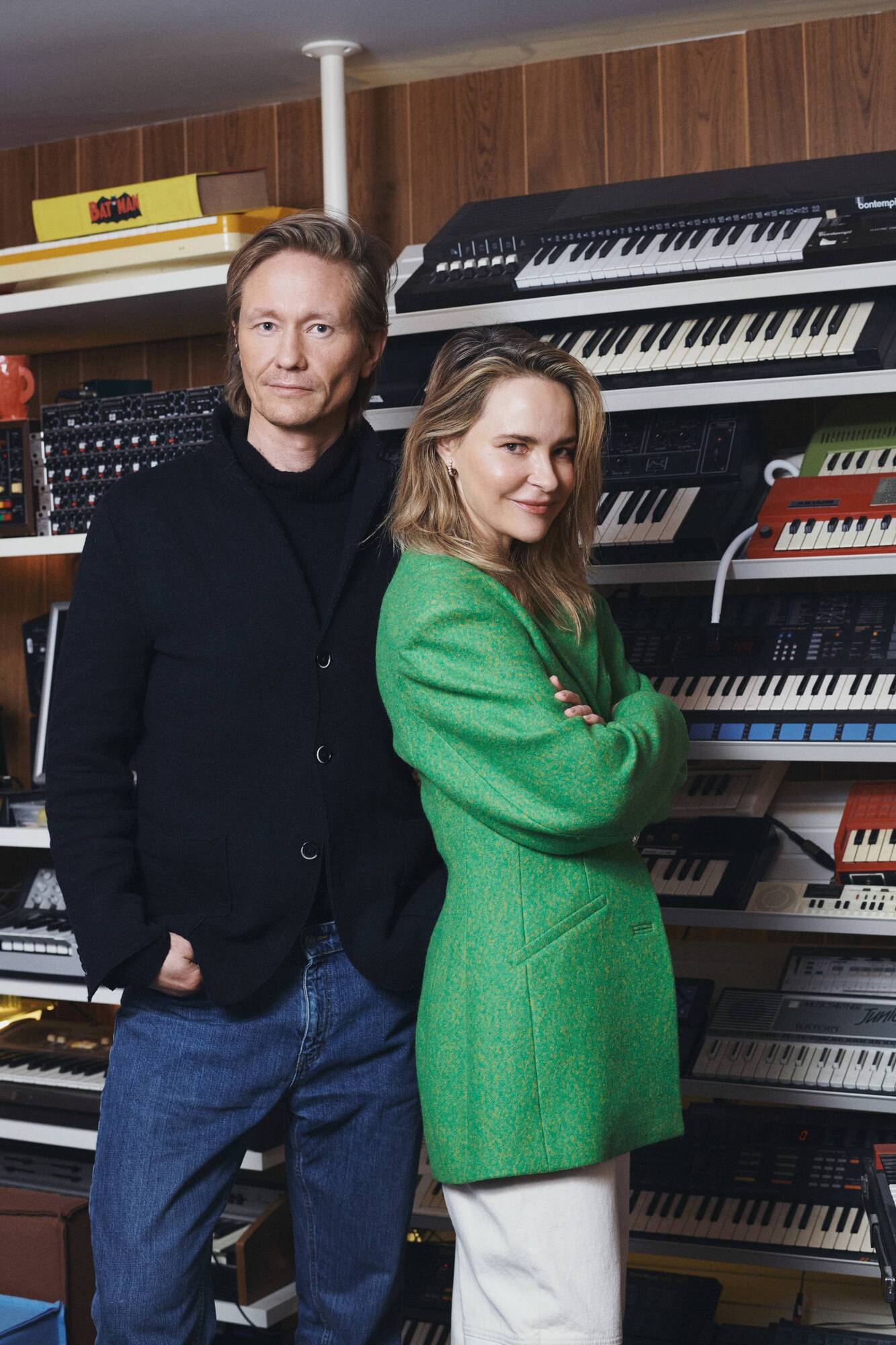
Nicolaj and Ditte Reffstrup, the CEO and creative director of GANNI.
In the late 2010s, a little-known Copenhagen brand called GANNI began to trickle into conversations from New York to Sydney. In what was deemed Scandi 2.0, a brand with a high fashion mindset without the associated price, and with a defiant, individualistic spirit went from fashion’s best-kept secret to a global phenomenon almost overnight.
Quickly, the question “what are you wearing?” defaulted to “GANNI. Obviously!” for many sartorially inclined women. It owes to the brand’s 995k Instagram followers and the #GANNIgirls tag populated with over 75,000 colourful photos published by its “global community” of ardent followers and wearers.
If the spare, almost ascetic principles that defined Scandinavian minimalism cannibalised itself, this Danish label twinkled in the distance, a life force ready to explode like the Big Bang into the epicentre of fashion with lyrical clothing and cosmic appeal.
Ditte Reffstrup, GANNI’s creative director, felt this pervasion of Swedish classicism stole the conversation from Danish romanticism. She birthed the mythical GANNI girl, who mixes and matches colour and texture, embraces contrasts, and epitomises the Copenhagen state of mind: insouciant, collected, defying conventions of femininity as she pleases.
There was a non-conformist, rebellious streak running through the recent spring/summer 2022 show at Copenhagen Fashion Week, from zesty florals, crinkled sundresses, denim matching sets, boxy 1980s-inspired blazers with coordinating bra tops. It juxtaposed business and casual without ever relenting totally to the demands of either. The party is never too far from GANNI girls.
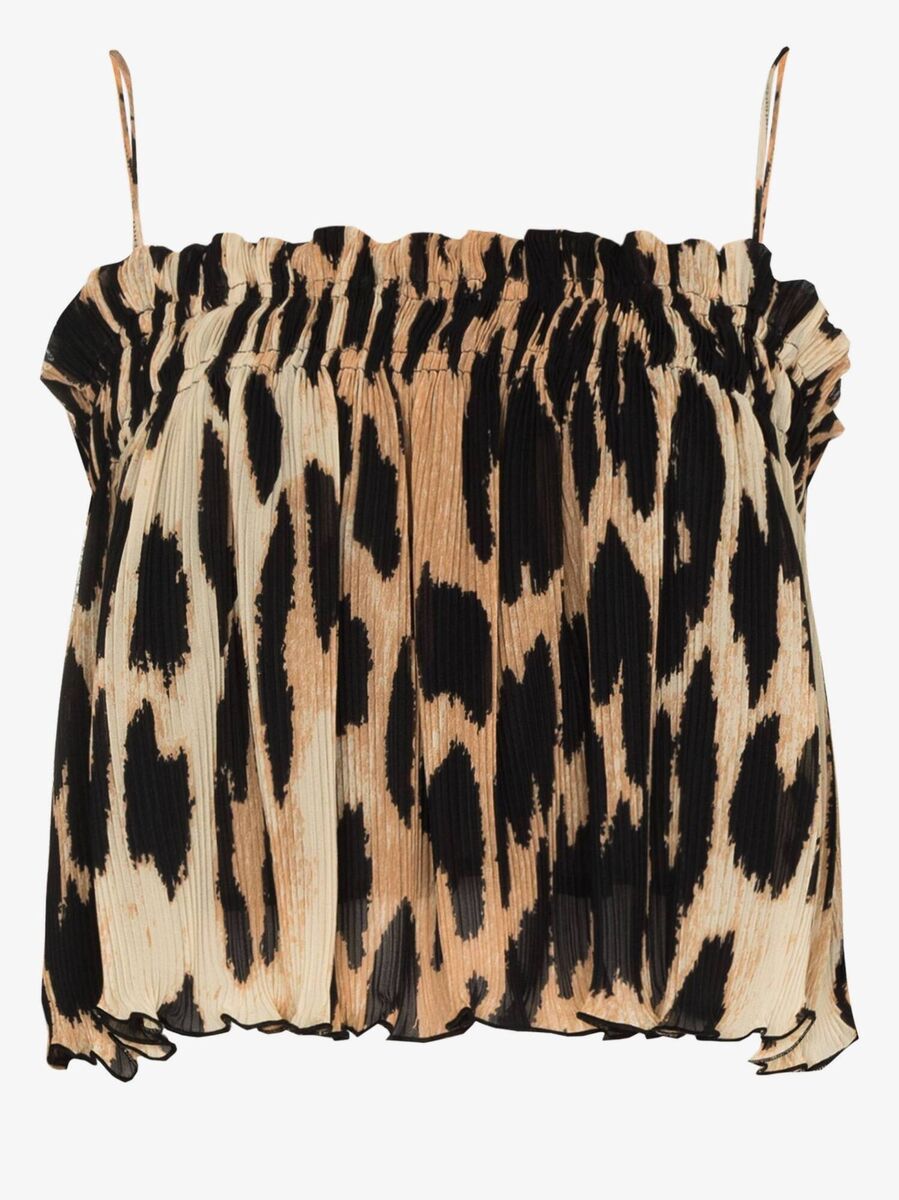
(A pleasant sight: the line runs to a UK 16, a riposte against many fashion brands who supposedly espouse democratic values even with restrictive sizing.) A festival of sorts: few can coalesce disparate styles like the brand whose autumn/winter collection, on sale now, witnesses modest seersucker wrap dresses meet eccentric watercolour-style floral print mesh tops and matching tiger-print trouser sets, alongside subtly feminine ruffle-trim check dresses and bookish knits with oversized collars.
“It’s difficult to pinpoint favourites from this season,” said Holly Tenser, the women's ready-to-wear buying manager at luxury retailer Browns Fashion in London, which stocks GANNI. Although she highlights oversized frill collared denim jacket and kick flare jeans as “the perfect trans-seasonal purchases.” Tenser continued, “there is a real breadth to their creations, and they do an incredible job of covering all occasions and categories; from identifiable t-shirts, the perfect leather jackets, sharp suiting with a twist, the perfect lounge sets. GANNI’s trademark handwriting makes the brand identifiable without stepping into logomania territory.” Nicolaj and Ditte Reffstrup heralded this shift in Scandi style towards something brighter, bolder, and wholly individual. In 2009, the husband-and-wife duo took over the then-sleepy cashmere brand, originally founded on the eve of the millennium.
Nicolaj, the chief executive officer, worked in the technology industry. The pair managed to jolt GANNI out of dormancy and into stratospheric heights with a strategy that blends sophistication with a devil-may-care attitude, a radiant palette, and sustainability.
Calling from their office in Copenhagen, the two chat about creativity, operations, and responsibility. Together, they are at ease, sharing the conversation around both the creative and business sides of things.
It is evident that Ditte, who spent time working in fashion in Paris and Copenhagen, channels a metropolitan spirit into the clothing that telegraphs authenticity and agency.
“Copenhagen has always been my biggest inspiration. We were so lucky to live in a liberal, free country, and our upbringing has and is very much about how to live fearlessly and just being who you are. Our upbringing and our lifestyle are very close to the brand’s DNA,” she said.
To this day, she still cycles to work every day, a mundane activity she says has inspired the design process. (“I still don't have a driver’s licence.”) The imagined GANNI girl is “always on her bike. She would ask to wear sneakers so and to like that mix it with a feminine dress, so or sporty hoodie.” “We are so different. I have so much respect for his work, and if we were doing the same, then maybe we would have had a divorce or something. Because we're not doing the same thing and we have the respect, we are keeping each other relevant,” said Ditte.
“We both like a party. That evens the playing field,” Nicolaj added.
Nicolaj said Ditte “can put herself in other people's shoes. It’s embedded in the design of GANNI. She truly, genuinely wants to create stuff that's flattering for women; and not just one woman but women in general.” Not long after the quickly besotted Niamh O’Donoghue first discovered GANNI at Copenhagen Fashion Week in 2018, she purchased a candy-coloured, gingham-printed day dress - “think a picnic dress but on steroids”. In the summer with sandals or the winter with lug-soled boots, the Irish social media editor and writer remarks that the piece is “comfortable to commute in and suitable for work, but totally transformative for after-hours.” “I love the feeling of wearing something that simultaneously feeds my personality but also feels authoritative,” O’Donoghue said. Ultimately, quoting Ditte, she said they're "clothes to dance in, to be seen in, to be confident in.” GANNI’s infiltration of high fashion, from the street style capitals of the world to the pages of Vogue and the closets of celebrities like Beyoncé and Gigi Hadid, might seem anomalous. But considering its price point, above that of high street retailers like Zara but below high-end labels like Gucci, the Danish brand embodies the happy medium.
Other than Topshop, few lines outside high fashion manage to penetrate the haughty bubble positioned on an axis of exclusivity and elitism. Perhaps it owes to the label’s charmingly authentic sensibility, an attitude it has so effortlessly embodied and one high fashion desperately clamours for.
Browns’ Tenser noted that “Ditte’s ability to play with colour, print and texture ensures each collection feels fresh, always bright and joyous and her brand ethos and message is genuine and transparent.” As with most modern brands, the company has sharpened its focus on its sustainability efforts. Sustainability is too freighted to say; Nicolaj prefers responsibility because “you cannot be sustainable when you're a fashion brand”.
From working to eliminate single plastic use and promoting gender equality both within the organisation and in its supply chain, “the ultimate dream is to create a collection that is impact-free. [Responsibility] is part of every decision-making process across the company.” The dream, they admit, is expensive and challenging.
While some deploy greenwashing marketing tactics, Ditte asserts that this has long been on her husband’s mind. When she first met him in 2004, she recalled he was “all about global warming, sustainability responsibility.” She shared, “to be honest: I did not know what really what he was talking about then. I was much more about, you know, 'where's the next party?'” Nicolaj is aware of the brand’s shortcomings. He recalls its beginnings when people were less aware of just how much fashion damaged the environment. In a push for more transparency in the industry, GANNI publicly shares its objectives and progress for the world to see. (The current list consists of 44 aims to achieve by 2023.) Among its activations, there was GANNI Rental, where customers could borrow from 45 one-of-a-kind embellished pieces created reusing and reworking existing styles from previous collections.
There was the GANNI x Levi's collaboration which saw the label interpret the codes of American denim. While the primary signifier of a conscious effort revolved around its timeless appeal, the collection used cottonised hemp, a cotton alternative that uses 70% less water to produce. (The capsule first launched as a rent-only exclusive on their rental platform.) While concepts like this invigorate the world surrounding a brand, unforeseen challenges like the pandemic have stymied businesses across the fashion industry.
Many brands and retailers have filed for bankruptcy. However, the Danish brand has managed to withstand the turbulent period, opening stores in sought-after locations like London, New York, and Amsterdam.
“Although we lost money when regions or countries were shut down for a while, we also saw a major pickup when those countries opened up. You're seeing that people want to shop in real life, they want to go out and have that experience,” said Nicolaj. (To their credit, the GANNI stores house dazzling, alchemic clothing in a space doused in pastels and contrasting punchy hues.) Nicolaj suggests the pandemic forced its hand to pursue objectives it had considered before the global shutdown, “but never had the guts or maybe the time to do it." It involved scaling back the size of collections, integrating upcycling into the mainline, and producing smaller quantities that would, ideally, sell out.
Albeit the pandemic afforded the business operation to become more nimble, the creative side found it harder to find its footing. Previously, the team could ruminate on ideas at length within the collections, but when it had to be trimmed, Ditte said there was a moment of panic in the studio. However, they began to see the agitations to creativity as “opportunities instead of limitations.” One can examine this agility in the autumn/winter 2021 and spring/summer 2022 collections where the point of view, a blend of flamboyance and propriety, remains experimental yet coherent.
“Whether that was going against the grain or not, that was a byproduct of doing what we felt was the right thing to do. Obviously, it helps differentiate yourself from the pack,” said Nicolaj.
In the future, the two hope that GANNI becomes more of a lifestyle brand, somewhere their loyal following can connect and engage with on an even deeper level. As a community-driven brand, it would appear that the foundations for expansion are already strong.
For Ditte, who got her start in retail at 14, this journey towards an encompassing lifestyle brand began with the realisation that: "very early on, I learned that I could make a difference, like making women feel better about themselves."
"I love that I would always be the friend that would find the right dress. I would never be the friend who would say that the ugly would look good on you. I would always be super honest. And you know people are still asking me what to wear to weddings or parties or something, and I love it."
CONNECT WITH US TODAY



Be the first to know the latest news and updates