Sweatpants forever: What happens when no one has a reason to dress up?
It’s difficult, in retrospect, to pinpoint when panic about the coronavirus, Covid-19, took hold in the US, but it might be March 12.Â
That day, stores ran out of canned goods. Streets emptied of cars. Tom Hanks had just tested positive for the virus. That evening, Scott Sternberg, a fashion designer, was lying awake, at home in the Silver Lake neighborhood of Los Angeles, thinking about Entireworld, a line of basics he had founded two years earlier.Â
Would people still buy clothes? How much cash did he have? When would he have to lay people off? "My Band of Outsiders battle scars just opened wide," he said.
Band of Outsiders was Sternberg’s previous company. He had founded it in 2004, as a line of slim shirts and ties. (Remember the skinny-tie boom? That was Sternberg.) Eventually, it grew into full men's and women's collections that won over the fashion world with self-consciously preppy clothes. Sternberg took home two Council of Fashion Designers of America (CFDA) awards, the industry’s equivalent of the Oscars. He posed for photos with Kanye West. Michelle Obama wore one of his dresses. He opened stores in Tokyo and New York. Then, in 2015, to everyone's surprise, Sternberg announced that Band was going out of business. An investment with some Belgians had gone bad, but that didn't feel like the whole story. Sternberg knew the whole story. Every choice he made at Entireworld was to prevent it from happening again. Now, a global pandemic had hit. He couldn’t have foreseen that. No one had.
Unlike other designers, Sternberg studied economics, not design, because the year he entered Washington University, in St Louis, the economist Douglass North, a professor there, won a Nobel Prize. Sternberg graduated summa cum laude. His senior thesis was about the economics of actors in Hollywood, which is how he wound up in Los Angeles. This is all to say that Sternberg knew what uncertainty does to consumer behaviour.
"What was going through my head was: 'Man, I don’t know how big businesses are going to deal with this'," he said. "
As it happened, it was the giants who would fall first. Over the next few months, J Crew, Neiman Marcus, Brooks Brothers, and JC Penney filed for bankruptcy. Gap couldn’t pay rent on its 2,785 North American stores. By July, Diane von Furstenberg announced she would lay off 300 employees and close 18 of her 19 stores. The impending damage to small businesses was inconceivable.
The next morning, a Friday, Sternberg drove to Entireworld’s offices in Koreatown. He sat down at his desk and began drafting an email: "Wow. I mean, WTF." He didn’t run the email by his staff. There was no meeting about it. He just sat down and wrote it.
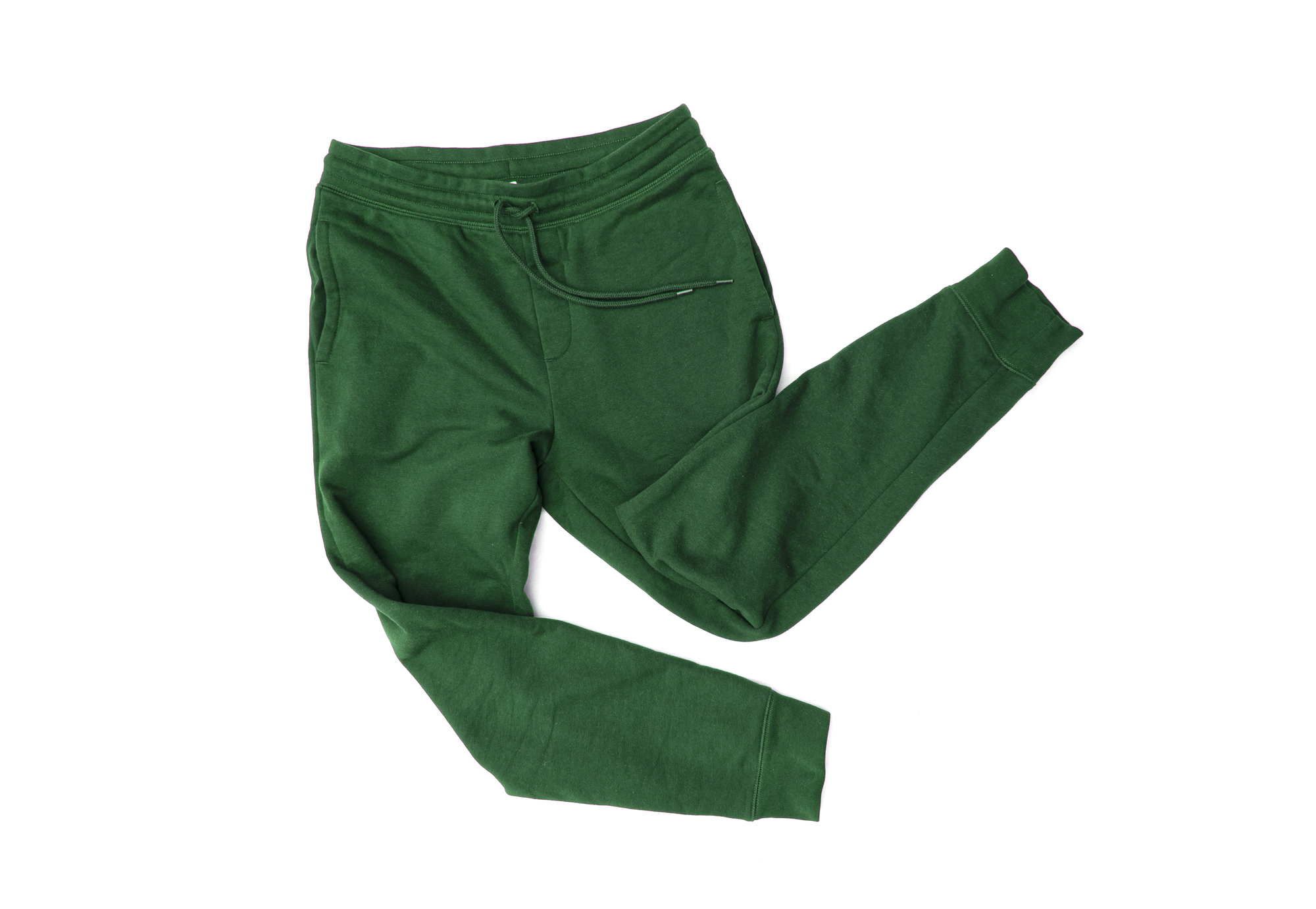
"Am I sick already? Can I leave my house? What do I tell my employees? Will my mom be OK on her flight home today? Can Zod" — Sternberg’s dog — "get coronavirus? Did I buy enough TP? How long will this last? Who’s in charge? What’s next?" The email went out to the brand’s 30,000 subscribers on Sunday, March 15. It was, in a sea of daily promotional emails, a distinctly human one. But this was still a promotion: For a sweatsuit, the brand’s top seller, a 'hero item' in industry speak. Inspired by a French children’s film, Entireworld’s sweatsuits come in a prism of cheery colours and, in Sternberg’s vision, "sort of make you look like a cross between a Teletubbie, Ben Stiller in , and a JC Penney ad from 1979." It wasn’t long before Sternberg’s employees began texting him happy-face emoji. On an average day, the brand — still in its nascent stage — sells 46 sweats. That day, they sold more than 1,000. When they ran out of sweatsuits, shoppers moved through the T-shirts, socks, and underwear. By month’s end, the brand’s sales were up 662% on March the previous year.
When we met, April 24, was the highest-grossing day in the company’s history. A new shipment came in that morning and promptly sold out again. Entireworld had now grossed more in two months than in its first year in business.

By 'met,' I mean that we were in Sternberg’s backyard, in chairs 20ft apart, with a set-up of disinfectant wipes between us. At this point, Sternberg hadn’t been leaving the house much, instead subsisting on deliveries from BlueApron, the meal-kit service, and rationing the ingredients into multiple meals. Entireworld’s managing director, Jordan Schiff — formerly of Dov Charney’s American Apparel, whose heyday Sternberg’s line openly pays homage to — had just come down with Covid-19. But he was still tracking the numbers. Just a few days before, Schiff reported that the company had sold out of 600 pairs of lavender women’s socks.
Sternberg was in a good mood. This was not just because of an email. Nor was it simply because the US had settled into sweatpants for the foreseeable future. He’d been laying down this groundwork since Band of Outsiders imploded. Entireworld wasn’t a departure in name only, suggesting, as it does, the opposite of the in-crowd.Â
It was also Sternberg’s rejection of the traditional fashion system, the one that once vaulted him to success. No more fashion shows, no more seasonal collections, no more wholesale accounts that had become unreliable (RIP Barney's), or the mark-ups required to pay for it all. (Band’s shirts started at $220; Entireworld’s are $95.) For years, Sternberg had been saying that the fashion industry was a giant bubble, heading toward collapse. Now, the pandemic was just speeding up the inevitable. In fact, it had already begun. An incredible surplus of clothing was sitting in warehouses and in stores, some of which might never reopen.Â
"That whole channel is dead," Sternberg said. "And there's no sign of when it’s turning on again." In April, clothing sales fell 79% in the US, the largest dive on record. Purchases of sweatpants, though, were up 80%. Entireworld was like the rare life form that survives the apocalypse. By betting that the luxury market would fail, Sternberg had evaded the very forces that were bringing down the rest of the industry.Â
"Because you could see the writing on the wall," he said. "The Neimans writing on the wall, the Barney's. ... Listen, Barney's? That was not a shock to anyone."Â
If there's one mage that I will remember from the last days of the fashion industry as it has existed for the last two decades, it’s Marc Jacobs streaming live from the Mercer Hotel, in New York, in pearls and perfect make-up. The broadcast ran to 75 minutes, over two virtual events. It began on April 15, with Global Conversations, a series the magazine introduced to figure out how to fix the fashion industry, and continued a month later, on May 15, with Business of Fashion, the industry’s go-to news website.
"I'm in the process of grief right now," Jacobs told .
"Why are you grieving, Marc?" the moderator asked.
"Why? Because this is all very sad."
Then, later:Â
"I’m not sure there will be a spring/summer 2021 collection." Jacobs had come to see his fall 2020 show as a kind of farewell. "I've said this to my psychiatrist, my lovely Dr Richardson," he told Business of Fashion, after taking a long drag from his vape pen, "that I would be very happy if that were my last show." That collection would never be produced. Buyers couldn’t place orders, and even if they had, factories were shut down. Jacobs said he had to lay off "a bunch of people" and ask others to take pay cuts. Not that this began with the pandemic. Since 2013, Jacobs’s business had shrunk from 250 stores to just four. Speaking to , he said, "This has been a very difficult business to be in for a long time, I think."Â
Things looked different in 2005. I’m choosing that year somewhat subjectively, because that’s when I started as an intern at . It was a thrilling time in US fashion. A new guard of young designers had just entered the scene, displacing the stars of the 1980s and 1990s (Donna Karan, Calvin Klein, Michael Kors, et al) and re-energising the runways. Interns don’t see much, but, occasionally, fashion-week invites trickle down. My first show was Zac Posen, in something like row eight. My second was Proenza Schouler. Those designers, along with Alexander Wang, Derek Lam, Phillip Lim, Rag & Bone, Rodarte, Jason Wu, and, later, Joseph Altuzarra, seemed to grow into global brands overnight, with the help of store buyers and fashion editors eager to usher in a post-9/11 generation of US talent.
Band of Outsiders was part of that. Sternberg was 29 when he started the brand, in 2004. Like the Rodarte sisters, who had no formal training and lived with their parents in Pasadena, California, Sternberg, a former agent at Creative Artists Agency designing a line in what was then a fashion desert, was an outsider instantly embraced. Within months, he had a full-page photo of his ties in and was picked up by Barney's. "We were next to Dries, Balenciaga, Prada," he said. "And 'we' were ... me, making shirts and ties in LA."Â
Along with brands like Thom Browne, Band joined the wave of the nerdy-preppy resurgence — shrunken blazers, polos, boat shoes — or what Sternberg called "preppy clothes about preppy clothes". Once he expanded into women’s wear, the brand grew into a $15m (€13m) wholesale business, sold in 250 stores worldwide. "It wasn’t, by the end, all that good for us, obviously, because we weren’t building a sound business," Sternberg said. "But it’s pretty incredible, the power of what that global fashion system could do."Â
When Sternberg says 'global fashion system,' he’s referring to the ecosystem of designers, fashion media, and stores that puts us all in clothes. Fashion week is where those entities meet. The reason spring collections are shown in the autumn (and vice versa) is so they can be ordered, reviewed, and produced in time for the actual season. As with most things, this system was upended by the internet. Once normal people could view collections online — which, confusingly, they couldn’t buy until six months later — everything began to accelerate. Now, stores needed deliveries earlier to fill demand, and two deliveries simply weren’t enough. Suddenly, mid-season collections — mainly, pre-fall and resort (also known as cruise) — became the norm, even for smaller designers whose customers were not necessarily among the subset of people who jet off to Capri or St Tropez for the winter.

So, designers went from making two collections a year to four. If you had a men's line, maybe it was six, and if you were Dior or Givenchy, you were also doing couture. As fashion shows had grown into huge marketing events, because Rihanna or Anne Hathaway, or whoever, was sitting in the front row, each of those collections was also a show. Somehow, this was all still going pretty well. Consumers were consuming, store buyers were buying more, and designers were producing more and faster. Business boomed. And everyone just kept growing.
If there was a turning point, it might have been fall 2008. That year, New York Fashion Week drew an estimated 232,000 attendees and generated $466m (€390) in visitor spending. Three days after it ended, in September, the economy collapsed. The luxury market was already oversaturated, and now there was no one to buy the stuff. Stores panicked and marked everything down early. But then they did it again the next year, and the year after that, relying on mark-downs to generate revenue and training consumers to shop on-sale. So, now you had summer dresses arriving in January and being discounted before the weather would even allow you to wear them.
The fashion cycle stopped making sense. Despite dwindling budgets, thousands of people were still flying all over the world every two months for the shows. Designers started to crack under the pace, most notably John Galliano, who attributed his 2011 anti-Semitic rant (and subsequent firing from Dior) to work-related stress. And the clothes themselves got kind of weird. The sped-up calendar gave birth to 'seasonless dressing', a trend of Frankenstein clothing items: Toeless boots, sleeveless coats — you get it. When you’re delivering fall in July, it’s really not about the weather anymore.
This might have been the time to rethink things. Instead, everyone doubled down and made more stuff.
As online retailers, like Net-a-Porter and Matches Fashion, gained traction, and everything was suddenly sold everywhere, department stores looked for new ways to draw customers.Â
Enter 'novelty', a term for the sometimes-literal bells and whistles that buyers increasingly asked designers to add to collections to entice straying customers like cats. If, in the last decade, you’ve gone looking for a simple cashmere sweater, and, instead, encountered ones with zippers, giant animal faces, glitter shoulders or 'distressed' anything — that’s novelty. If you found yourself annoyed, you were not alone.Â
"That was so we could sell to Saks, Neiman, Barney's, Nordstrom, Colette, and everybody could have their own special thing," Sternberg said.Â
It used to be that stores attracted shoppers with the promise of an exclusively carried designer. Once designers could no longer afford to remain exclusive to a certain store, the compromise was exclusive styles. In addition to a presented collection, buyers requested slightly altered looks — lengthen a hem here, add a sleeve there, take the print from that dress and make it into pants — that could then be exclusive to their customers. This is still going on.
"The amount of work you do for exclusives is out of control,” Batsheva Hay, a former litigator who started her namesake line of off-kilter prairie dresses in 2016, told me. " 'I want this, can you make this with a little this'? Some of it is because they think it might sell, but some is just so they can say it's exclusive." Molly Nutter, a former vice-president for merchandising at Barney's, worked for the department store for 19 years.Â
"The system has been broken for a long time," said Nutter, who is now the president of ByGeorge, a specialty store in Austin, Texas. "There was a lot of pressure on designers to produce more collections, and therefore more product. I would say it wasn’t a real demand by the customer; I think it was just retailers trying to grab market share. They thought, 'If I can get more in, and earlier, then I can get more clients through my door'. But with everyone doing this, it just compounds the problem. Then, of course, all of these stores end up with too much inventory, and this is where all of the promotional activity starts to take place. You’re basically putting luxury product out there and devaluing it almost right away. It was just this vicious cycle," Nutter said. Â
This is what Jacobs would later be mourning in his hotel room. While everyone seemed eager to define fashion’s future, he was holding space for its present. He was lucid, candid, somehow smarter than everyone. (I was relieved when he declined to be interviewed for this article.)Â
"We've done everything to such excess that there is no consumer for all of it," Jacobs told . "
He added, "When you’re just told to produce, to produce, to produce, it’s like having a gun to your head and saying, you know, 'Dance, monkey'!"Â
IN 2013, STERNBERG sat down with the then chief executive at Barney's, Mark Lee, who, Sternberg said, over-promised how much inventory the department store would be able to sell. "Barney's promised us the world and never delivered on any of it," Sternberg said. (Lee did not respond to requests for comment.) "And it was stupid of us to listen to them. But we trusted them. That was a complete killer. And you feel insecure, like, 'I need Barney's to be cool'. And then there are these things called RTVs."Â
RTV stands for 'return to vendor', which is what it sounds like: If a collection — the one that the store has asked you to pad out with novelty and exclusives — doesn’t sell, the retailer can return it and ask for its money back. According to Nutter, as stores struggled, the terms of this deal got worse. In some cases, stores asked designers to sell on consignment, or to share costs, if a certain percentage of the collection didn’t sell at full price.Â
So, let’s say a store marked the collection down early: You now owed it for those losses. "Even as I’m telling you this," Nutter said, "I'm like, 'Isn't that crazy'?" It is. It is crazy. And here's where it got even crazier: In order to protect exclusivity, stores had to commit to even larger buys, ordering more clothes than they could possibly sell. Then, when they couldn’t move the stuff, they’d return it. Thanks to the rise of fast fashion and the luxury market’s simultaneous attempt to keep up with its impossible pace, it all started to feel disposable.Â
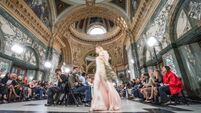
So detrimental was the cycle of overproduction and discounting to luxury goods that, in 2018, Burberry, the British label, revealed that it had been burning — not metaphorically, but literally: burning — $37m (€31m) of merchandise per year to maintain 'brand value'. In short, fashion seemed to slowly annihilate itself. Remember fashion week? While incurring all those losses, designers were still putting on shows roughly every three months, productions that ran to hundreds of thousands of dollars. (Or millions, if you were Chanel.)Â
The problem is that everyone who attended the shows and streamed them out via endless, blurry Instagram videos was actively making the case for the demise of their jobs. Because if you’re there, watching via the tiny screen on your phone, while the real live show is happening feet away, why even go? "God bless fashion media," Sternberg said. "They still have not caught up to the idea that everyone is seeing it at the same time."Â
"It's such a little scam, fashion week," he continued.Â
Sternberg acknowledged that there were other factors that killed Band of Outsiders, chief among them his own inexperience in scaling a niche brand, but, ultimately, he was underfunded and over-leveraged. The day he opened the store in SoHo — with a Momofuku Milk Bar attached — he knew it was over.Â
Sternberg took a $2m (€1.7m) convertible loan from CLCC, a fashion fund backed by a Belgian shipping magnate, and defaulted six months later. The brand was collateral. (Band has since been reborn as a zombie version of itself, run by the Belgians.) In May 2015, he handed off passwords, keys, and a storage locker in Pomona, California, with the brand’s archive and walked away. "But it wasn’t some big disaster," he said. "Well ... by the end it was a little bit of a disaster."Â
Sternberg’s story was not unique. In Europe, luxury fashion conglomerates like LVMH and Kering paired young designers with experienced businesspeople. "In America, it was much more entrepreneurial," Andrew Rosen, a founder of Theory and an early investor in Proenza and Rag & Bone, told me. "You had a lot of these incredibly talented young designers that, frankly, didn’t have the business partnership to go along with it."Â
I asked Sternberg if he felt as if he’d lost the narrative. "To some extent, I didn’t lose the narrative, because I never had one," he said. "I started making shirts and ties for men, and everybody loved them. Then, I made men’s clothes for women, and everybody loved them. All these amazing stores and magazines were eating them up. I was just a kid in a candy store, waiting for an adult to step into the room and rein it all in." The adult never came. Proenza Schouler has gone through myriad investors, ending up with one that specialises in distressed assets. Last summer, Derek Lam shut down his high-end line. In November, Zac Posen went out of business the same week as Barney's, the store that once discovered him, followed closely by Opening Ceremony, in January.
Then, Covid-19 hit.
Consumers stopped having any need for fashionable clothing. Retailers scrambled to cancel and return orders. (Remember RTVs?) Designers were unable to cover basic expenses, like rent and payroll, let alone upcoming collections. Suddenly, an industry that was already on the brink ground to a complete halt.
"It crystallised a lot of conversations that the fashion industry had been having for some time," Anna Wintour, editor of and artistic director of CondĂ© Nast, told me when we spoke, via Zoom, in May. "For an industry that is meant to be about change, sometimes we take a long time to do just that, because it's so big and there are so many moving parts. But, now, we were really forced into a moment when we had to reset and rethink." (Full disclosure: I’ve written for .)Â
Later, I asked Wintour why so many designers of that generation were now struggling. "I think, in general, we’ve created a system that is unrealistic and a strain for even the largest of brands," she wrote in an email. "It could be that some younger designers were playing the same game and trying to keep up with the big brands, rather than determining what’s best for them." In March, partnered with the CFDA to set up A Common Thread, a pandemic-relief initiative that has raised $4.9m (€4.1m). By May, more than 1,000 companies had applied for aid. "I was truly saddened by the number," Wintour said, adding: "I think it really is a time where we need to learn from what’s happened, almost about how fragile and on the edge we were all living. And that it wasn’t that solid." Steven Kolb, the president of the CFDA, was even more blunt. "I think there will be brands that don’t come out of this still a business," he said.
How did we get here? This is a question I asked almost everyone.
"I think everybody would say it's the other and not themselves," Kolb told me.
"I don’t think you can blame one person, or one part of the industry," Wintour said. "Certainly, the media had something to do with it, as everything went so instant through digital and the emphasis on what’s new."
 In May, I called Jeffrey Kalinsky, the retail pioneer who opened Jeffrey in New York’s meatpacking district in 1999, transforming the neighbourhood into the retail zone it is today. Kalinsky was first in New York to sell Band of Outsiders. In 2005, his stores were acquired by Nordstrom, one of the department stores said to be well positioned to survive the pandemic. "I think all of us played a part," Kalinsky said. "It was the stores and the customers and the brands and ... all of us. I hate what's happening in the world. But I think if there's anything good that can come out of this, it's the chance to look at ourselves." Four days after we spoke, Nordstrom announced that it was closing Jeffrey.
Sternberg never intended to design a uniform for sheltering in place. After Band of Outsiders folded, in 2015, he padded around his house for a few weeks and avoided the press. Then, he got an email from Gwyneth Paltrow. "I was so sad when Band closed," she wrote. "It was a dark day for fashion. I’m not sure what you’re doing, where your head is at, or if you have a non-compete, but I have an idea I’d love to run by you." Soon, Sternberg had a job designing Paltrow’s clothing line for Goop, her wellness-and-lifestyle business. Meanwhile, he thought about what he might like to do next.
Sternberg surveyed the fashion scene and saw a lot of noise: The luxury minimalism of countless Celine copycats; the maximalism of brands like Gucci; the full gamut of streetwear, from Supreme to Vetements. He wanted to do something that felt like a palate cleanser. Sternberg took meetings with Target and Amazon fashion and pitched Superproduct, a line of well-designed basics that he hoped could be what the Gap once was. When neither went anywhere, he decided to do it on his own.
Entireworld was born in 2018 as a DTC (direct-to-consumer) line, with no seasons, no shows, no novelty. "I wanted complete freedom from that," he said. You probably know what DTC is even without knowing it. Reformation, Everlane, Outdoor Voices, Warby Parker, Allbirds — all those sans-serif, venture capital-funded brands that have proliferated so much in the last decade that you’re probably wearing one of them right now. Have you ever bought clothes from an Instagram ad? That's DTC. Entireworld is sort of post-DTC, which is to say that there is no Silicon Valley boardroom trying to solve a problem for you. It's just Sternberg, a fashion-industry refugee, feeling his way through it.
"I'm incredibly business-minded," Sternberg said. "But we’re design-driven. I come out of fashion. I’m not coming out of a PowerPoint deck." Most styles in his line are perennial. There are pleated trousers that are sort of the cooler version of what your 1980s dad might wear, and a 'Giant Shirt' inspired by Ralph Lauren’s 'Big Shirt' of the 1990s. The sweatsuit, made of fabric that Sternberg developed from scratch, feels like the sartorial version of a hug. Something about its combination of colour, fabric, and fit makes it feel OK to wear not only to bed, but also out. (In January, I saw a woman in New York wearing it under a Burberry coat.) Unlike Band’s slim fit, most things by Entireworld are roomy and wide. Its slogan is, 'The stuff you live in.' In recent years, the collapse of the fashion industry has pushed other runway designers, like Thakoon Panichgul and the shoe designer Tamara Mellon, to redefine themselves as DTC companies. Those who haven’t are now being nudged in that direction. Take Batsheva Hay, for instance, who, in April, had more than half of her wholesale orders slashed and $100,000 owed to her by retailers. When I reached her, she was packaging web orders from a lake house in upstate New York and selling face masks via Instagram. She estimated that before the pandemic, DTC was about 10% of her business. "But, now, it's kind of all my business," she said.
Emily Adams Bode, a men's-wear designer who won a CFDA award last year, was, until recently, sold in 120 stores worldwide, with e-commerce accounting for less than 10% of her sales. In May, Bode was at her fiance's parents' home in Canada, rushing to put her spring/summer collection online. "Stores that we’ve had in our Excel sheets on the probability of getting paid at 90% now call us and say they’re closing," she told me. "We have to completely rely on our own selling, because, at the end of the day, I don’t know how many stores are going to be able to carry the weight in another six months." Last November, just as everyone declared that retail was dead, Bode opened her own brick-and-mortar store on the Lower East Side. The store, which is sort of the old-school version of DTC, ended up saving her. What she projected to sell in a month she started selling in a day. "I don’t think we’d be here without the store," she said. Hay was also looking at store space just as the crisis began, and planned to again. "There’s going to be a ton of empty retail space," she said. "I’m sure I can find an amazing deal." The pandemic has also forced a correction of the calendar. With factories shut down and deliveries delayed, many of this year's fall collections will, for the first time in a long while, actually arrive in season. Some in the industry have even talked about pushing the unseen and unsold 2020 collections to 2021 to avoid losses. "Which, by the way, is not a bad idea," Sternberg said. "It's what the clothing industry has over the food industry: In the food industry, the aged inventory rots." The fascinating part is that to do that — to give that aged inventory value again — requires killing fashion, that nebulous deity that says something is 'in' this year and not the next.
In May, two separate groups of designers banded together to put forth proposals on how to change the industry. Each essentially pushed for the same thing: Later deliveries, delayed mark-downs, fewer collections. "I think a lot of us are aligned on this idea that seasons have to go back to what they were," Joseph Altuzarra, who signed both proposals, told me. The only person who didn’t think fashion had been moving too fast was the designer Virgil Abloh, even though he had to skip his own fashion show in Paris last September, reportedly because of exhaustion. (Abloh juggles his streetwear label, Off-White, with Louis Vuitton men’s wear, as well as collaborations with Nike, Ikea, Evian, Jimmy Choo, and others.) "I work at the pace of my ideas, and those come often," he told me. "The consumer today is a hyper being. I’m not one to say, 'Let's go back to the old days', when we had rotary phones or something." He called revising the delivery schedule an "obvious fix, more so than a profound idea or anything". What does all of this mean for the shows?
"There will definitely be something, but nothing resembling fashion week as we knew it," Wintour told me.
Abloh announced that he will no longer show on a seasonal schedule, or base his shows in one place. The Belgian designer Dries Van Noten will not show until 2021. Chanel premiered a virtual resort show the week that the George Floyd protests began and came off as mostly tone-deaf. Alessandro Michele, the Gucci designer, has reduced the number of shows from five to two, doing away with seasons and gender altogether. There has also been talk of virtual reality and films accompanied by fabric samples. In New York, the CFDA will still be the official scheduler of New York Fashion Week, in September, though it’s unclear why mostly digital shows would have to be scheduled.
"I think fashion week is over," Hay said. "I’m pretty sure it’s over for ever." If not the shows, then certainly the collective circus that travels from New York to London to Milan to Paris twice a year.
The more important question is whether people will buy clothes that aren’t sweatpants. Some are already designing with that uncertainty in mind. Altuzarra, who makes the opposite of homebody clothes, told me he was adding softer fabrics and more relaxed silhouettes to his spring 2021 collection.Â
"Not necessarily like loungewear or athleisure," he said. "But I think, after spending months in sweatpants, people are going to want to feel comfortable." Hay, meanwhile, was pivoting from party dresses to house-dresses. "I’m just like, 'OK, we’re home more, but why does that have to be sweatpants'?" she said. "Can it be a dress? A house-dress is completely easy. You can throw it on, zip it off, whatever. Maybe I’m going too far, imagining a future where we’re constantly in and out of quarantine, but business-wise, I’m sort of preparing for that."Â
And if that’s the case, what happens to designers like Jacobs? When asked about online shopping, Jacobs told Business of Fashion: "I love to go to a shop. I like to see everything. I like to touch it. I like to try it on. I like to have a coffee. I like to have a bottle of water. I like to get dressed up." He raised his eyebrows for emphasis. "But ordering online, in a pair of grubby sweats, is not my idea of living life." Incidentally, Jacobs’s fall 2020 show, in February, was among his very best.Â
The clothes referenced a pre-internet New York, while modern dancers charged at unsuspecting audience members seated at cafe tables in a way that now feels prescient. In 2008, Sternberg used to sneak into Jacobs’s shows at the Lexington Avenue Armory, as everyone did then. ("I'm a huge Marc Jacobs fan," he told me.) That was the year that Santigold and MIA played on every runway, and there was a magic to the way that the music, the stomping models, and the fabric in motion gave fashion its heartbeat.Â
The incredible talent of someone like Jacobs is that his clothes didn’t even have to be produced or worn to have influence. He’s all about starting a conversation that then threads its way through the system, eventually landing in a consumer's hands via a perfume or an accessory, if at all. "So what happens to Marc?" Sternberg asked. "Where does he end up?" He answered his own question. "I guess in the Mercer Hotel, wearing pearls."Â
IN JUNE, I stopped by Sternberg’s garage, where he keeps a personal archive of Band of Outsiders designs. There are crates labeled 'turbs', for the turbans he sent down the runway for fall 2013 — a collection inspired by Billie Holiday and Atari video games — and 'SS12', for spring/summer 2012, which referenced Peter Weir’s . There are also polos from his 'This is not a polo shirt' line; fur jackets (before he got off fur) from the show that opened with mountain climbers rappelling from the ceiling; and bandage skirts stitched out of suspenders. "I made that, yay, me," Sternberg said, flatly. "This is some ugly print that Rashida Jones wore on ,” he said. (Sternberg loves Jones; it’s his own work he’s ambivalent about.)Â
"What do you do with all this [expletive]? You don’t want to throw it out. Give it away? Should someone be wearing it? It’s not art, for God’s sake." Going through this stuff, Sternberg was a bit like a musician revisiting the hits he made before he got sober. He loves them, he really does, but the excess of it weighs on him — all those ideas that never became anything, all those materials, all that waste. Like the shoes: Lace-up Manolo Blahniks and golf-cleat Oxfords and platforms with watch bands as straps, all developed just for the shows, at 30 pairs per show, and never even produced. "And it’s season after season," he said.
Last year, Sternberg let his CFDA membership lapse. He saw it as a largely New York Fashion Week-centric institution. "They don’t offer anything for what I’m doing," he said. "They should be trying to figure out what all this is and how they could support it." The CFDA subsequently reached out to Sternberg. "They were sort of like, 'What are you doing?' And I just said: 'This is what I’m doing. What are you doing? When you’re in my zone, let’s talk'." When I asked Kolb if the CFDA could do more to support DTC companies, he said: "I think that’s a big question. That's not an answer I have." It was ultimately up to the board, he added. "But I know we have those conversations all the time."Â
Whatever tensions there may be, everyone I spoke to praised Sternberg’s reinvention, in the way that fashion people praise things, which is to say with a tiny bit of shade. "Love Scott," Anna Wintour said. "It seems very honest to me and very realistic. I understand not everyone can afford Marc Jacobs or Chanel." Kolb told me, "I think Scott is a brilliant marketer," adding, "It works really well with a basics brand." But he also credited him with anticipating this moment. "Whatever happened between him and the investors, and however he got out of that, maybe, at the time, was painful, but it enabled him to start over. I think brands that are in it now, it's much harder to make that change." Even Virgil Abloh, the designer of Vuitton men's wear, was excited when I brought up Sternberg’s name. "Oh, I loved Band of Outsiders!" he said. "My question is, 'Where did he go'?" By June, US clothing sales rebounded, but they were still down overall from the year before. Market analysts predicted that with infections soaring again and stimulus money running out, that uptick might be temporary. The anomalies have been mostly athleisure companies, like Lululemon, the purveyor of bougie leggings, whose shares have surged in recent months.
Entireworld is still tiny. But in its second year, Sternberg said its revenue is already eight times that of Band of Outsiders by the same point, and that’s while selling much more product ($15/€13 underwear and socks, $32/€27 tees, $88/€74 sweatshirts). Despite the recent good sales, Sternberg has still had to scale back. In February, he expected to get a round of financing from investors in Korea, but then the virus hit there first, and that evaporated. The same week that the sweatsuits were selling out, he laid off three of his nine employees and cut styles he planned to add in the fall. Even before the pandemic, persuading investors to bet on clothing brands had become a drag.Â
"This is the shmatte business," he told me. "It's no longer sexy. Investors want something disruptive. When they’re with their investor friends, they want to say they invested in, like, flavoured water or an operating system that changes the way we walk." Investors that do pump money into DTC brands are after swift returns, pushing companies to grow big and fast in a way that’s unsustainable. One such casualty was Outdoor Voices, the athletic-apparel company that reportedly took in $60m (€50m) of venture-capital money and faltered in February, with its CEO ousted and its valuation plummeting. After what happened to Band, the last thing Sternberg wants is to grow too fast for his own good. "Investors are only interested in, like: 'Billion-dollar company. Unicorns'," Sternberg said. Sternberg doesn’t want to be a unicorn. He just wants to be profitable by next year. "The second Band tried to grow, that’s when we stopped being profitable," he said.
Sternberg wouldn’t remember this, but we met briefly a long time ago, when I covered his spring show in September 2008, mere weeks before the financial crash. He seemed different now — sort of softer around the edges, which also happens to be how he describes his new line. "I’m much lighter as a person," he said. "I know that whatever I’m doing for work is not the end-all, be-all of my life. That doesn’t mean I don’t emotionally invest in all this and want it to thrive. But my identity and sense of self-worth isn't tied to its success or failure. Would I like this to work? Sure. But is it going to ruin me? No." The last week, Sternberg admitted, had been rough. Though Schiff, his managing director, had recovered from Covid-19, a billionaire seed investor informed Sternberg that he would not be investing any more money. "And it’s not like we haven’t hit our numbers," Sternberg said. In a way, if it weren’t for the pandemic, this might have been the end of Entireworld. When the pandemic hit, he had maybe six weeks of runway left. The sales boom has extended that to at least the end of the summer. Still, he had to get more product up on the website, and for that, he had to pay his factories.
He found the whole thing depressing. Here he was, perhaps the only one in fashion who couldn’t sell merchandise fast enough in a pandemic, and no one was interested in investing. "It’s a slog," Sternberg said. "It’s a constant series of disappointing conversations." He thought it was indicative of where the industry was now. Someone like Marc Jacobs would probably be OK, because he was backed by LVMH. But what would happen to the upstarts? If the wholesale model could no longer be relied on to fund young designers, and private equity and venture capitalists pushed them to expand so quickly that they inevitably imploded, was there any hope for brands to grow slowly and thoughtfully, over time? If not, fashion might go the way of other industries, like film, in which there are the blockbusters and the tiny indies and nothing in between.
 "Band didn’t need to be a $100m (€84m) brand," Sternberg said. "But is there a place for a $30m (€25m) brand that can self-sustain and be around year after year? Certainly not with big backers, because that’s not interesting to them. Wholesale used to be able to support that, but it also ultimately killed it." Fashion is, by definition, unpredictable. People buy clothes for illogical, emotional reasons. The challenge, as Sternberg saw it, was to build a brand that could be immune to trends and novelty and whatever dystopian disaster was coming next. "The trick with fashion is that we're not selling toilet paper," he said, "which, of course, during Covid, toilet-paper sales go up. But, ultimately, it will level out, because there’s only so many butts in the world. That hasn’t changed — people are just hoarding. Fashion is really different. You have to assume the cycle will change, even if you’re doing commodity. And how will you keep up with that? How do you build a business that can sustain those fluctuations over time?" That was his pitch, anyway. But so far, no one seemed to be listening. One investor suggested that maybe Sternberg should turn Entireworld into a TV show that would advertise the clothes. (Sternberg: "Sounds easy!") Another told him, "Wow, it’s great that you’re doing well, but I’m actually looking into distressed assets now."Â
Instead of investing into a young business that was actually making money, the investor was looking to swoop in and pick off bigger brands that were now on the brink of bankruptcy. Reviving a corpse was easier than tending to a newborn. As this investor saw it, that, in the end, held the promise of a bigger pay-off.