Meet the Irish women leading the charge in ethical style
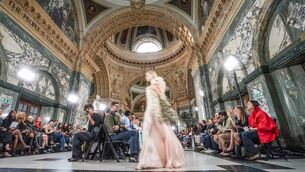
Fast fashion is over. profiles the women leading the charge in ethical style.
Does fast fashion fling leave you cold? You’re not alone. With environmental and fair- trade concerns increasingly at the heart of how we shop and what we buy, consumers are now seeking a more meaningful relationship with what they wear.
From consignment stores and auction houses to vintage specialists and ethical costume designers, we meet the industry insiders working behind the seams of sustainability.
Claire-Laurence Mestrallet, associate director and head of the jewellery department at Adam’s Auctioneers
www.adams.ie

The jewellery I appraise on a regular basis and that is included in my auctions is a majority of 19th and 20th-century jewellery - so from Georgian and Victorian, to Belle Epoque, Art Deco, Retro, 1970s and contemporary jewellery. I even have contemporary designers designing and consigning their new pieces in my fine jewellery auctions.
I evidently look for quality. It’s essential because the quality of the manufacture and the quality of the stones on the piece will guide me to value the piece. I also look for a signature too which is also going to influence the value of the piece and its present condition. Lastly, after having looked at it, I will consider how much demand there is for such piece on the auction market.
Having worked in the business for 12 years, I have seen some incredible pieces being sold. Most recently in my last September auction, we sold a beautiful diamond rivière necklace signed by renown 1950s jeweller Mauboussin. The necklace had been in the same family since it was bought with its original invoice and fitted case. It was estimated between €120,000-180,000 and fetched hammer €150,000. We were thrilled to have this consignment directly from the family and the price it made.
Suzanne Belperron was an amazing designer who, for a long time, was overlooked; now her pieces achieve incredible prices at auction. Her designs dating from the 1930s are still so contemporary and designers are still inspired by her; she was a real visionary. The Mauboussin necklace was definitely a big hit too and I was very proud that the family chose Adam’s auctioneers with whom to sell it.
Caroline Quinn Co-owner with sister Kathy Sherry of Dublin-based vintage bridal and occasion wear boutique, Dirty Fabulous
www.dirtyfabulous.com
Price expectation is something on which we’re constantly trying to educate people. There are a lot of online, mass-produced vintage style dresses that can be bought for very little money. Our dresses can be over 80 years old; they are made from fabrics no longer available, hand-made, restored and cleaned by us. They are rare, one-off pieces and our prices reflect that.
When we opened ten years ago, during the recession, people were making more thoughtful purchases. Now we’re seeing the return of the need for instant buys at lower prices. This is mostly due to the availability of Internet shopping. We’ve had countless brides come in three weeks before their wedding who’ve had dress disasters after buying their dress cheaply online.
Certain aspects of this are true. The earlier the vintage era, the smaller the standard sizes tend to be.
These were times of less readily available transport, no processed food and very little socialising combined with decades of war and rations. It is harder to find dresses from the 1920s to 50s above a size 12, but we do our best to find as wide a range as possible. From the 1960s onwards, dress sizes start changing and resemble our modern sizing. That’s still about thirty years of fashion goodness that’s accessible to most. You just have to be willing to try them.
Om Diva is one of our favourite stores. We often pick up cute vintage day dresses there; it’s an absolute explosion of colour. Instagram is an amazing place to source and become inspired by vintage. A couple of our most loved people are @butchwaxvintage and @fabgabs.
Sinéad O’Sullivan, London-based costume designer and creator of the Costume Directory
@thecostumedirectory

Social and environmental responsibilities go hand in hand; I was driven to really do something in 2013 after the Rana Plaza building collapse in Bangladesh killed over 1,000 garment workers. As someone involved in making clothes for a living, I don’t see why women in developing countries should have to work in slave labour conditions to feed our appetites for cheap disposable clothing.
It depends on the project. On period / historical films we tend to hire as many of our crowd costumes as possible. We then make the principal actors costumes, so in those instances, we research our fabrics carefully and try and buy from fair trade suppliers, and have them made in the UK. On contemporary jobs, we try and buy as much second hand as we can, and then we also try to use ethical, sustainable and independent designers where possible. In terms of the day-to-day running of things, we are looking at ways to reduce the use of single-use plastic, avoid unnecessary car journeys, and repurpose unwanted items at the end of a job.
As a freelancer, I feel like the whole infrastructure of our industry needs a shakeup and sustainability commitments need to be mandatory rather than just suggested guidelines. No one pays me to implement sustainable and ethical standards in the film, and designing costumes has to be my priority or else no one will employ me, but as I move from job to job it often feels as if we have to address sustainability issues from scratch each time – there isn’t a standard position on sustainability across the board.
I’ve got my wedding coming up in a few weeks and I’ve just got a great pair of shoes and a jacket yesterday from Oxfam!
Ella de Guzman, CEO and founder of Dublin designer resale and consignment store Siopaella
www.siopaella.com

We buy, sell and trade authenticated luxury designer handbags, clothing and accessories and help our customers unlock the currency in their wardrobes.
When I moved here from Vancouver, there weren’t any consignment stores that specialised in the buying and selling of high street to high end so I knew there would be a market for it. I had been consigning since the 1990s back home in Canada. My friends and I would buy things knowing we would be consigning them once we were done with them; it was the way we shopped. I love knowing that my purchase will not end up in a landfill and that it will be continuously worn many times over through the services that a consignment store offers.
It is a challenge sometimes educating customers about the environmental value in buying pre- owned as opposed to brand-new. Fashion is the second largest polluter in the world and we should all be encouraging everyone to shop sustainably. Yes, you might only save €100 on a next to new Gucci bag when you compare buying it brand-new, for example, but the environmental savings are priceless. People tend to forget the manufacturing process is that is involved in making anything and this is our goal for 2019 onwards - to educate as many people as possible in the benefits of buying resale.
I remember going on a buying trip to Long Island where I found a vintage Louis Vuitton bag in one of the bins for €20. That bag would sell for €500 but I ended up keeping it.
We have recycled over 124,000 items since 2011 and have kept them out of the landfill.
Naomi Fitzgibbon, founder of online boutique Vintage Finds You
https://vintageclothes.ie

I honed my style watching my mother who made most of her own clothes as well as those of her seven children. I then became hooked on vintage as a student nurse and amassed a large collection of pieces on my travels. When I finished my MSc in Clinical Leadership in Health, I decided to start working on my passion and launched Vintage Finds You. I now offer personal appointments and hold regular pop-ups around the country.
Niall Morris, writer and producer of ‘Callas - the Life of Marie Callas’, was looking for a costume for his lead opera singer. We decided on a 1950s velvet Maggy Rouff dress for one of the scenes, which I got on a Berlin shopping trip. Rouff was a couturier (1929-1963); her father Christoff von Drécoll designed fashions for the Imperial Family of Austria. On further research, I discovered that Rouff had also designed costumes for Marie Callas. The coincidence was incredible.
My customers feel it’s quite difficult to stand out in the fast pace of fashion these days and are also very conscious of sustainability. They want something special, good value for money and feel they are giving something back to the planet, one dress at a time.
I tried on a 1950s wool swing coat in a New York thrift store. It was a bit pricy so I didn't buy it. The next morning, I was going home to Ireland and decided to use my taxi money to go the airport to buy the coat. When I got to the shop it was closed. I went to the coffee shop next door and to my amazement, the lady serving me was from the thrift store. She recognised me and told me she put the coat aside; she didn't want anyone else to buy it as she knew I would be back. She even gave me a discount and I could afford my taxi to the airport. I still have the coat receipt.
Breda Casey, owner of Cork-based vintage boutique Miss Daisy Blue
@missdaisyblue

Miss Daisy Blue is a collection of casual and statement vintage pieces passionately built over years.
We choose each garment that makes it to the shop in person and curate the collection according to strong personal taste. Being a niche shop in a small city we tend to know our returning customers’ tastes and make an effort to pick up things that we feel will excite our shoppers.
I had to choose one to run out of a burning house with it would have to be my mother’s swimsuit.
Made at Sunbeam in Blackpool, Cork in the late `50s, it’s a personal treasure.
Remember your style when shopping for vintage but be open-minded. Vintage can be trickled into a contemporary look in the way of a fab blouse with a brilliant `70s print and a pair of jeans. It can be easy to incorporate by checking which decade is in season and completing the outfit with the right elements.
We are grateful for all our local Cork customers. The shop has always attracted people from far and wide but we really depend on the customers who know what we are about and keep returning. One of our challenges at the moment is competing with such a rapidly growing online shopping craze. We are currently building our Shopify account and regularly updating our Instagram so that our fans in Ireland and abroad can keep updated on our latest favourites.
Vintage shopping is not as easy as walking in choosing a garment and getting it in your size but it is far more satisfying when you do find an exceptional piece that nobody will have seen. Between all the silhouette changes throughout the decades there genuinely is something for all types and sizes.