Taylor Swift applies to trademark her voice and image amid AI concerns
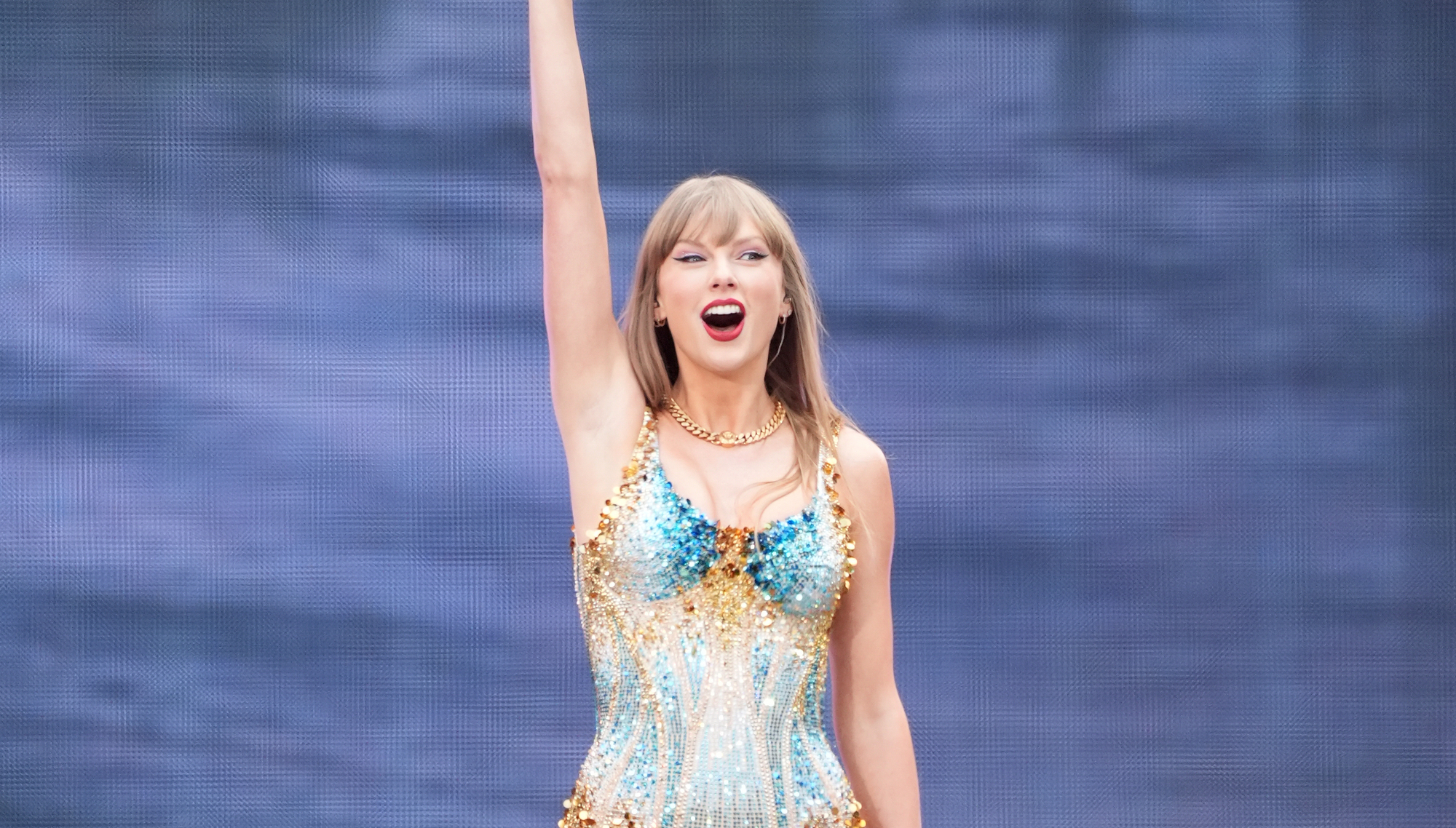
The 36-year-old submitted three applications in the US on Friday to trademark her voice and likeness.
Taylor Swift has applied to trademark an image of herself as well as her voice, amid growing concerns of content generated by artificial intelligence (AI).
The 36-year-old, known for the hit songs and submitted three applications in the US on Friday to trademark her voice and likeness.
The applications included an image of herself from the Eras tour, along with two audio clips where she introduced herself while promoting her most recent studio album,
The image submitted was used to promote Swift’s Disney+ docuseries and was described in the court filing as: “Taylor Swift holding a pink guitar, with a black strap and wearing a multi-colored iridescent bodysuit with silver boots.
She is standing on a pink stage in front of a multi-coloured microphone with purple lights in the background.”
One of the audio clips featured the star saying: “Hey, it’s Taylor Swift” while in the second she says: “Hey, it’s Taylor. My brand new album is out on October 3 and you can click to pre-save it so you can listen to it on Spotify.”
star Matthew McConaughey recently told the he had trademarked his voice and image to protect himself from any unauthorised use by AI apps.
Although protecting sound is not a new concept, according to trademark attorney Josh Gerben – who first highlighted the details of the applications on his site GerbenLaw – involving spoken voice through audio clips has not been tested in US courts before.
Mr Gerben added that the applications could provide Swift with an “additional layer of protection”.
He said: “By registering specific phrases tied to her voice, Swift could potentially challenge not only identical reproductions, but also imitations that are “confusingly similar,” a key standard in trademark law.
“The image-based filing serves a similar purpose: by protecting a distinctive visual, down to Swift’s commonly worn jumpsuit and pose, Swift’s team may gain additional grounds to pursue claims against manipulated or AI-generated images that evoke her likeness.”
He said that historically in the US, artists would either use copyright law to protect their music or right of publicity laws to protect their likeness or image, however trademarking Swift’s sound and image could increase her protection.
He continued: “AI has broken that model. Now, anyone can spin up a version of an artist’s voice, have it say anything, attach it to anything and distribute it at scale.
“That’s where trademarks come in. Trademark law doesn’t just stop identical uses (like copyright law): it stops anything that is confusingly similar to the registered trademark. That’s a much broader right and more powerful tool in an AI world.”
CONNECT WITH US TODAY



Be the first to know the latest news and updates