This Much I Know: Donovan, musician
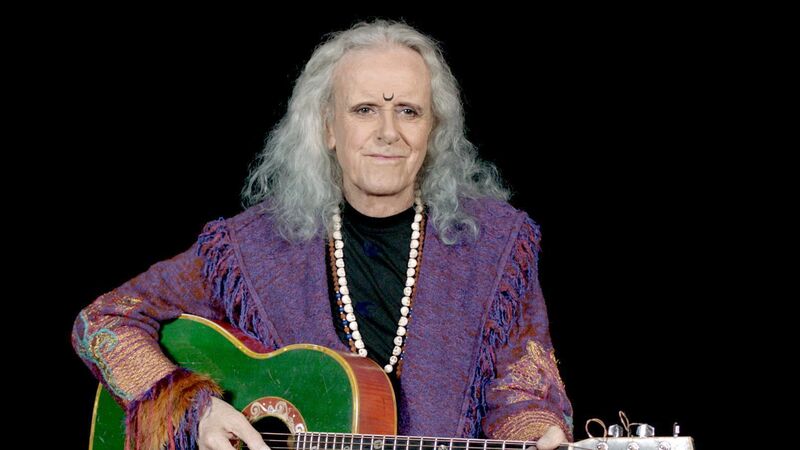
I never set out to be an entertainer. My mission was to bring the ‘Bohemian Manifesto’ to the world. By that I mean a search for inner freedom. I was born to it. It was a calling.
I grew up in Glasgow and it wasn’t until I moved away and got some perspective that I realised just how bohemian and theatrical my family was. Both my grannies were Irish. My father always reminded me that I was from working-class roots, but also from one of the most highly educated places on earth. The industrial revolution began in Glasgow.
I always had the gift of the gab. It’s a Gaelic power. All Scots can tell a story.
That is what inspired me. My aim was never just to get to the top of the music charts, although that is where I arrived, and remained, from age 18 to 26. I began playing guitar at 10. I soon found I could play anything. Songwriting too seemed effortless.
I always had a talent for visual art, but they wanted you to have chemistry and biology for art school so I didn’t get in. I’m glad I didn’t because music and the road called.
People may know me from hits like ‘Mellow Yellow’, ‘Hurdy Gurdy Man’ and the album ‘Sunshine Superman’, released when I was only 19 [one year before his friends The Beatles, influencing their album Sgt. Pepper’s Lonely Hearts Club Band] but there’s no mistake that my Scots roots have always been a major influence.
So, it’s no coincidence that my first concert after lockdown is Masters of Tradition in Bantry, with artists like Steve Cooney and Christy Moore.
I am very fortunate to have spent lockdown in my beautiful old rectory in North Cork. We avoided illness. And, before any of this Covid business began, I’d already made the decision to stop touring for a while.
I am a very organised person, and my current task is an archival one. I am organising my song lists and collections. I’ve already had a book out, and a documentary, but cannot believe the amount of material I have kept. Each song, each poem, each painting on an album cover — since 1954 my life and work marked social changes in the 20th century.
My daily routine begins with meditation in the morning as it has done for years [he meditated with the Beatles and the Maharishi in India]. When you study your thought patterns through meditation you see there is a connection to the rise and fall of your breath. Short breaths mean you are anxious and you take long breaths when you are peaceful. We feel fear and anxiety only when we don’t understand this, when we don’t know what’s going on. Meditation helps you observe the rising of your thoughts, as well as your breath, and to dissociate from them.
The afterlife had a before-life and often the before-life is much more interesting. So when Linda [his wife] and I ask our Indian teachers ‘how do you know what you were in a previous life?’ Their answer is always simply to 'observe what you are up to now in this life. What are you doing?'
So far life has taught me that it is a continuum. That is clear to see when you watch nature, how the leaves on the trees come and go.
The secret is to find what leads you to your bliss.
CONNECT WITH US TODAY



Be the first to know the latest news and updates