Further post-mortem tests in George Michael case just routine procedure
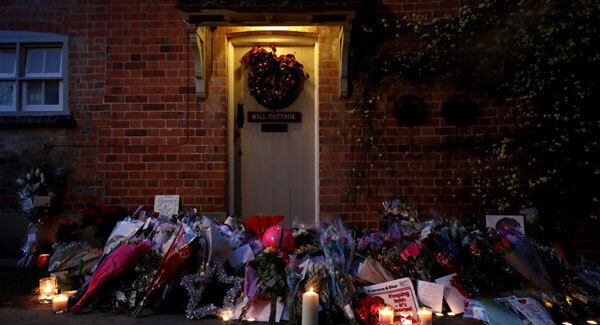
A post-mortem examination on George Michael's body proved inconclusive, meaning there will be further tests to establish a cause of death before the possible scheduling of an inquest.

Further post-mortem tests in George Michael case just routine procedure

A post-mortem examination on George Michael's body proved inconclusive, meaning there will be further tests to establish a cause of death before the possible scheduling of an inquest.

A case is usually referred to a coroner for investigation when a cause of death is unknown and a death certificate cannot be issued.

Michael Osborn, of the Royal College of Pathologists, said: "That doesn't mean it's a suspicious death or a murder when I say investigate, it means they are just looking into what caused the death.

"It might be that the person had cancer, it might be anything at all. It might be that they've been murdered, but that's not usual and there's no question about that in the George Michael case.

"Him being referred is absolutely bog standard - it would happen if I was found at home today. The fact he is who he is makes absolutely no difference."

In some circumstances a coroner can speak to a family doctor to ascertain if a person had a pre-existing condition such as cancer, but in around 40% of cases that go before a coroner there has to be a post-mortem examination.

Dr Osborn said: "In the post-mortem a pathologist looks at the body and all of the organs individually - the heart and the lungs and the brain, for example - and they will try and find out what the cause of death is."

The cause can often be obvious, such as a ruptured artery leading to major blood loss, a person involved in an accident receiving multiple serious injuries or having a cancer that has spread.

But when an examination does not uncover an obvious cause of death - which is determined on the balance of probability - then further investigations are carried out.

Dr Osborn - who stressed he has no connection with Michael's case - said it was not uncommon not to discover a cause of death from a physical examination of a body.

A toxicology test is almost always carried out, examining items such as blood, urine, stomach contents, bile or the vitreous humour fluid from the eye, to establish the presence or absence of alcohol or drugs.

Dr Osborn said: "The fact you've done toxicology doesn't cast any aspersions on the person who has had the toxicology done on them.

"If it was a nun who lived in a closed order you would do toxicology on them, as again if it was a person who lived on the street you would do toxicology on them."

Depending on circumstances, histology tests may also be carried out to examine cells and tissues at a microscopic level, such as on a growth to see if it was cancerous.

Parts of organs, such as the heart, lungs, kidneys, liver or bone marrow, are also examined, and in certain circumstances an entire organ can be sent to specialists for testing.

Thames Valley Police said the test results on Michael are unlikely to be known for several weeks, which Dr Osborn said is commonplace with laboratories dealing with thousands of cases and the complex processes needed.

He said: "Two weeks is not unusual at all. The trouble is everybody thinks it will be next day because they've watched too much CSI."

More in this section

Lifestyle

Newsletter

The best food, health, entertainment and lifestyle content from the Irish Examiner, direct to your inbox.

Cookie Policy Privacy Policy Brand Safety FAQ Help Contact Us Terms and Conditions

© Examiner Echo Group Limited